

Most American tattoo studios rely on advanced numbing creams to enhance client comfort and streamline sessions, a trend that is gaining traction across Central Europe. With over 60 percent of tattoo clients expressing anxiety about pain, offering reliable solutions like TKTX and Dermacain can set a studio apart. Tattoo artists and shop owners searching for the safest and most effective topical anesthetics will discover practical insights to improve customer satisfaction and keep clients returning.
Table of Contents
- Defining Tattoo Numbing Creams
- Variations of TKTX & Dermacain
- How Numbing Creams Alleviate Pain
- Application Best Practices
- Safety And Regulatory Considerations
- Benefits For Tattoo Studios
Key Takeaways
| Point | Details |
|---|---|
| Importance of Active Ingredients | Active ingredients in numbing creams, such as lidocaine and prilocaine, are crucial for managing pain levels effectively during tattoo procedures. |
| Tailored Application Techniques | Application techniques should be customized based on individual client factors, such as skin type and pain tolerance, to ensure maximum effectiveness. |
| Regulatory Compliance | Adhering to regulatory guidelines is essential for client safety and to avoid potential health risks associated with unapproved products. |
| Enhanced Client Experience | The use of numbing creams can significantly improve the overall tattoo experience, leading to reduced discomfort and increased client satisfaction and retention. |
Defining Tattoo Numbing Creams
Tattoo numbing creams are specialized topical anesthetic products designed to significantly reduce pain during tattoo procedures. These creams work by temporarily blocking nerve signals in the skin, creating a localized numbness that helps clients manage discomfort during tattoo sessions. Topical anesthetics are scientifically engineered to interrupt pain transmission, allowing tattoo artists to work more efficiently while providing a more comfortable experience for their clients.
The primary active ingredients in these numbing solutions typically include lidocaine, prilocaine, or benzocaine - chemical compounds that interrupt nerve signal transmission in the skin’s surface layer. However, tattoo professionals must exercise caution, as the FDA warns about potential health risks associated with excessive absorption of topical anesthetic products. High concentrations of these chemicals can lead to systemic absorption, potentially causing adverse reactions.
For Central European tattoo studios, understanding the nuanced application of numbing creams is crucial. Different body areas and individual pain tolerances require tailored approaches. Factors like skin thickness, tattoo location, and client sensitivity play significant roles in determining the appropriate numbing cream and application technique. Most professional-grade numbing creams are designed to provide pain relief for approximately 3 hours, which aligns perfectly with standard tattoo session durations.
Pro Tip for Tattoo Artists: Always perform a small patch test on clients before full application to check for potential allergic reactions and ensure the numbing cream’s compatibility with their specific skin type.
Here’s a quick overview of key factors when choosing tattoo numbing creams:
| Factor | Why It Matters | Impact on Studio |
|---|---|---|
| Active Ingredients | Determines numbness level | Effects client comfort |
| Duration of Action | Matches session length | Improves scheduling |
| Skin Type Suitability | Reduces risk of reactions | Ensures client safety |
| Regulatory Approval | Ensures legal compliance | Avoids legal issues |
Variations of TKTX & Dermacain
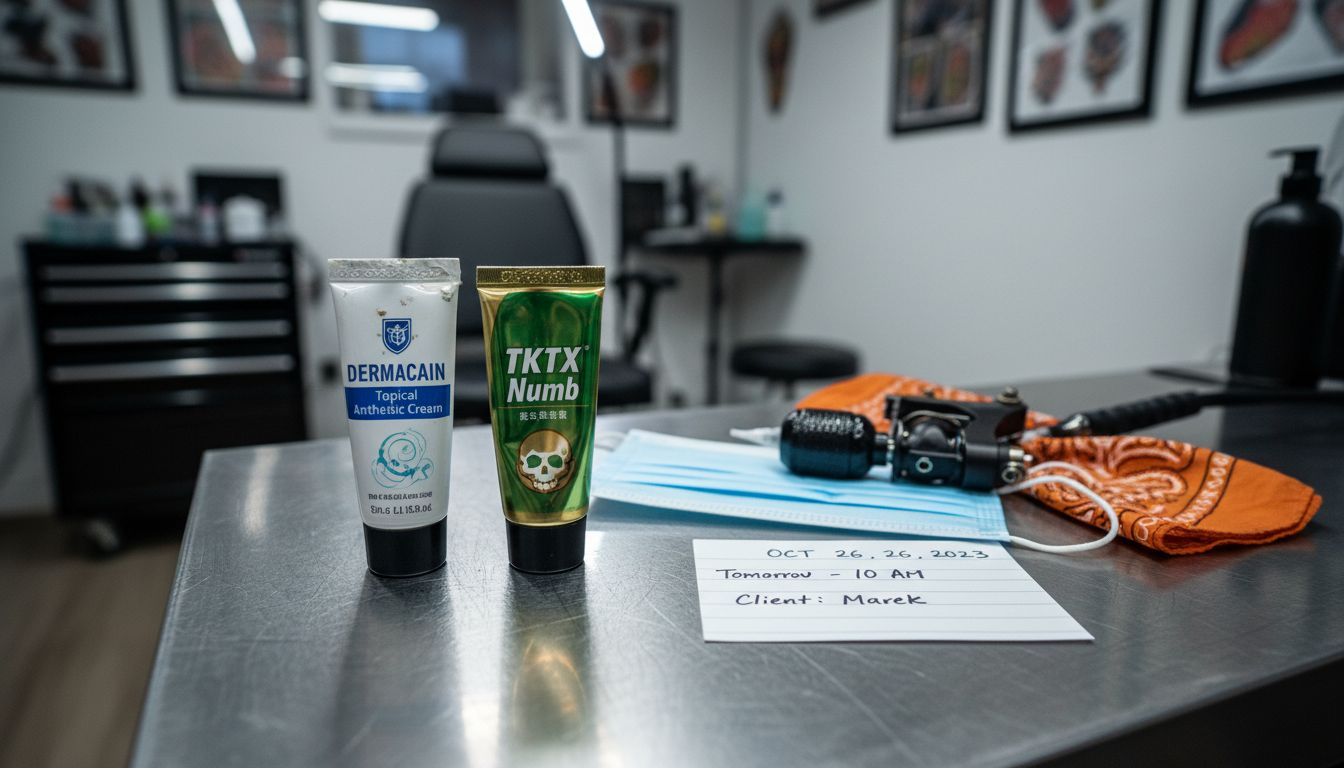
Tattoo numbing creams from TKTX and Dermacain represent sophisticated pain management solutions designed specifically for the European tattoo market. These brands offer multiple formulation variations tailored to different skin types, tattoo locations, and pain sensitivity levels. Comparative studies of lidocaine and tetracaine formulations reveal significant variations in pain relief efficacy, highlighting the importance of selecting the right product for specific client needs.
TKTX products typically range from low to high concentration numbing solutions. Federal regulators have issued warnings about certain unapproved formulations, emphasizing the critical need for professional-grade products that meet stringent safety standards. These variations generally include:
- Standard Strength Creams: Suitable for smaller tattoos and clients with moderate pain tolerance
- Maximum Strength Formulations: Designed for larger tattoo sessions and more sensitive skin areas
- Long-Duration Numbing Solutions: Providing extended pain relief for complex or lengthy tattoo procedures
For Central European tattoo studios, understanding these nuanced product variations is essential. Dermacain and TKTX offer specialized formulations that cater to different client requirements, considering factors like skin thickness, tattoo complexity, and individual pain thresholds. Professional artists must carefully select numbing creams that provide optimal comfort while maintaining safety and performance standards.
Pro Tip for Tattoo Artists: Always cross-reference product specifications and conduct thorough client consultations to determine the most appropriate numbing cream variation for each specific tattoo procedure.
Compare the main features of popular numbing cream brands:
| Brand | Formula Types Offered | Target Usage Areas | Typical Duration |
|---|---|---|---|
| TKTX | Standard, Max, Long-Acting | Small & large tattoos | Up to 3 hours |
| Dermacain | Sensitive skin, Extra strong | Delicate or thick skin | 2-4 hours |
How Numbing Creams Alleviate Pain
Local anesthesia represents a sophisticated pain management technique that transforms the tattoo experience for both clients and artists. Scientific research demonstrates how numbing creams block nerve conduction in the skin, creating a temporary interruption of pain signals before they can reach the brain. This neurological intervention allows tattoo artists to work more precisely while ensuring client comfort during complex and extended tattoo procedures.
Comparative studies highlight the nuanced effectiveness of different numbing cream formulations, revealing that pain reduction is not a one-size-fits-all solution. The mechanism of action involves several critical steps:
- Neural Signal Blocking: Active ingredients like lidocaine attach to nerve cell membranes
- Sodium Channel Interference: Preventing electrical impulses from transmitting pain sensations
- Localized Numbness: Creating a controlled, temporary pain-free zone in specific skin areas
For Central European tattoo studios, understanding these biochemical interactions is crucial. The numbing cream’s effectiveness depends on multiple factors, including application technique, skin type, and individual pain tolerance. Professional-grade numbing solutions work by creating a temporary barrier between nerve endings and pain stimuli, allowing tattoo artists to work more efficiently and clients to experience minimal discomfort during intricate tattoo sessions.
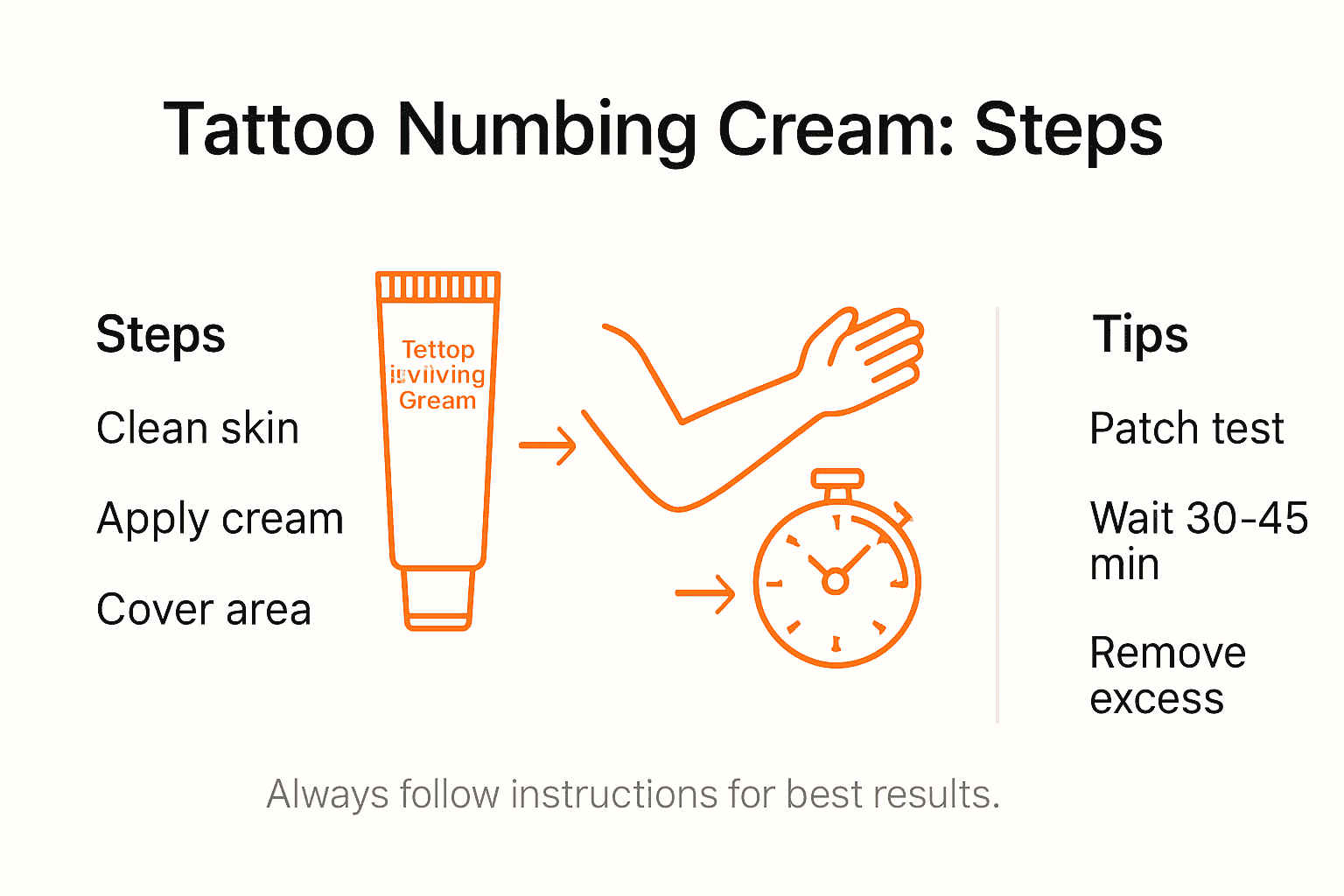
Pro Tip for Pain Management: Apply numbing cream 30-45 minutes before the tattoo procedure and cover with medical-grade plastic wrap to enhance absorption and maximize pain reduction effectiveness.
Application Best Practices
Precision application of numbing creams is critical for ensuring both client safety and optimal pain management during tattoo procedures. Federal regulators caution against inappropriate application techniques that could compromise client health. Professional tattoo studios must implement meticulous protocols to guarantee safe and effective numbing cream usage.
Scientific research underscores the importance of methodical application strategies, highlighting several critical steps for successful numbing cream implementation:
-
Pre-Application Assessment
- Conduct thorough client medical history review
- Check for potential allergic reactions
- Identify any skin sensitivity issues
-
Application Technique
- Apply a thin, uniform layer of cream
- Cover with medical-grade plastic wrap
- Allow 30-45 minutes for optimal absorption
For Central European tattoo studios, understanding regional skin variations is paramount. Different body areas require nuanced application techniques, considering factors like skin thickness, vascularity, and nerve density. Professional artists must adapt their approach based on specific tattoo location, client pain tolerance, and individual skin characteristics.
Pro Tip for Safe Application: Always perform a small patch test 24 hours before the tattoo procedure and maintain strict documentation of client reactions and cream performance.
Safety And Regulatory Considerations
Regulatory compliance represents the cornerstone of responsible numbing cream usage in professional tattoo studios across Central Europe. Federal regulatory agencies have consistently issued warnings about unapproved numbing product formulations, emphasizing the critical importance of adhering to strict safety standards. These guidelines are designed to protect clients from potential health risks associated with improperly manufactured or applied topical anesthetic products.
Scientific research highlights significant health concerns related to anesthetic substances in tattoo-adjacent products, revealing complex interactions between chemical compounds and human physiology. Key safety considerations include:
-
Ingredient Screening
- Verify active ingredient concentrations
- Confirm pharmaceutical-grade quality
- Check for potential allergenic compounds
-
Regulatory Compliance Checklist
- Obtain proper product certifications
- Maintain detailed application documentation
- Implement rigorous client screening protocols
For Central European tattoo professionals, navigating the intricate landscape of regulatory requirements demands meticulous attention to detail. Each numbing cream must undergo comprehensive evaluation, considering factors such as chemical composition, potential side effects, and compliance with regional health regulations. Tattoo studios must establish robust internal protocols that prioritize client safety while maintaining the highest standards of professional practice.
Pro Tip for Regulatory Compliance: Develop a comprehensive client intake form that includes detailed medical history and potential contraindications for numbing cream usage, ensuring thorough documentation and proactive risk management.
Benefits For Tattoo Studios
Numbing creams represent a strategic investment for professional tattoo studios, transforming the client experience and operational efficiency. Scientific research demonstrates significant improvements in client comfort and procedural outcomes, highlighting multiple tangible advantages for Central European tattoo professionals. By implementing sophisticated pain management solutions, studios can differentiate themselves in a competitive market.
Comprehensive studies reveal how numbing creams directly impact tattoo artist performance, offering several key benefits:
-
Client Experience Enhancement
- Reduced procedural anxiety
- Minimal pain perception
- Increased likelihood of repeat business
-
Operational Advantages
- Extended tattoo session duration
- Improved artist concentration
- More precise and detailed artwork execution
For Central European tattoo studios, numbing creams represent more than just a comfort solution. They are a sophisticated tool for professional differentiation, client relationship management, and service quality optimization. By strategically implementing these products, studios can create a more controlled, comfortable environment that attracts discerning clients seeking premium tattoo experiences.
Pro Tip for Studio Management: Develop a transparent communication strategy that educates clients about numbing cream benefits, positioning your studio as a client-centric, technologically advanced tattoo destination.
Enhance Your Tattoo Studio Experience with Professional Numbing Creams
Pain management is a key challenge for Central European tattoo studios striving to provide a comfortable and precise tattooing process. This article highlights the importance of using medically formulated tattoo numbing creams like TKTX and Dermacain, which can guarantee up to three hours of effective pain relief. By addressing client discomfort and reducing anxiety, you elevate your studio’s reputation and operational efficiency.
Discover the difference with medically approved numbing creams that:
- Ensure consistent client comfort throughout the session
- Align with session lengths for seamless scheduling
- Are safe, tested, and tailored for different skin types and tattoo areas
Experience the benefits firsthand by exploring our trusted range at buytktx.online. We offer free shipping on orders over 30 Euro and a satisfaction guarantee with an easy return policy. Elevate your tattoo sessions today with professional-grade pain relief solutions that your clients will appreciate.

Ready to provide pain-free tattoo sessions that your clients will return for again and again? Visit our website now to select the perfect TKTX or Dermacain formulation for your studio. Learn more about safe application techniques and maximize client comfort by checking out our expert recommendations at buytktx.online. Don’t wait to upgrade your professional toolkit and stand out in the Central European tattoo market.
Frequently Asked Questions
What are tattoo numbing creams and how do they work?
Tattoo numbing creams are specialized topical anesthetics that temporarily block nerve signals in the skin, creating localized numbness. This helps reduce pain during tattoo procedures by interrupting pain transmission.
What are the active ingredients commonly found in tattoo numbing creams?
Common active ingredients in tattoo numbing creams include lidocaine, prilocaine, and benzocaine. These compounds work to interrupt nerve signal transmission in the skin, providing pain relief during tattooing.
How should I apply tattoo numbing cream for optimal results?
For best results, apply a thin, uniform layer of the cream about 30-45 minutes before the tattoo procedure. Cover the area with medical-grade plastic wrap to enhance absorption and maximize pain reduction.
How long does the numbing effect of these creams last during a tattoo session?
Most professional-grade tattoo numbing creams provide relief for approximately 2 to 4 hours, which aligns well with standard tattoo session durations, allowing artists to work more efficiently while ensuring client comfort.