

Most people planning their first tattoo spend more time worrying about pain than about the actual design. That fear is real, and it drives a growing number of clients across Europe to search for numbing solutions before they even book an appointment. But here is the surprising part: very few people actually understand what “numbing” means in a tattoo context, which products are legal, or how to use them safely. Making the wrong choice here is not just uncomfortable. It can affect your health, your tattoo quality, and even put you on the wrong side of local regulations.
Table of Contents
- What does numbing mean in tattooing?
- How tattoo numbing products work
- Numbing regulations and safety in Europe
- Practical advice: Choosing and using tattoo numbing products
- Why the right understanding of numbing matters more than ever
- Find trusted numbing solutions for your next tattoo
- Frequently asked questions
Key Takeaways
| Point | Details |
|---|---|
| Numbing defines pain relief | Tattoo numbing means using topical creams to reduce pain safely during sessions. |
| Check legal status | Only licensed numbing creams are safe and permitted for tattoo use in Europe. |
| Know your ingredients | Products like lidocaine or prilocaine must be within legal limits and applied correctly for best results. |
| Prioritize safety | Avoid unlicensed imports and always follow professional and medical guidelines when using numbing agents. |
What does numbing mean in tattooing?
In everyday language, numbing means losing sensation in a body part. In the tattoo world, it has a much more specific meaning. “Numbing” refers to topical products used to reduce or block pain during tattooing, applied directly to the skin before the session begins. These are not injections, not general anesthesia, and not anything that puts you to sleep. They are creams, gels, or sprays that work on the surface layer of your skin.
The purpose is straightforward: make longer sessions more tolerable, especially on sensitive areas like ribs, spine, or inner arms. A numbing cream does not eliminate all sensation, but it significantly reduces the sharp, stinging pain that makes some people tap out early.
Here are the most common misconceptions clients have:
- Numbing means zero pain. Not quite. Most products reduce pain by 50 to 80 percent, not 100 percent.
- Any numbing cream will do. Wrong. Products vary widely in ingredients, concentration, and legal status across Europe.
- Your tattooist will handle it. In most European countries, tattooists are not legally allowed to supply or apply numbing creams for you.
- Stronger always means better. Higher concentrations carry higher risks, including skin reactions and systemic side effects.
Understanding top numbing ingredients is the first step toward making a smart choice. Products sold through licensed pharmacies or regulated online retailers are your safest option. When you look at key ingredients in numbing creams, you will notice that the concentration and formulation matter as much as the active substance itself.
Pro Tip: Always choose products licensed for European use. Products sourced from unregulated markets may list ingredients that do not match what is actually inside, which is a genuine health risk.
How tattoo numbing products work
Now that we have defined numbing, it is important to understand how these products actually work and what makes them effective.
Topical anesthetics work by temporarily blocking sodium channels in nerve endings just beneath the skin. When sodium cannot enter the nerve cell, the nerve cannot fire a pain signal to your brain. The result is reduced or absent sensation in the treated area. This is a localized effect, meaning it does not travel through your body the way a painkiller pill would.

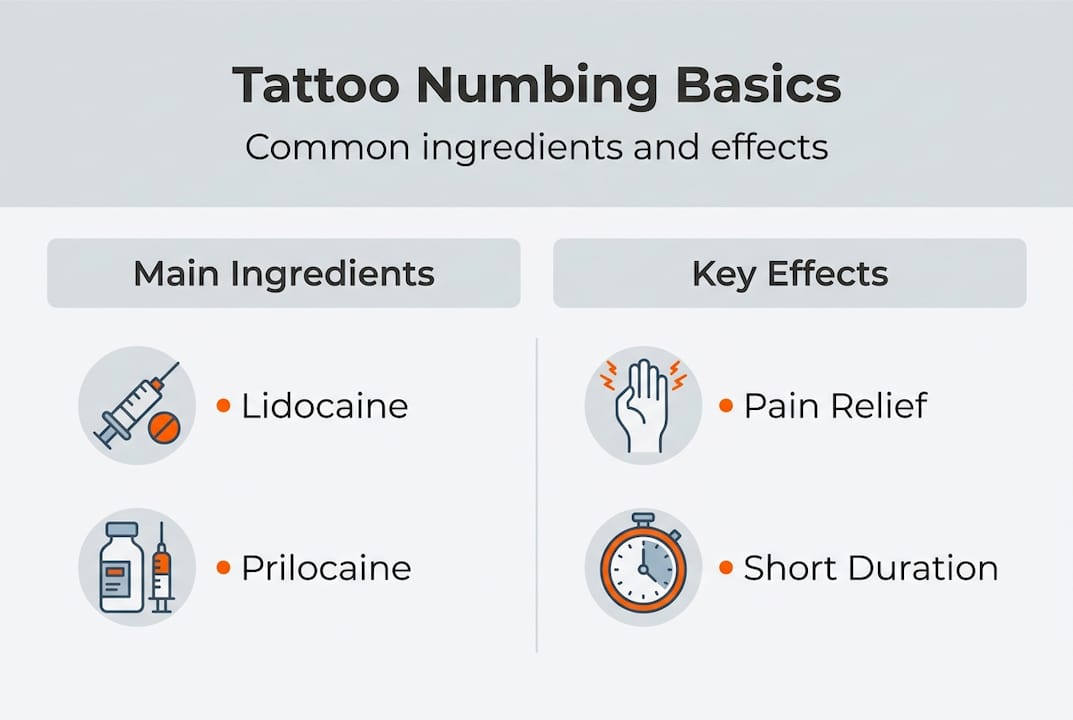
Active ingredients include lidocaine (most common, OTC 4 to 5 percent max), prilocaine, tetracaine, and epinephrine. Epinephrine is often added to constrict blood vessels, which slows absorption and extends the numbing effect.
Here is a quick comparison of the main ingredients:
| Ingredient | Max OTC strength | Onset time | Duration |
|---|---|---|---|
| Lidocaine | 4 to 5% | 20 to 45 min | 1 to 2 hours |
| Prilocaine | 2.5% (combo) | 30 to 60 min | 1 to 2 hours |
| Tetracaine | 1 to 4% | 30 to 60 min | Up to 3 hours |
| Epinephrine | Trace amounts | Works with others | Extends effect |
For reference, products like Dr. Numb use lidocaine as their primary active ingredient, which is consistent with licensed formulations.
Here is how to apply numbing cream safely before a session:
- Clean the skin thoroughly with mild soap and water.
- Dry the area completely before applying.
- Apply a thick, even layer of cream over the tattoo area.
- Cover with plastic wrap (occlusion) to boost absorption.
- Wait the recommended time, usually 45 to 60 minutes.
- Remove the wrap and wipe off the cream just before your artist begins.
Pro Tip: Heavy reliance on high-concentration imports can lead to regulatory and health risks. Stick to numbing ingredients explained by licensed sources, and never exceed the recommended application time.
Numbing regulations and safety in Europe
Once you know how numbing agents act, it is crucial to consider legal and safety issues, especially across European countries.
In Europe, only licensed medicinal products are legal; unlicensed imports with 55 to 75 percent lidocaine concentrations pose serious compliance and safety risks. These ultra-high-dose products are not approved by European regulatory bodies and can cause severe adverse reactions.
Here is how licensed pharmacy products compare to common import gels:
| Feature | Licensed pharmacy cream | Unlicensed import gel |
|---|---|---|
| Legal status | Approved and regulated | Often illegal in EU/UK |
| Lidocaine concentration | Up to 5% | Up to 75% |
| Quality control | Mandatory | None |
| Side effect risk | Low when used correctly | High |
| Available in pharmacies | Yes | No |
The risks of using unlicensed products go beyond a skin rash. Risk of methemoglobinemia with prilocaine is a documented concern, and tattooists should not routinely supply or apply numbing creams. Methemoglobinemia is a blood condition where red blood cells cannot carry oxygen properly, and it can be life-threatening in severe cases.
Key safety points to keep in mind:
- Never apply numbing cream to broken or irritated skin.
- Do not exceed the recommended dose or coverage area.
- Inform your tattooist that you have used a numbing product before the session.
- If you experience dizziness, pale skin, or shortness of breath, seek medical help immediately.
“Unlicensed numbing products with extreme lidocaine concentrations are not just a legal problem. They are a genuine health hazard that no tattoo is worth risking.”
For a full breakdown of what is allowed in your country, check legal numbing creams in Europe and compare parlour numbing solutions to understand what professional studios actually use. The TKTX official European site also provides region-specific product information.
Practical advice: Choosing and using tattoo numbing products
Understanding the legal and safety framework, let us look at how you can choose and use numbing products the right way.
Licensed creams from pharmacies are safest and comply with European standards; high-concentration imports may not undergo proper quality checks. That is not a minor detail. It means you have no guarantee about what is actually in the product you are putting on your skin.
Here is a checklist for choosing the right numbing cream:
- Look for products with clearly listed active ingredients and concentrations.
- Confirm the product is sold through a licensed retailer or pharmacy.
- Check that the lidocaine concentration does not exceed 5 percent for OTC use.
- Read reviews from verified European buyers, not just global marketplaces.
- Avoid any product that makes claims like “100 percent pain-free” or “hospital-strength.”
Before your session, have an honest conversation with your tattooist. Ask if they are comfortable working on numbed skin, since some artists prefer not to because numbing can slightly change skin texture during tattooing. A good artist will appreciate the heads-up.
Here are the steps to apply numbing cream safely:
- Confirm your artist is okay with you using numbing cream.
- Patch test the cream on your inner arm 24 hours before the session.
- On the day, clean and dry the tattoo area.
- Apply a generous layer and cover with plastic wrap.
- Set a timer for the product’s recommended onset time.
- Remove and wipe clean right before the session starts.
For a broader look at your options, explore examples of numbing agents and review the best anesthetics for tattoos available in 2026. The official TKTX UK site also lists approved formulations for UK-based clients.
Pro Tip: Always test new creams on a small patch of skin first. Reactions are rare with licensed products, but individual sensitivities vary. A 24-hour patch test takes five minutes and could save you a ruined session.
Why the right understanding of numbing matters more than ever
With the practical how-tos covered, here is an honest, experience-backed take on numbing and comfort in tattooing.
Many European tattoo clients are exposed to false online claims about instant, pain-free tattoos with unregulated imports. Social media makes it look easy: apply a cream, feel nothing, get a perfect tattoo. The reality is more nuanced and more important.
Chasing maximum numbness can actually backfire. When skin is over-numbed, clients sometimes miss early warning signs of a reaction, like unusual swelling or redness. Heavily numbed skin can also behave differently under the needle, which some artists say affects ink saturation and line quality.
Our experience tells us that legality, moderation, and realistic expectations are the real keys to a great session. A client who uses a licensed 5 percent lidocaine cream correctly, communicates with their artist, and arrives prepared will almost always have a better outcome than someone who ordered a 55 percent import and hoped for the best.
Here is the contrarian view worth considering: mild, legal numbing combined with the right artist is a safer and more effective strategy than chasing ultra-high doses. Think beyond the session itself. Your skin health, the quality of your healed tattoo, and your long-term safety all matter far more than eliminating every last bit of discomfort in the chair. Explore safe numbing practices to build a strategy that actually works for you.
Find trusted numbing solutions for your next tattoo
Ready to take the next step? Here is how you can get reliable numbing products for your pain-free tattoo experience.

At buytktx.online, we offer licensed, quality-checked numbing creams shipped across all of Europe. Our TKTX 40% formula is one of the most popular choices for clients who want proven, consistent results, and our premium Dermacain 50g is ideal for longer or more detailed sessions. Both products are available through our official TKTX shop, with free shipping on orders over 30 Euro. Not happy with your purchase? We offer a full money-back guarantee. Just send the product back and we will refund you, no questions asked.
Frequently asked questions
Are over-the-counter tattoo numbing creams legal in Europe?
Only licensed creams are permitted in Europe; high-dosage imports with extreme concentrations are not legal and carry serious safety risks. Always buy from regulated retailers.
How long does tattoo numbing last?
Typical numbing duration is 30 to 90 minutes with OTC lidocaine, though products containing tetracaine or epinephrine can extend this to up to three hours depending on the formulation.
Is it safe for tattooists to apply numbing cream for clients?
Tattooists are not allowed to routinely supply or apply creams in most European countries; clients should purchase and apply licensed creams themselves before arriving at the studio.
What are the risks of using high-concentration numbing products?
Risk of methemoglobinemia and side effects from strong unlicensed creams is well documented, and these products can also cause skin reactions, cardiovascular stress, and unpredictable absorption rates.


