

Finding effective pain relief for tattoos is a top priority for millions, but European regulations often differ sharply from American standards. Tattoo enthusiasts and artists in Central Europe face real challenges when choosing numbing creams, as product safety and legal compliance vary from country to country. With many creams containing lidocaine concentrations as high as 5 percent, knowing how and when to use these options can make all the difference for a safe, comfortable tattoo session.
Table of Contents
- Tattoo Numbing Creams Explained and Myths
- Types and How Numbing Creams Work
- Legal Status Across Central Europe
- Safe Application and Product Labeling
- Risks, Liabilities, and Compliance Issues
Key Takeaways
| Point | Details |
|---|---|
| Understanding Numbing Creams | Tattoo numbing creams contain anesthetics like lidocaine that reduce pain but do not eliminate sensation entirely. |
| Proper Application Techniques | Apply a thick layer of cream and cover it with plastic wrap for maximum effectiveness. |
| Regulatory Considerations | Numbing cream regulations vary across countries in Central Europe, necessitating caution and research. |
| Safety Precautions | Always conduct a patch test and consult with your tattoo artist regarding recommended numbing cream usage. |
Tattoo Numbing Creams Explained and Myths
Tattoo numbing creams are specialized topical anesthetics designed to reduce pain during the tattooing process. These products typically contain active ingredients like lidocaine, which temporarily desensitize the skin’s nerve receptors. Understanding how these creams work requires separating scientific facts from common misconceptions about pain management during tattoo sessions.
The primary mechanism of numbing creams involves blocking nerve signals in the applied area, providing temporary relief. FDA warnings highlight potential safety concerns with unapproved products, emphasizing the importance of using regulated and verified numbing solutions. Most effective creams contain lidocaine concentrations around 4%, which can reduce pain sensations for up to 8 hours when applied correctly.
Common myths about tattoo numbing creams include complete pain elimination and universal effectiveness. In reality, these products reduce pain intensity but do not entirely remove sensation. Topical anesthetic guidelines recommend specific application techniques such as cleaning the skin, applying a thick layer, and covering the area with plastic wrap for 40-60 minutes before tattooing. Users should also be aware of potential allergic reactions and avoid using numbing creams on broken or irritated skin.
Pro tip: Always consult with your tattoo artist about recommended numbing cream usage and perform a patch test 24 hours before your tattoo appointment to check for potential skin sensitivity or allergic reactions.
Types and How Numbing Creams Work
Tattoo numbing creams represent a diverse category of topical anesthetics designed to minimize discomfort during tattooing. Different formulations contain specific local anesthetics that block nerve signals and reduce pain sensations. The primary active ingredients typically include lidocaine, benzocaine, prilocaine, and tetracaine, each offering unique characteristics in pain management.
The most common type of numbing cream contains lidocaine hydrochloride, usually at concentrations around 4-5%. External analgesia formulations provide temporary pain relief by interrupting nerve signal transmission in the targeted skin area. These creams work by temporarily blocking sodium channels in nerve cells, which prevents pain signals from reaching the brain. This pharmacological mechanism ensures that while complete sensation is not eliminated, pain intensity is significantly reduced.
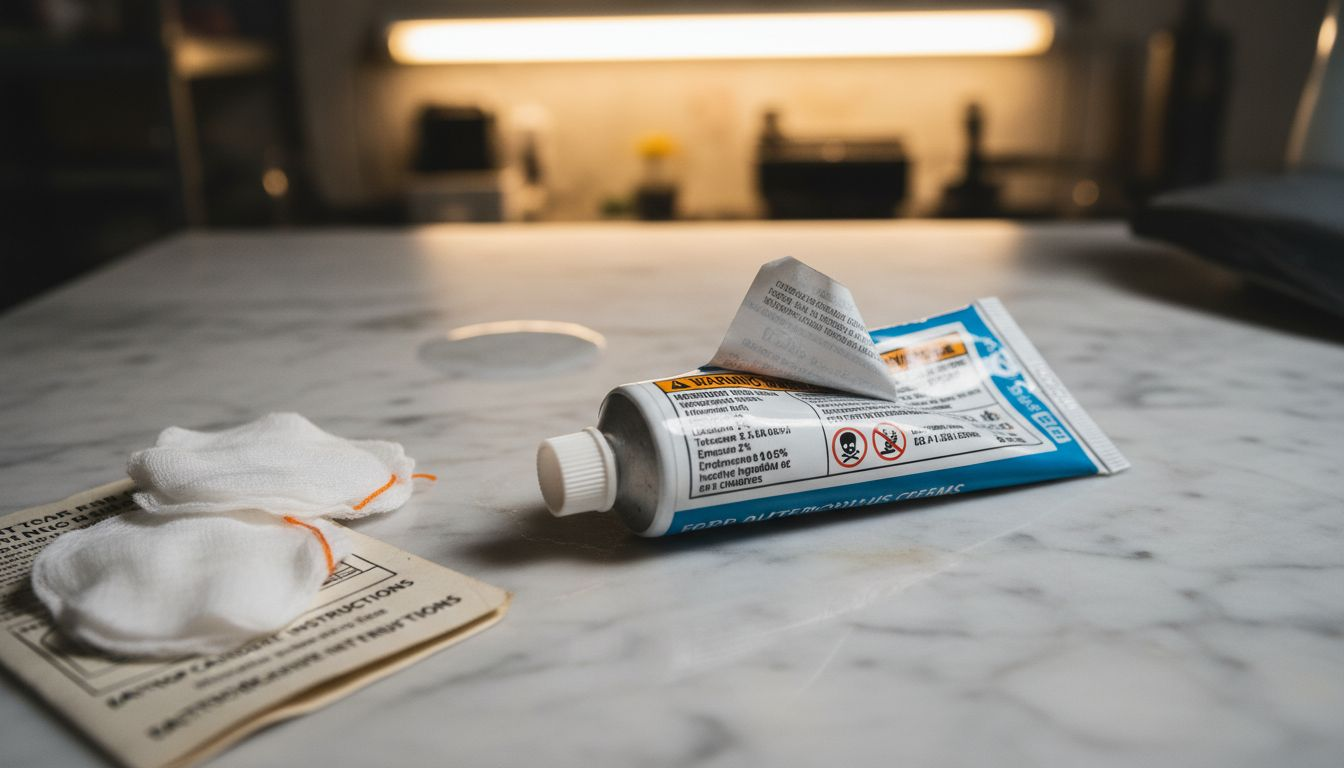
Numbing cream varieties can be classified based on their active ingredients and intended duration of effect. Lidocaine-based creams offer rapid onset and moderate duration, while tetracaine formulations provide longer-lasting numbness. Some advanced products combine multiple anesthetic agents to enhance pain reduction and extend the numbing period. Users should carefully select creams based on their specific tattoo placement, skin sensitivity, and anticipated tattoo session length.
Pro tip: Consult with professional tattoo artists about recommended numbing cream types and always perform a small skin patch test 24 hours before your tattoo to ensure compatibility and prevent potential allergic reactions.
Here’s a comparison of the main active ingredients found in tattoo numbing creams:
| Ingredient | Typical Concentration | Onset Time | Duration of Effect |
|---|---|---|---|
| Lidocaine | 4-5% | 20-30 minutes | 1-2 hours |
| Benzocaine | 10-20% | 10-15 minutes | 30-60 minutes |
| Prilocaine | 2-5% | 15-30 minutes | 1-2 hours |
| Tetracaine | 0.5-2% | 30-45 minutes | 2-3 hours |
Legal Status Across Central Europe
Navigating the legal landscape of tattoo numbing creams in Central Europe requires understanding the complex and often fragmented regulatory environment. Tattoo regulations vary widely across European countries, with each nation maintaining its own unique approach to product safety, age restrictions, and medicinal guidelines. These variations create a challenging terrain for consumers and professionals seeking clarity on numbing cream usage.
In the European Union, no unified regulation specifically addresses tattoo numbing creams, leaving individual member states to interpret and enforce their own rules. Medicinal product regulations typically govern these topical anesthetics, with countries like Germany, Austria, and Hungary applying different standards. Some nations require strict medical oversight for products containing local anesthetics, while others maintain more relaxed approaches to distribution and use.
Key legal considerations for numbing creams in Central Europe include age restrictions, product safety standards, and medical compliance. Most countries mandate that individuals must be at least 18 years old to purchase and use such products, with some allowing parental consent for younger individuals. Professional tattoo studios often have their own internal policies regarding numbing cream usage, which may be more stringent than national regulations. Users must carefully research local guidelines, as what is permissible in one country might be restricted in another.
Pro tip: Always consult local health authorities or professional tattoo associations to get the most up-to-date information about legal requirements for numbing creams in your specific Central European country.
Safe Application and Product Labeling
Properly applying tattoo numbing creams requires precision and careful attention to detail. Comprehensive application involves specific preparation steps that ensure maximum effectiveness and minimize potential skin irritation. Successful numbing cream usage begins with understanding the critical preparatory techniques that professionals recommend.
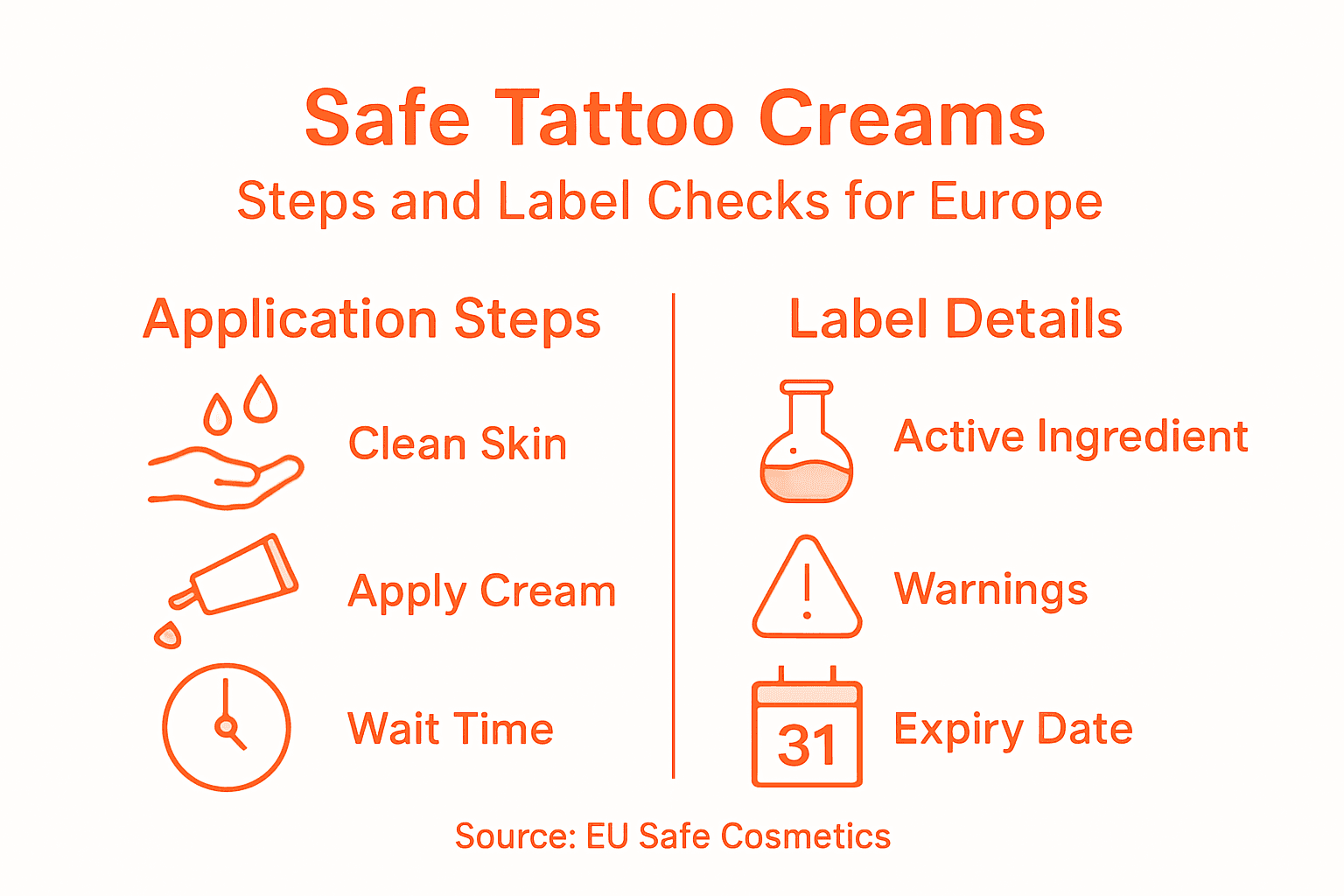
The application process typically involves several meticulous stages. Skin preparation is paramount, requiring thorough cleansing and gentle exfoliation to remove dead skin cells and enhance product absorption. Users should apply a generous 2-3 mm thick layer of cream, carefully covering the entire area to be tattooed. The critical step involves securely wrapping the treated area with plastic wrap, which helps maintain cream temperature and improve active ingredient penetration. This method allows the numbing agents to effectively block nerve signals and reduce pain sensation during the tattooing process.
Product labeling plays a crucial role in safe numbing cream usage, providing essential guidance for consumers. Key information should include active ingredient percentages, recommended application time, potential side effects, and clear contraindications. Users must carefully review warnings about avoiding application on broken, irritated, or damaged skin. Professional tattoo artists often recommend consulting with them before using numbing creams, as some may prefer untreated skin for optimal ink quality and application. Additionally, individuals should always perform a patch test to check for potential allergic reactions or skin sensitivities before full application.
Pro tip: Always read the product label completely and conduct a small skin patch test 24 hours before your tattoo to ensure compatibility and prevent potential adverse reactions.
Below is a summary of critical steps and warnings for safe numbing cream application:
| Step | Details | Key Warning |
|---|---|---|
| Skin preparation | Clean and exfoliate area thoroughly | Avoid if skin is damaged |
| Cream application | Use 2-3 mm thick, cover fully | Do not mix multiple products |
| Occlusion | Wrap with plastic for 40-60 minutes | Remove if irritation occurs |
| Patch testing | Test 24 hours before tattooing | Discontinue if reaction felt |
Risks, Liabilities, and Compliance Issues
Navigating the complex landscape of tattoo numbing cream regulations requires a comprehensive understanding of potential risks and legal responsibilities. European chemical safety regulations emphasize product compliance with strict guidelines designed to protect consumer health and minimize potential adverse reactions.
Manufacturers and distributors bear significant legal liability for numbing cream safety. The European Commission’s research highlights critical safety concerns surrounding these topical anesthetics, including potential risks of allergic reactions, skin irritation, and toxicity. The regulatory environment remains fragmented, with no unified EU legislation specifically addressing numbing creams. This creates a challenging compliance landscape where manufacturers must navigate multiple national regulatory frameworks, ensuring their products meet stringent safety standards and ingredient restrictions.
Consumers and tattoo professionals share responsibility for safe product usage. Key compliance issues include verifying active ingredient percentages, understanding proper application techniques, and recognizing potential contraindications. Potential risks range from mild skin irritation to more serious allergic responses, making thorough product evaluation crucial. Manufacturers must provide clear labeling, comprehensive usage instructions, and transparent information about potential side effects. Professional tattoo artists should maintain updated knowledge about product safety and recommend appropriate numbing solutions based on individual client needs.
Pro tip: Always request detailed product safety documentation from manufacturers and perform a comprehensive patch test before full application to minimize potential adverse reactions.
Experience Safe and Effective Tattoo Numbing Creams Across Europe
Navigating the legal complexities of tattoo numbing creams in Central Europe can be overwhelming. The article highlights crucial pain points including product safety, the importance of regulated lidocaine concentrations, and compliance with local laws to ensure a safe, pain-reduced tattoo experience. You deserve a trusted solution that guarantees effectiveness without compromising your skin’s health or legal safety.
At buytktx.online, we specialize in supplying TKTX and Dermacain, premium tattoo numbing creams that are fully compliant with European regulations. Our creams provide guaranteed numbing for up to 3 hours, so you can face your tattoo session without fear of pain or irritation. We understand your concerns about allergic reactions and product authenticity, which is why we offer free shipping on orders over 30 Euro and a full satisfaction guarantee with easy returns.

Discover how our carefully formulated creams align perfectly with the safe application and product labeling guidelines discussed in the article. Don’t wait until your next tattoo session to worry about pain or legal compliance. Take control of your tattoo experience by visiting buytktx.online now and choose reliable, legal numbing creams designed for your comfort and peace of mind. Order today for a pain-free tattoo tomorrow.
Frequently Asked Questions
What are tattoo numbing creams and how do they work?
Tattoo numbing creams are topical anesthetics designed to reduce pain during tattooing. They typically contain active ingredients like lidocaine that block nerve signals in the skin, providing temporary relief from pain.
Are there any legal restrictions on using tattoo numbing creams in Europe?
Yes, legal restrictions on tattoo numbing creams can vary across different countries in Europe. Each nation may have its own regulations regarding product safety, age restrictions, and medical guidelines for use.
What should I look for in a tattoo numbing cream?
When selecting a tattoo numbing cream, check for active ingredient concentrations, especially lidocaine, benzocaine, or prilocaine. Pay attention to the recommended dosage, application guidelines, and potential side effects mentioned on the product label.
How can I safely apply tattoo numbing cream?
To safely apply tattoo numbing cream, first cleanse and exfoliate the skin. Apply a thick layer of cream, cover it with plastic wrap, and leave it for 40-60 minutes. Always perform a patch test 24 hours in advance to check for potential allergic reactions.


