

Finding reliable ways to manage client pain during tattoo sessions is a challenge every artist faces in Central Europe. The difference between topical and injectable anesthesia matters because each offers a distinct level of comfort and accessibility. Tattoo creams like TKTX create superficial numbness ideal for standard studio work, while injectables demand medical oversight and introduce legal risks. This guide clarifies how these methods work so you can confidently deliver pain relief and maintain safe practices.
Table of Contents
- Defining Topical And Injectable Anesthesia
- Main Differences In Tattoo Pain Management
- How Topical Creams Like TKTX Work
- Injectable Anesthesia: Safety And Legality
- Common Misconceptions And Mistakes To Avoid
Key Takeaways
| Point | Details |
|---|---|
| Topical Anesthesia Is Preferred | Most tattoo artists rely on topical anesthesia like TKTX due to its accessibility and lack of medical oversight. |
| Injection Requires Medical Oversight | Injectable anesthesia must be administered by licensed professionals, making it impractical for most tattoo studios. |
| Effectiveness Timing Is Crucial | TKTX should be applied at least 45 minutes before the session for optimal numbness. |
| Understanding Depth and Duration | Injectable anesthesia offers deeper and longer-lasting numbness, but comes with higher risks compared to topical methods. |
Defining topical and injectable anesthesia
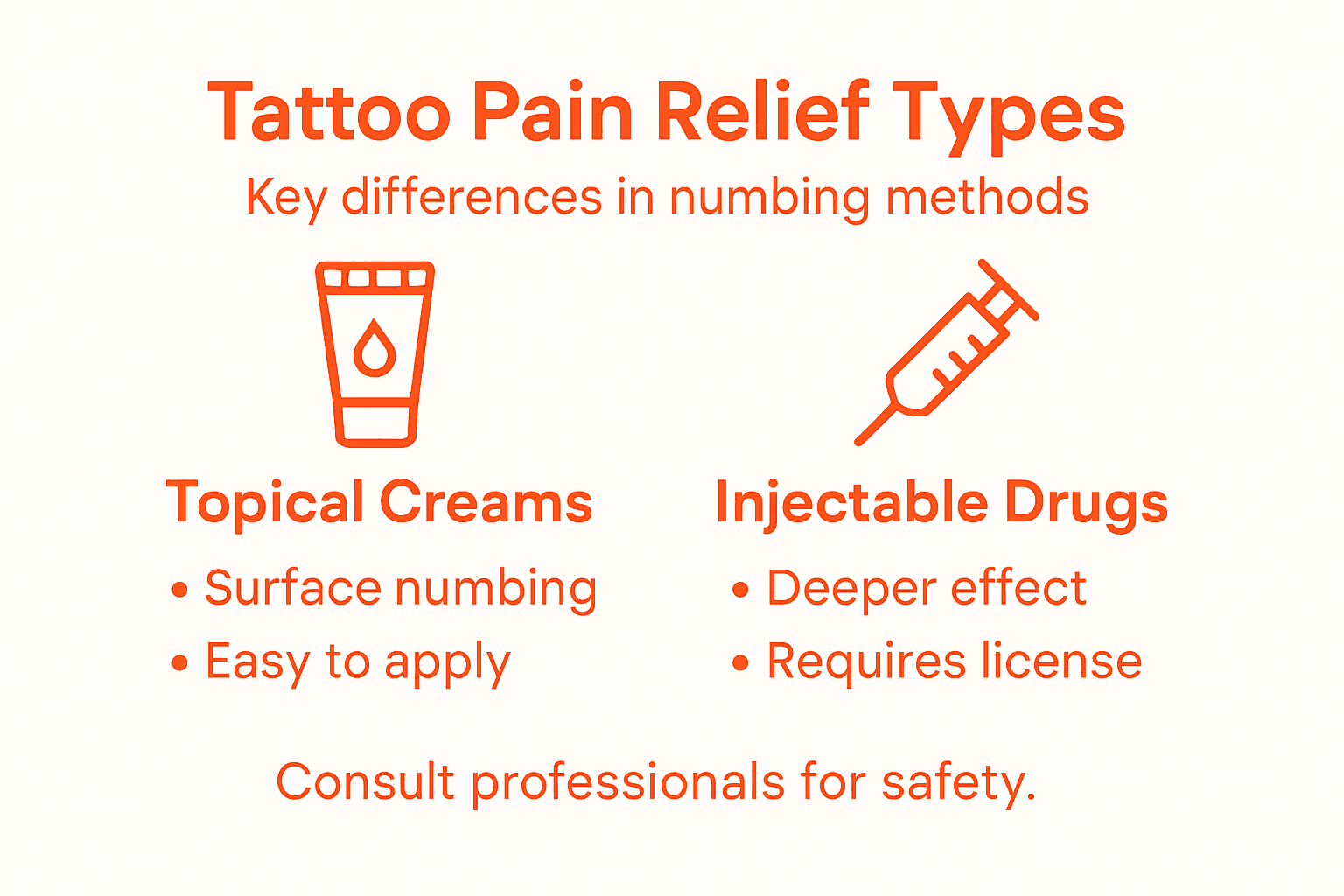
Tattoo pain relief comes down to two main approaches: topical and injectable anesthesia. Understanding the difference matters because each method works in fundamentally different ways and delivers vastly different results for your clients.
Topical anesthesia sits on the skin surface. Products like TKTX numbing cream are applied directly to the area before tattooing begins. These creams create a superficial numbness that affects only the outermost layers of skin.
Injectable anesthesia, by contrast, involves a needle injection administered by a medical professional. The anesthetic is deposited near nerve structures to block sensation in a targeted area much deeper than topical methods can reach.
How Each Type Works
Both topical and injectable anesthetics function the same way at the cellular level: blocking sodium channels in nerve cells to prevent pain signals from traveling to the brain. The critical difference is delivery method and depth of penetration.
Topical creams work by absorption through the skin. The active ingredients gradually penetrate into nerve endings just beneath the surface. This process takes time, usually 45 minutes to an hour, before the numbing effect reaches its peak.
Injectable anesthetics achieve rapid, profound numbness because they bypass the skin barrier entirely. The medication reaches nerve clusters immediately, creating a much stronger blocking effect in a specific area.
Key Differences at a Glance
- Depth of effect: Topical works on surface nerves; injectables reach deeper nerve structures
- Speed of action: Injectables work within minutes; topicals require 45-60 minutes
- Duration: Topical anesthesia typically provides locally applied anesthetics for superficial numbness lasting 3 hours; injectables can last 4-8 hours
- Intensity: Injectables create deeper, more complete numbness
- Accessibility: Topical creams require no medical credentials; injectables require licensed administration
- Client comfort: Topical requires no needles; injectables involve an injection
Why This Matters for Your Studio
Most tattoo artists in Central Europe work exclusively with topical anesthesia like TKTX for practical reasons. You don’t need medical licensing, clients avoid needle anxiety, and the results work well for standard tattoo sessions.
Injectables remain in the medical realm because they require professional administration and carry different liability considerations. They’re typically used only in medical settings or specialized clinics.
Your clients likely prefer topical solutions. They want pain relief without medical injections, and they want it applied before arriving at your chair.
The choice between topical and injectable anesthesia isn’t really a choice for most tattoo artists—topical products like TKTX are the practical standard for studio work.
Pro tip: Apply TKTX at least 45 minutes before the appointment starts, and cover the area with plastic wrap to maximize penetration. This ensures your client experiences the full 3-hour numbness window during their entire session.
Here’s a concise comparison of topical versus injectable anesthesia for tattoo procedures:
| Factor | Topical Anesthesia | Injectable Anesthesia |
|---|---|---|
| Application Control | Artist applies cream | Medical professional injects |
| Typical Use Case | Standard tattoos | Surgical or complex tattoos |
| Regulatory Oversight | Low, over-the-counter | High, strictly regulated |
| Risk of Complications | Minimal with proper use | Elevated, includes nerve damage |
| Workflow Integration | Simple, artist-led | Disruptive, requires extra staff |
Main differences in tattoo pain management
Pain management strategies differ dramatically between topical and injectable approaches. The choice you make affects not only your client’s comfort but also your workflow, liability, and session duration.
Topical creams like TKTX work from the outside in. They numb the skin surface through absorption, making them ideal for standard tattoo sessions. Most Central European artists rely on this method because it’s accessible, requires no medical credentials, and clients appreciate avoiding needles.
Injectable anesthetics work from the inside out. A medical professional injects medication near nerve structures, creating a much larger numb zone. This approach suits complex surgical procedures or extensive work, but it’s rarely used in tattoo studios.

How They Differ in Practice
Topical anesthetics provide superficial, short-term numbing ideal for small or less sensitive areas. They’re easy to apply, require minimal preparation, and clients experience the full effect within 45-60 minutes.
Injectables offer deeper anesthesia covering a larger area but require licensed medical supervision. They last longer and work more intensely, but they introduce risks like skin texture changes and infection that topicals avoid.
Key Practical Differences
- Application method: Topical creams rubbed on skin; injectables delivered via needle injection
- Onset time: Topicals take 45-60 minutes; injectables work in minutes
- Numbness depth: Topicals affect only surface layers; injectables penetrate to nerve clusters
- Coverage area: Topicals work best on smaller zones; injectables can numb large regions
- Duration: Topicals last around 3 hours; injectables extend to 4-8 hours
- Professional requirements: Topicals need no licensing; injectables require medical credentials
- Session compatibility: Topicals integrate smoothly into standard tattoo workflow; injectables require medical supervision
Safety Protocols
Topical creams carry minimal risk when applied correctly. Your main concerns are proper application timing and client allergies to specific ingredients.
Injectables introduce safety risks that increase outside medical environments. Infection, nerve damage, and adverse reactions become real concerns. This is why they belong in clinics, not tattoo studios.
Your clients also prefer topical solutions. They avoid medical settings for ink, they dislike injections, and they want a straightforward appointment experience.
Topical anesthesia keeps your studio workflow simple while delivering genuine pain relief. Injectables complicate things without adding value for standard tattoo work.
Pro tip: Schedule consultations with new clients about their pain sensitivity beforehand. This lets you recommend appropriate TKTX application timing and prepare them mentally for what numbness feels like during their session.
How topical creams like TKTX work
TKTX numbing cream works through a simple but effective process: the active ingredients penetrate the skin and temporarily block pain signals at the nerve endings. Understanding this mechanism helps you apply the product correctly and set client expectations.
When you apply TKTX to skin, the cream begins absorbing immediately. The active ingredients in numbing creams include compounds like lidocaine and prilocaine that cross the skin barrier and reach nerve tissue beneath the surface.
Once absorbed, these ingredients attach to sodium channels in nerve cells. This blocks the transmission of pain signals from traveling up to the brain. Your client still feels pressure and vibration, but the sharp pain sensation disappears.
The Timeline of Effectiveness
TKTX doesn’t work instantly. You need to understand the absorption timeline to schedule appointments properly.
- 0-15 minutes: Cream absorbs into skin; minimal numbing begins
- 15-30 minutes: Stronger numbness develops; effects become noticeable
- 30-45 minutes: Peak numbness approaches; nearly maximum effectiveness
- 45-60 minutes: Full effectiveness reached; ready for tattooing
- 60-180 minutes: Maximum pain relief maintained throughout session
- 180+ minutes: Numbness gradually fades; may need reapplication for long sessions
This is why applying TKTX at least 45 minutes before your appointment matters. Rushing the process means your client experiences unnecessary pain.
Why Coverage and Wrapping Matter
Covering the cream with plastic wrap increases penetration significantly. The plastic creates a moisture barrier that forces the active ingredients deeper into skin rather than evaporating into the air.
Without wrapping, some cream effectiveness is lost to evaporation. With wrapping, absorption accelerates and results improve noticeably. This is a simple but crucial step many artists overlook.
Depth of Numbness
TKTX creates superficial anesthesia affecting the upper skin layers where tattoo needles work. The numbness extends deep enough to block pain from the needle itself but doesn’t reach muscles or deeper structures.
This is actually perfect for tattooing. You want the exact level of numbness that TKTX provides: enough to eliminate pain without creating the risks associated with deeper anesthesia.
TKTX works by chemically blocking pain signals in nerve endings, creating a reliable 3-hour window of pain-free tattooing when applied correctly.
Pro tip: Apply TKTX generously to the entire design area, not just a small spot, and cover it completely with plastic wrap for the full 45-60 minutes. This ensures even numbing across the entire tattoo zone and prevents patchy pain relief.
Below is a quick guide to optimizing TKTX numbing cream for clients:
| Step | Detail | Impact on Tattoo Session |
|---|---|---|
| Application Timing | 45-60 minutes before procedure | Ensures maximum numbing effect |
| Coverage Technique | Spread evenly over complete design area | Prevents uneven pain relief |
| Use of Plastic Wrap | Cover entire area during waiting period | Enhances skin absorption |
| Allergy Assessment | Confirm no known sensitivities | Reduces risk of adverse reactions |
Injectable anesthesia: safety and legality
Injectable anesthesia sits in a completely different legal and practical category than topical creams. As a tattoo artist, you need to understand why this matters for your business and your clients.
Injectable anesthesia requires a licensed medical professional to administer it safely. This isn’t a limitation—it’s a legal requirement that exists because injections carry real risks. Nerve damage, infection, and allergic reactions become possible when needles enter the body.
In Central Europe, injectable anesthesia administration is restricted to licensed healthcare providers, making its use in tattoo studios without medical oversight illegal. Even if you wanted to offer injectables, doing so would violate medical practice laws and expose you to serious liability.
Safety Risks of Injectable Anesthesia
Injectable anesthesia involves risks like nerve damage and infection and should only be administered by licensed medical professionals in appropriate medical facilities. These aren’t theoretical concerns—they’re documented medical complications.
Proper administration requires more than just the injection itself. Medical professionals must conduct pre-anesthesia evaluations, monitor patient vitals throughout, and maintain emergency readiness in case adverse reactions occur.
Without this infrastructure, clients face genuine danger. Your tattoo studio isn’t equipped for medical emergencies, doesn’t have monitoring equipment, and lacks the training to handle complications.
Why This Matters for Your Business
Ofering injectable anesthesia would immediately create liability nightmares. You’d be practicing medicine without a license—a criminal offense in every European country.
Your insurance wouldn’t cover it. Your clients would have recourse if anything went wrong. Regulatory authorities would shut down your studio.
Topical anesthesia avoids all these problems while delivering effective pain relief.
The Legal Reality in Central Europe
Regulation of tattooing varies by country, but the prohibition on unlicensed anesthetic administration is universal. Each nation has specific medical practice laws that strictly define who can inject substances into the human body.
Some countries regulate minimum age for tattooing. Some require consent documentation. But none allow tattoo artists to administer injectable anesthesia.
Compliance with medical standards is essential for legal and safe operation.
Injectable anesthesia belongs in medical clinics with licensed professionals, not in tattoo studios. Stick with topical solutions like TKTX to stay legal and safe.
Pro tip: When clients ask about injectable options, explain confidently that topical TKTX provides 3-hour pain relief without the legal complications and safety risks of injections. Position it as the professional choice for your studio.
Common misconceptions and mistakes to avoid
Tattoo artists and clients often hold incorrect beliefs about pain management that lead to poor outcomes. Understanding what actually works separates professionals from amateurs.
The biggest misconception is that stronger anesthetics always mean better results. This is false. Misuse or improper dosing of anesthetics can cause adverse effects or damage the skin, affecting tattoo appearance and healing. More product doesn’t equal better pain relief—proper application does.
Another myth: topical creams completely eliminate pain. Reality is different. They reduce sensation significantly but don’t create total numbness. Clients still feel pressure and vibration during tattooing. Setting realistic expectations prevents disappointment.
Critical Mistakes Artists Make
Mistake one is rushing the application timeline. Applying TKTX only 15 minutes before the session means your client experiences real pain during the first 30 minutes. The cream needs 45-60 minutes to reach full effectiveness.
Mistake two is applying unevenly. Some artists dab cream on random spots rather than covering the entire design area thoroughly. This creates patchy numbness where some areas hurt while others feel fine.
Mistake three is skipping the plastic wrap coverage. Without it, active ingredients evaporate instead of penetrating skin. Your client gets 50 percent of the potential effect.
Client Misconceptions
Many clients believe all numbing creams are identical. They’re not. Quality varies significantly between brands. TKTX and similar professional-grade products work differently than cheap alternatives.
Some think all numbing creams are safe without prescription, but many require medical approval due to potential allergic reactions or interference with healing. Always verify that clients don’t have contraindications before application.
The Supervised Administration Myth
A common misconception is that anesthesia for tattoos is always safe regardless of the setting or provider. This dangerous belief leads some artists to consider injectables without medical supervision.
Risks increase significantly when anesthesia is administered without proper medical oversight. Injections require specific training, emergency protocols, and medical facilities—not tattoo studios.
What Works Instead
- Apply TKTX 45-60 minutes before appointment to reach full effectiveness
- Cover the entire design area generously, not just small spots
- Use plastic wrap for full 45-60 minutes to maximize penetration
- Verify client allergies before any application
- Set realistic expectations about sensation during tattooing
- Reapply for sessions longer than 3 hours to maintain numbness
The difference between average and exceptional pain management is execution, not anesthetic strength. Proper technique with TKTX beats shortcuts with stronger products every time.
Pro tip: Create a simple pre-appointment checklist for clients: verify allergies, provide application instructions, confirm arrival time 60 minutes before the session, and explain they’ll still feel pressure but not pain. This eliminates surprises and builds confidence.
Experience Professional Tattoo Pain Relief with TKTX
Understanding the crucial difference between topical and injectable anesthesia helps you choose the safest and most effective pain relief for your tattoo clients. As the article highlights, topical creams like TKTX provide a reliable 3-hour numbness window without the medical risks or legal complications that come with injectable anesthesia. The challenge many artists face is delivering consistent pain relief while maintaining a smooth studio workflow and client comfort.
With TKTX and Dermacain, you benefit from easy application, no needles, and proven effectiveness that your clients will appreciate during every tattoo session. Our products are specially designed to block pain signals at the skin surface, ensuring your clients feel pressure but not pain. Plus, with free shipping on orders over 30 Euro and a customer satisfaction guarantee, you can confidently stock your studio for all your pain management needs.

Ready to elevate your tattoo experience and keep your clients comfortable from start to finish? Visit our website to order TKTX and Dermacain today. Learn more about the benefits of topical anesthesia by exploring Tattoo Pain Relief Solutions and make your next tattoo session one your clients will thank you for.
Frequently Asked Questions
What is the main difference between topical and injectable anesthesia for tattoos?
Topical anesthesia is applied directly to the skin and affects only the surface nerves, while injectable anesthesia is administered via a needle, targeting deeper nerve structures for more profound numbness.
How long before a tattoo appointment should I apply topical anesthesia like TKTX?
You should apply TKTX at least 45 minutes before your appointment to ensure maximum pain relief during the tattooing process.
What are the safety risks associated with injectable anesthesia?
Injectable anesthesia carries risks such as nerve damage, infection, and allergic reactions. It should only be administered by licensed medical professionals in appropriate settings.
Can topical anesthesia completely eliminate pain during a tattoo session?
Topical anesthesia significantly reduces pain, but it doesn’t completely eliminate the sensation. Clients may still feel pressure and vibration, although sharp pain is eliminated.


