

Many people assume tattoo pain is just part of the process, something clients must endure no matter what. That belief overlooks significant advances in pain management that transform both client experience and tattoo outcomes. Pain-free tattooing isn’t about eliminating sensation entirely but minimizing discomfort to levels that allow clients to relax, artists to work with precision, and skin to heal optimally. This guide explores why reducing pain during tattoo sessions matters for everyone involved, from the biological effects on healing to practical strategies that enhance satisfaction. You’ll discover how modern pain management techniques create better results, longer sessions, and happier clients while supporting vibrant, lasting tattoos.
Table of Contents
- Key takeaways
- Understanding the impact of pain and trauma on tattoo healing
- How pain-free tattooing enhances client experience and session quality
- Comparing common pain-free tattooing methods and their effectiveness
- Practical steps to achieve pain-free tattoo sessions: preparation and care
- Enhance your tattoo experience with premium numbing products
- Frequently asked questions
Key Takeaways
| Point | Details |
|---|---|
| Reduced skin trauma | Pain free tattooing minimizes tissue damage and inflammation, helping ink settle more evenly. |
| Longer uninterrupted sessions | Numbing creams enable clients to stay still, allowing artists to maintain precision across extended sessions. |
| Prep and hydration | Adequate rest and hydration improve pain tolerance and the overall healing process. |
| Inflammation management | Reducing inflammatory spikes helps ink stay in place, producing crisper, more vibrant long term results. |
Understanding the impact of pain and trauma on tattoo healing
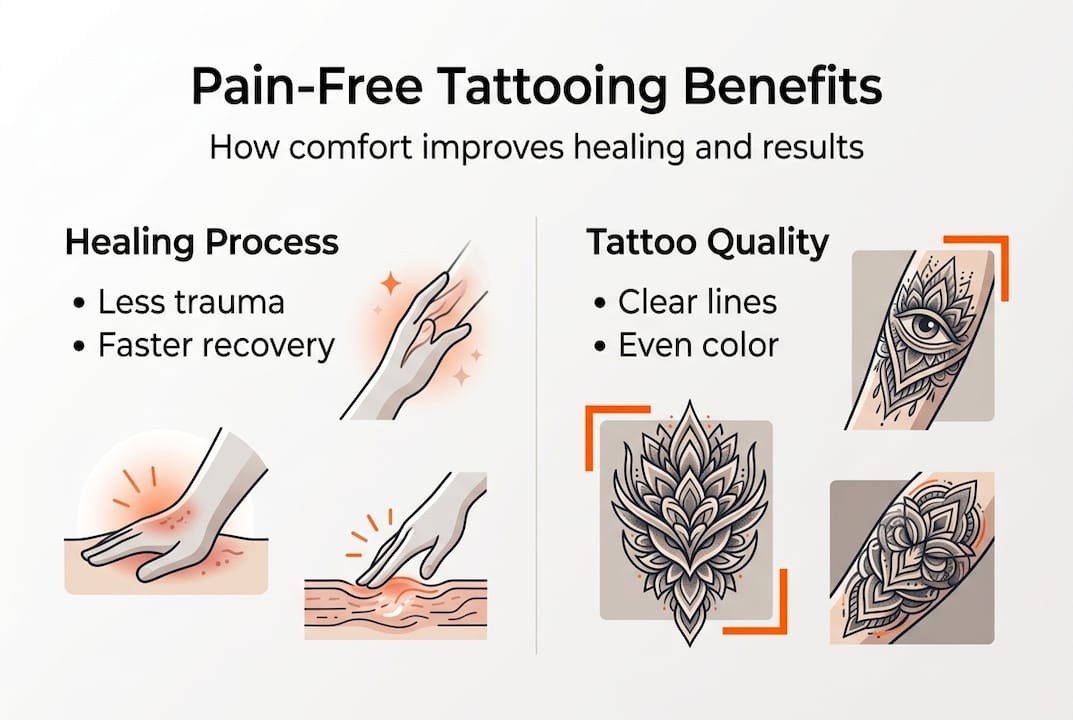
When a tattoo needle penetrates skin, it creates controlled trauma that triggers your body’s inflammatory response. In vitro tattooed skin models show acute inflammation peaks at 24-48h post-tattooing, subsiding by day 4-7 as your immune system processes the ink and begins repair. This inflammatory cascade involves releasing cytokines like IL-6 and IL-8, which signal tissue damage and recruit healing cells to the area. The intensity of this response directly correlates with mechanical trauma severity during the session.
Here’s what matters for your tattoo quality: excessive inflammation from unmanaged pain can interfere with optimal ink placement and retention. When clients flinch or tense from discomfort, artists must work harder to maintain consistent depth and pressure, potentially creating uneven trauma patterns. Less mechanical trauma means reduced cytokine release, which translates to a calmer healing environment where ink particles settle more uniformly in the dermal layer. The benefits of tattoo numbing cream extend beyond comfort to actual biological advantages during recovery.
The inflammation timeline reveals why pain management matters throughout your session. Peak inflammatory response occurs within the first two days after tattooing, but the groundwork gets laid during the actual session. Minimizing trauma as the needle works means starting the healing process from a better baseline. By day 4-7, inflammation subsides considerably, and your tattoo enters the proliferative healing phase where new skin forms over the ink.
Pro Tip: Schedule tattoo appointments when you’re well-rested and hydrated. Your pain threshold drops significantly when you’re tired or dehydrated, making even quality numbing products less effective at managing discomfort.
The connection between reduced trauma and tattoo appearance becomes clear when you consider how inflammation affects ink. Excessive swelling can push ink particles out of optimal placement or create uneven distribution as fluid accumulates. A controlled inflammatory response keeps ink where the artist intended, supporting that crisp, vibrant appearance you want long-term. This biological reality makes pain management not just a comfort issue but a quality concern for anyone serious about excellent tattoo results.
| Inflammation Phase | Timeline | Impact on Tattoo |
|---|---|---|
| Acute response | 0-48 hours | Cytokine release, initial swelling |
| Peak inflammation | 24-48 hours | Maximum immune activity |
| Subsiding phase | 4-7 days | Reduced swelling, healing begins |
| Proliferation | 7-14 days | New skin formation over ink |
How pain-free tattooing enhances client experience and session quality
Pain management transforms the dynamics of tattoo sessions in ways that benefit both clients and artists. When clients experience minimal discomfort, they remain still and relaxed throughout the process, eliminating the flinching and involuntary movements that disrupt artist precision. Pain-free methods enable longer sessions without flinching, reducing interruptions that break artist concentration and extend total appointment time. This stability allows artists to maintain consistent hand pressure and needle depth, critical factors in achieving even saturation and clean lines.
The duration of numbing effectiveness aligns well with typical session lengths. Quality numbing creams provide relief for approximately 3-4 hours, covering most single-sitting tattoos or substantial progress on larger pieces. This window allows artists to work continuously through complex sections without stopping to address client discomfort. Combining numbing products with strategic breaks every 30 minutes creates an optimal rhythm where clients can reset mentally and physically without losing numbing effectiveness.
Client comfort directly influences session productivity in measurable ways. When pain levels stay manageable, clients book longer appointments and commit to fewer total sessions for large pieces. This consolidation benefits everyone: clients spend less total time in the chair across multiple visits, artists can maintain creative flow on complex designs, and the tattoo heals as a more cohesive unit rather than in distinct sections that might show slight variations. The tattoo client comfort strategies that incorporate proper numbing create win-win scenarios.
Pro Tip: Apply numbing cream 45-60 minutes before your appointment starts, following product instructions precisely. Early application ensures maximum effectiveness when the needle first touches skin, setting a comfortable tone for the entire session.
The psychological component of pain-free tattooing deserves attention too. Clients who experience minimal discomfort during their first tattoo are significantly more likely to return for additional work and recommend the artist to others. This positive association builds client loyalty and expands artist reputations. Conversely, clients who endure high pain levels often delay or abandon plans for additional tattoos, even when they love the artwork itself. Managing pain isn’t just about immediate comfort but about fostering long-term relationships and enthusiasm for the art form.
Consider these session quality improvements from effective pain management:
- Reduced client movement allows for precise detail work and shading
- Fewer breaks mean maintaining consistent ink saturation across sections
- Lower stress levels keep clients’ skin in better condition throughout the session
- Artists can focus on creative execution rather than managing client distress
- Extended sessions become feasible for complex pieces requiring continuous work
The tattoo pain relief process creates tangible improvements in both experience and outcomes. When clients arrive prepared with proper numbing and artists structure sessions with strategic breaks, the entire appointment flows smoothly from start to finish. This professional approach elevates tattooing from an ordeal to be endured into an experience clients actually enjoy, fundamentally changing how people perceive and engage with the art form.
Comparing common pain-free tattooing methods and their effectiveness
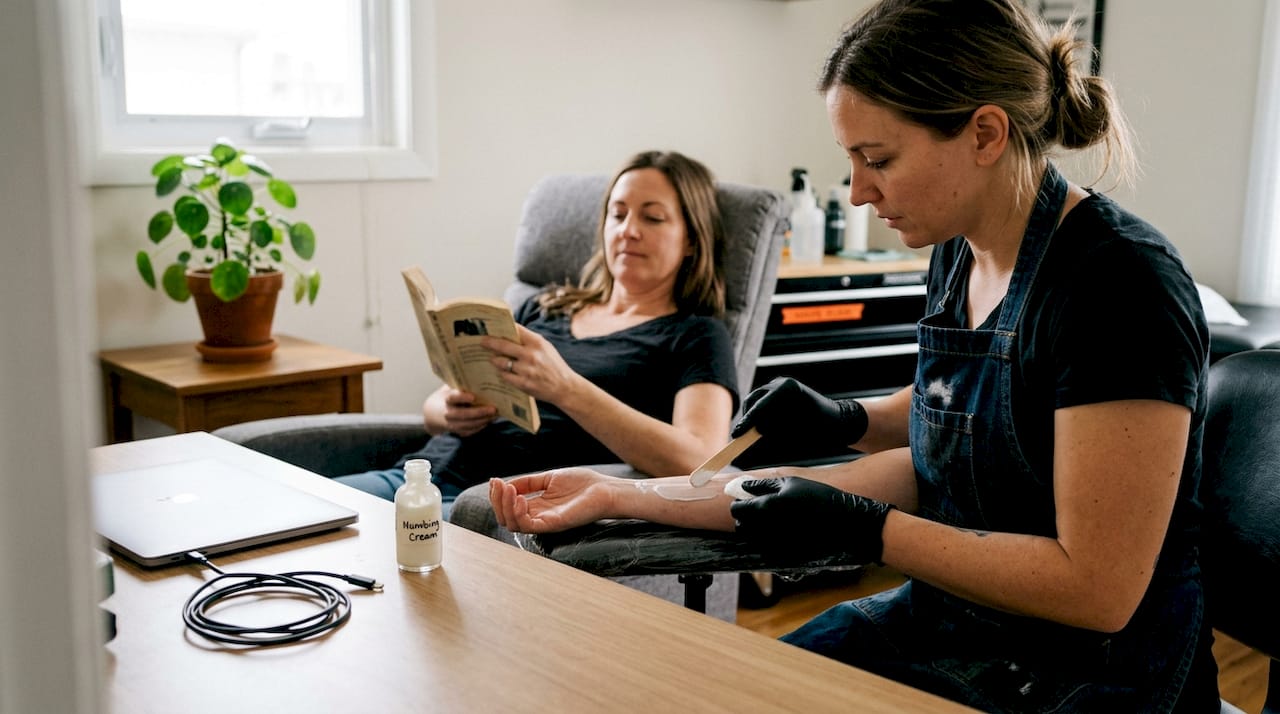
Multiple approaches exist for managing tattoo pain, but topical anesthetics consistently deliver the most reliable results for extended sessions. LMX4/EMLA creams preferred for numbing effectiveness, with average pain scores around 4/10 in microneedling studies, demonstrate significant discomfort reduction compared to unmanaged sessions. These pharmaceutical-grade products contain lidocaine or lidocaine-prilocaine combinations that temporarily block nerve signals in the application area, creating a numbing effect that lasts several hours.
The effectiveness of different numbing agents varies based on formulation strength and penetration depth. Professional-grade products designed specifically for tattooing typically contain higher lidocaine concentrations than over-the-counter options, providing more substantial pain relief. Application method matters too: creams that sit on skin under occlusive wrapping penetrate more effectively than those simply rubbed in and left exposed. Understanding these variables helps you choose products that match your pain sensitivity and session requirements.
| Method | Pain Reduction | Duration | Best For |
|---|---|---|---|
| Topical anesthetics (TKTX, EMLA) | High (pain scores 3-4/10) | 3-4 hours | All tattoo types, extended sessions |
| Cooling devices | Moderate | Continuous during use | Supplemental comfort, small areas |
| Vibration distraction | Low to moderate | Continuous during use | Sensitive clients, small tattoos |
| Breathing techniques | Low | Session duration | Anxiety management, mild discomfort |
| Hypnosis/meditation | Variable | Session duration | Highly receptive individuals |
Beyond topical anesthetics, several supplemental methods can enhance comfort. Cooling devices that blow cold air on the tattoo area provide temporary relief by overwhelming pain receptors with cold sensation. Vibration tools work similarly, creating competing sensory input that partially masks needle discomfort. While these methods offer some benefit, they lack the comprehensive pain blocking that quality numbing creams provide. Most professionals view them as complementary options rather than primary pain management solutions.
The top tattoo anesthetics 2025 reflect advances in formulation technology that improve both effectiveness and safety profiles. Modern products balance strong numbing capability with skin-friendly ingredients that minimize irritation risk. When comparing options, consider:
- Active ingredient concentration and type
- Onset time before full numbing effect
- Duration of effective pain relief
- Application method and preparation requirements
- Skin compatibility and potential sensitivity reactions
Client preference studies consistently show topical anesthetics outperform alternative methods for tattoo pain management. The combination of significant pain reduction, predictable duration, and ease of application makes them the practical choice for most situations. While some clients successfully use breathing techniques or meditation to manage mild discomfort, these approaches rarely suffice for extended sessions or particularly painful body areas. The tattoo numbing creams comparison helps identify which specific products deliver the best results for different scenarios.
Pro Tip: Test numbing cream on a small skin area 24 hours before your tattoo appointment to confirm you don’t have sensitivity reactions. This simple precaution prevents discovering allergies or irritation when you’re already committed to your session.
Choosing the right pain management approach depends on your individual pain tolerance, the tattoo’s location and size, and session length expectations. For most clients seeking reliable comfort during multi-hour sessions, pharmaceutical-grade topical anesthetics provide the most consistent results. Supplemental methods like controlled breathing or cooling can enhance comfort further but work best alongside primary numbing products rather than as replacements.
Practical steps to achieve pain-free tattoo sessions: preparation and care
Successful pain-free tattooing starts well before your appointment, with preparation steps that optimize both numbing effectiveness and skin condition. Preparation routines and hydration improve pain management and skin healing outcomes significantly. Your skin’s health directly affects how well it accepts numbing products and withstands the tattoo process, making pre-session care a critical component of comfort strategy.
Follow these preparation steps in the days leading up to your appointment:
-
Hydrate consistently for 3-5 days before your session. Well-hydrated skin maintains better elasticity and responds more favorably to both numbing products and tattooing. Drink water regularly throughout each day rather than trying to compensate with excessive intake the night before.
-
Avoid alcohol and blood-thinning medications for 24-48 hours prior. These substances increase bleeding during tattooing, which interferes with ink placement and extends healing time. They also reduce numbing cream effectiveness by altering blood flow patterns.
-
Protect the tattoo area from sun exposure for at least one week before. Sunburned or tanned skin shows increased sensitivity to pain and may react poorly to numbing products. Cover the area or use high-SPF sunscreen if sun exposure is unavoidable.
-
Moisturize the tattoo area daily with fragrance-free lotion. Healthy, supple skin accepts ink more readily and experiences less trauma during the process. Stop moisturizing 24 hours before your appointment to ensure numbing cream penetrates properly.
-
Eat a substantial meal 1-2 hours before your appointment. Low blood sugar dramatically reduces pain tolerance and can cause dizziness or nausea during extended sessions. Choose protein-rich foods that provide sustained energy.
-
Apply numbing cream according to product instructions, typically 45-60 minutes before the session. Cover the application area with plastic wrap to enhance penetration. Arrive at your appointment with the cream still in place for your artist to remove.
The skin preparation steps before tattoos extend beyond physical preparation to mental readiness. Approach your session well-rested and with realistic expectations about sensation levels. Even with excellent numbing, you’ll feel pressure and some discomfort, particularly as the session progresses. Understanding this helps you stay calm and relaxed throughout the process.
Pro Tip: Bring snacks and water to your appointment for consumption during breaks. Maintaining stable blood sugar and hydration throughout long sessions keeps your pain tolerance high and prevents fatigue that amplifies discomfort.
During the session itself, communicate openly with your artist about comfort levels. Quality professionals want you comfortable and will adjust their approach or suggest breaks when needed. Strategic breaks every 30 minutes allow you to reset mentally, use the restroom, and stretch without significantly impacting numbing effectiveness. These pauses also give your artist moments to assess their work and plan the next section.
Aftercare practices influence both healing quality and residual discomfort after your session ends. Clean the tattoo gently with antibacterial soap within a few hours of completion, then apply a thin layer of recommended aftercare product. The efficient tattoo numbing routines that incorporate proper aftercare minimize post-session inflammation and support optimal healing. Keep the area moisturized but not oversaturated, and avoid picking at scabs or exposing the tattoo to dirty environments.
Post-session discomfort typically peaks 24-48 hours after tattooing as initial numbing wears off and inflammation reaches maximum levels. Over-the-counter pain relievers like ibuprofen can manage this discomfort while reducing inflammation. Avoid aspirin or other blood thinners that might cause bleeding or slow healing. Most clients find post-tattoo discomfort manageable with basic care and resolves within 3-5 days as the healing process progresses.
Enhance your tattoo experience with premium numbing products
Achieving truly comfortable, pain-free tattoo sessions requires more than good intentions. You need proven numbing products formulated specifically for the unique demands of tattooing. Our specialized numbing creams deliver reliable pain relief that lasts throughout your session, letting you focus on the artwork rather than discomfort. Whether you’re getting your first small piece or sitting for hours on a complex design, the right numbing solution transforms your experience.

We offer professional-grade options designed for serious pain management. The 3x TKTX 40% bundle provides excellent value for multiple sessions or larger pieces requiring generous application. For maximum numbing power, TKTX 55% GOLD cream delivers the strongest formulation available, ideal for extended sessions or particularly sensitive areas. Complete your pain-free approach with premium Dermacain tattoo care that supports comfortable healing after your session ends. Every product comes with our satisfaction guarantee and free shipping on orders over 30 Euro throughout Europe.
Frequently asked questions
Why is pain management important during tattoo sessions?
Pain management minimizes client discomfort while reducing mechanical trauma that triggers excessive inflammation. Lower pain levels help clients remain still and relaxed, allowing artists to work with greater precision and consistency. This creates better conditions for optimal ink placement and supports faster, more vibrant healing outcomes that preserve tattoo quality long-term.
How long do numbing creams typically last during tattooing?
Most numbing creams provide effective pain relief for 3-4 hours when applied correctly. This duration covers typical single-session tattoos or substantial progress on larger pieces. Proper application technique, including occlusive wrapping during the onset period, maximizes both strength and duration of numbing effects throughout your appointment.
What are the best preparation steps to reduce tattoo pain?
Hydrate consistently for several days before your appointment to optimize skin condition and numbing effectiveness. Avoid alcohol and sun exposure for 24-48 hours prior, as these increase sensitivity and bleeding. Apply your recommended numbing cream 45-60 minutes before the session starts, following all product instructions precisely for maximum pain relief.
Can pain-free tattooing improve the final tattoo appearance?
Yes, reduced trauma and inflammation support more vibrant and well-healed tattoos. When clients remain still and comfortable, artists maintain consistent needle depth and pressure, creating even ink distribution. Lower inflammation levels during healing prevent excessive swelling that can disrupt ink placement, resulting in crisper lines and more saturated color that lasts.


