

Many clients walk into your studio worried about tattoo pain, and their anxiety can derail even the best session. Educating clients about numbing options isn’t just about comfort, it’s about building trust and setting realistic expectations that lead to better collaboration. When you explain how numbing works, address safety concerns, and normalize questions, you create an environment where clients feel informed and confident. This approach transforms nervous first-timers into relaxed participants who understand that numbing reduces sharp pain, not all sensation, leading to smoother sessions and happier outcomes.
Table of Contents
- Key takeaways
- Understanding client concerns about tattoo pain
- Preparing clients with clear numbing education and legal compliance
- Executing effective client consultations about numbing
- Verifying client understanding and managing expectations for pain
- Explore trusted numbing products for your studio
- Frequently asked questions about educating clients on tattoo numbing
Key Takeaways
| Point | Details |
|---|---|
| Client education expectations | Educating about numbing normalizes use and sets realistic pain expectations, which builds trust and improves collaboration. |
| European compliance | In Europe you must recommend only pharmacy licensed numbing products and require clients to purchase from licensed sources, with a mandatory 24 hour patch test before use. |
| Patch testing safety | Proper patch testing minimizes allergy risk and confirms safety before any numbing application. |
| Policies and timing | Your studio should publish clear guidelines on timing, coverage areas, and whether reapplication is needed during long sessions, including applying numbing 60 to 90 minutes before the appointment. |
Understanding client concerns about tattoo pain
Clients often arrive expecting complete numbness, which creates unrealistic expectations that can undermine your session. The truth is that numbing reduces sharp, stabbing sensations but doesn’t eliminate all feeling. When clients don’t understand this distinction, they may panic during the tattoo or blame the numbing product for not working. You need to address these misconceptions during initial contact, explaining that some pressure and vibration will remain even with the best numbing cream.
Many clients also fear allergic reactions or side effects because they’ve heard horror stories online without context. Without proper education, they may refuse numbing altogether or use unsafe products purchased from unverified sources. Educating via consultations using visuals like pain charts and before/after examples helps normalize asking questions and sets accurate pain expectations. This approach transforms fear into informed decision-making.
Common client misconceptions include believing numbing is dangerous, thinking it affects ink quality, or assuming all numbing products are identical. You can counter these myths by explaining that pharmacy-licensed products are tested for safety, that proper application doesn’t interfere with ink absorption, and that different concentrations serve different needs. When you take time to address numbing cream myths, you position yourself as a knowledgeable professional who prioritizes client wellbeing.
Pro Tip: Create a simple pain chart showing sensation levels with and without numbing. Use it during every consultation to visually demonstrate that numbing reduces pain from a 7-8 down to a 3-4, not to zero.
Key points to address with clients:
- Numbing reduces sharp pain but doesn’t eliminate all sensation
- Some pressure, vibration, and mild discomfort will remain
- Allergic reactions are rare with proper patch testing
- Pharmacy-licensed products are safe when used correctly
- Numbing doesn’t affect ink quality or healing when applied properly
Preparing clients with clear numbing education and legal compliance
European regulations require that you only recommend pharmacy-licensed numbing products, never supply them directly from your studio. This legal distinction protects both you and your clients while ensuring product quality and traceability. You must educate clients to purchase numbing creams from licensed pharmacies and emphasize the mandatory 24-hour patch test for allergies before any application. This preparation phase sets the foundation for safe, compliant numbing use.
Recommend numbing specifically for clients with high anxiety, sensitive skin, or tattoos on particularly painful areas like ribs, feet, or spine. However, also teach alternative pain management techniques like controlled breathing, distraction methods, and taking breaks. Not every client needs numbing, and offering multiple options demonstrates your expertise in pain management beyond just topical products.
Your studio should have clear written policies about numbing application timing, coverage areas, and limitations. For example, specify that clients must apply numbing 60-90 minutes before their appointment, that it works best on certain body areas, and that reapplication during long sessions may be necessary. When you document these policies and share them during booking, you eliminate confusion and create accountability.
| Preparation Step | Timeline | Responsibility |
|---|---|---|
| Purchase pharmacy-licensed numbing | 1 week before appointment | Client |
| Conduct patch test | 24 hours before session | Client at home |
| Review numbing policies | During booking confirmation | Studio |
| Apply numbing cream | 60-90 minutes pre-session | Client |
| Verify application and consent | Immediately before tattooing | Artist |
Pro Tip: Send clients a preparation checklist via email after booking that includes where to buy licensed numbing products, patch test instructions, and application timing. This reduces last-minute confusion and no-shows.
Essential preparation elements:
- Verify clients understand European legal requirements for numbing products
- Provide written instructions for the 24-hour patch test protocol
- Explain which body areas respond best to numbing
- Teach breathing exercises and distraction techniques as alternatives
- Document your studio’s numbing policies in booking confirmations
Understanding tattoo numbing cream regulations ensures you stay compliant while helping clients access safe products. Your role is educator and advisor, not supplier, which protects your business while empowering clients to make informed choices.
Executing effective client consultations about numbing
Your consultation is where education transforms into action. Start by showing pain charts that illustrate sensation levels across different body areas, then overlay how numbing affects each zone. Visual aids make abstract concepts concrete, helping clients understand that numbing works better on fleshy areas than bony spots. Follow up with before/after photos of clients who used numbing, emphasizing their comfort levels and final results.
Demonstrate proper numbing cream application using a practice pad or your own arm. Show clients the correct amount, how to spread it evenly, and why covering the area with plastic wrap enhances absorption. This hands-on approach removes mystery and builds confidence. When clients see exactly how to apply numbing, they’re more likely to do it correctly at home.
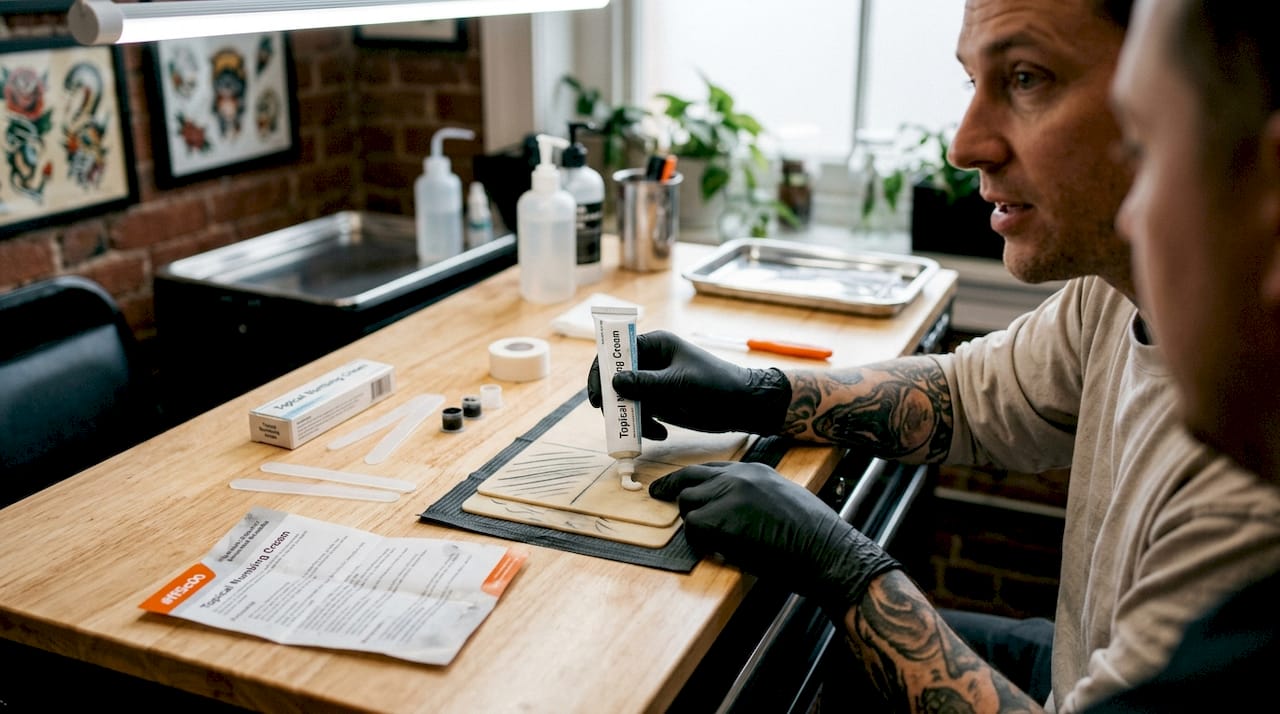
Frame numbing as collaboration for best results, not a sign of weakness. Explain that comfortable clients sit still longer, allowing you to work more precisely and complete larger pieces in fewer sessions. This reframing normalizes asking about numbing and positions it as a professional tool rather than a crutch. Discuss each client’s pain tolerance openly, asking about previous tattoo experiences or medical procedures to gauge their needs.
Outline your studio’s specific policies during this conversation, including patch testing requirements, application timing, and what happens if a client forgets to apply numbing. Clear policies prevent misunderstandings and set professional boundaries. When clients know exactly what to expect, they arrive prepared and confident.
Consultation talking points:
- Display pain intensity charts for different body areas
- Show application technique using visual demonstrations
- Explain timing: apply 60-90 minutes before the session
- Discuss how numbing reduces sharp pain but leaves some sensation
- Review studio policies on patch testing and product requirements
- Ask about client pain tolerance and previous experiences
Step-by-step consultation process:
- Review client’s tattoo design and placement on pain chart
- Assess client anxiety level and pain tolerance through conversation
- Demonstrate proper numbing cream application technique
- Explain realistic sensation expectations with and without numbing
- Provide written instructions for patch testing and application
- Schedule follow-up to confirm patch test results before session
By educating clients about numbing systematically, you create informed partners in the tattoo process. This collaborative approach improves outcomes and builds long-term client relationships. Remember to document client assessment before numbing in your records to track preferences and reactions for future sessions.
Verifying client understanding and managing expectations for pain
Before starting any tattoo, confirm client comprehension through verbal questioning and short quizzes. Ask clients to explain back to you what numbing does, when they applied it, and what sensations they expect during the session. This active recall technique reveals gaps in understanding that you can address immediately. If a client says they expect zero pain, you know to reinforce realistic expectations before picking up your machine.
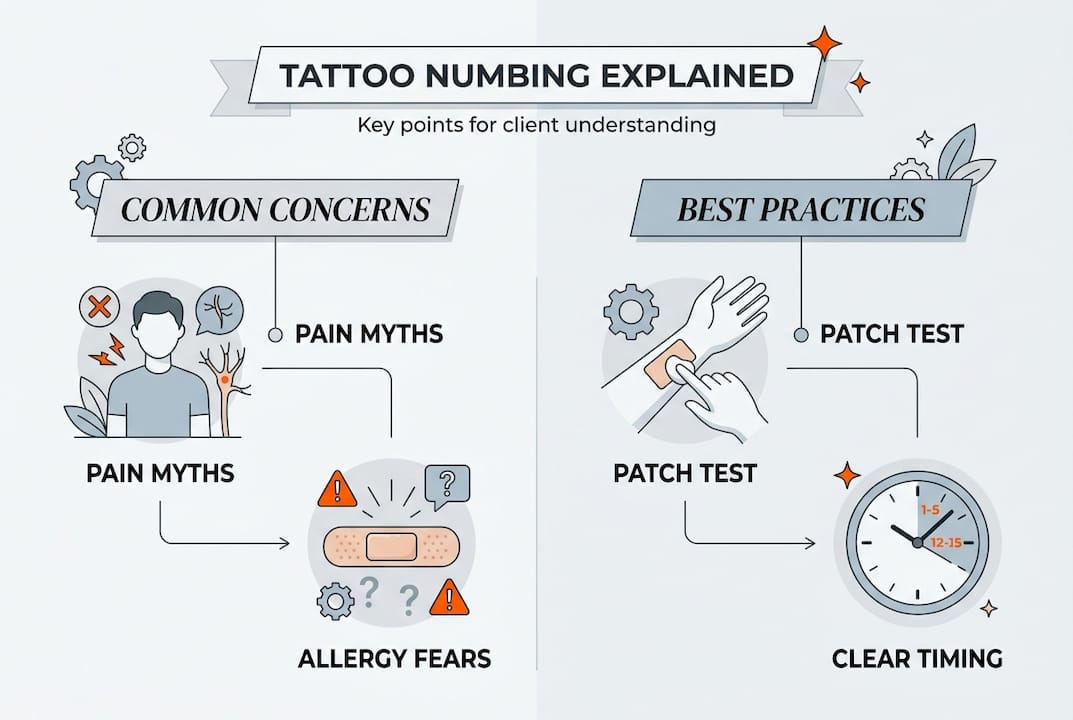
Compare numbing benefits directly against non-numbing alternatives to help clients make informed choices. Some clients prefer to experience natural sensation for their first small tattoo, while others need maximum comfort for large pieces. Present both options without judgment, emphasizing that either choice is valid based on individual needs and preferences.
| Aspect | With Numbing Cream | Without Numbing |
|---|---|---|
| Pain intensity | Reduced to 3-4 out of 10 | Typically 6-8 out of 10 |
| Session duration tolerance | Can sit 3-4 hours comfortably | Usually 1-2 hours before breaks |
| Application requirement | 60-90 minutes pre-session | None |
| Cost | Additional product purchase | No extra cost |
| Sensation type | Pressure and vibration remain | Full sharp, burning sensation |
Remind clients that numbing doesn’t eliminate all pain, particularly as the cream wears off during longer sessions. Prepare them for possible mild discomfort, skin sensitivity, or the need for breaks. When you set realistic expectations upfront, clients trust you more and handle discomfort better because they anticipated it.
Provide anxiety management tips beyond numbing, including controlled breathing patterns, focusing on music or conversation, and taking scheduled breaks. Some clients find that combining numbing with breathing exercises creates optimal comfort. Others discover they don’t need numbing once they try these techniques during their first session.
Pro Tip: Have clients rate their expected pain level on a scale of 1-10 before starting, then check in every 30 minutes during the session. This ongoing dialogue helps you adjust technique and identify when numbing is wearing off.
Verification checklist:
- Ask clients to explain what numbing does in their own words
- Confirm they completed the 24-hour patch test without reaction
- Verify application timing and coverage area
- Review expected sensations: pressure, vibration, mild discomfort
- Teach breathing techniques for anxiety management
- Establish a signal system for breaks or excessive discomfort
Understanding why clients request numbing creams helps you tailor your education approach. Some seek comfort, others want to complete large pieces faster, and many simply want to reduce anxiety. By exploring advantages of numbing cream for tattoos openly, you empower clients to make choices aligned with their goals and comfort levels.
Explore trusted numbing products for your studio
When clients ask where to buy quality numbing products, recommend pharmacy-licensed options that meet European compliance standards. TKTX numbing creams offer different concentrations to match client needs, from moderate comfort to maximum pain reduction. The 3x TKTX 40% provides reliable numbing for standard sessions, while 3x TKTX 55% GOLD delivers enhanced relief for sensitive areas or longer pieces.

For studios looking to guide clients toward premium options, the TKTX 55% GOLD cream combines maximum numbing with skin-conditioning ingredients that support the tattoo process. All TKTX products come with a satisfaction guarantee and free shipping on orders over 30 Euro, making them accessible across Europe. By directing clients to trusted sources, you ensure they receive genuine products that work as expected, protecting both their safety and your professional reputation.
Frequently asked questions about educating clients on tattoo numbing
What are the legal requirements for recommending numbing products in Europe?
You must only recommend pharmacy-licensed numbing products and cannot supply them directly from your studio. Clients should purchase products from licensed pharmacies, and you should verify compliance before sessions to protect your business and ensure product quality.
How do I explain realistic numbing effects without discouraging clients?
Frame numbing as reducing sharp pain to manageable levels, not eliminating all sensation. Use pain scales showing reduction from 7-8 down to 3-4, and emphasize that this allows longer, more comfortable sessions with better results.
Why is patch testing mandatory before using numbing cream?
Patch testing identifies potential allergic reactions 24 hours before your session, preventing dangerous reactions during tattooing. It’s a legal requirement in many European jurisdictions and demonstrates your commitment to client safety and professional standards.
What should I do if a client has unrealistic expectations about numbing?
Use visual aids and verbal confirmation to correct misconceptions immediately. Ask clients to explain back what numbing does, and if they mention complete numbness, clarify that pressure and vibration remain. Document this conversation to protect yourself.
How can I help anxious clients who are afraid of both pain and numbing?
Offer a multi-layered approach combining numbing with breathing exercises, breaks, and distraction techniques. Start with a small test area to build confidence, and emphasize that they control the pace. Some clients feel empowered by trying without numbing first, then adding it for larger pieces.


