

Finding reliable ways to ease tattoo pain often becomes a priority for tattoo enthusiasts and artists who want a smoother experience. As body art grows in popularity across Central Europe, the demand for effective and safe numbing methods has never been higher. From traditional practices to modern formulas like topical anesthetic creams that temporarily numb skin by blocking nerve signals, this guide breaks down what really works—helping you choose whether solutions like TKTX or Dermacain best suit your needs.
Table of Contents
- What Are Tattoo Numbing Methods?
- Ancient Tattoo Pain Relief Techniques
- From Evolving Tools to Early Creams
- Modern Numbing Creams: Tktx and Dermacain
- Risks, Effectiveness, and Safety Measures
Key Takeaways
| Point | Details |
|---|---|
| Numbing Methods | Various techniques, including topical creams and injections, are available to minimize pain during tattooing. Consult with a tattoo artist for the best option based on skin type and tattoo design. |
| Ancient Techniques | Ancient cultures used rituals and natural sedatives to cope with tattoo pain, viewing it as a test of strength and spiritual significance. Understanding these methods can provide context for modern practices. |
| Modern Advancements | Modern numbing creams like TKTX and Dermacain offer fast-acting relief and require proper application to be effective. Always perform patch tests before using any numbing product. |
| Safety Considerations | Risks can arise from incorrect usage of numbing creams, including severe health complications. It’s essential to follow application guidelines and consult professionals for safety. |
What Are Tattoo Numbing Methods?
Tattoo numbing methods are specialized techniques designed to reduce or eliminate pain during the tattooing process. These approaches involve applying topical anesthetic products that temporarily block nerve signals in the skin, making tattoo sessions more comfortable for clients. Local anesthetic creams provide targeted pain relief by numbing the specific area being tattooed.
Traditionally, tattoo numbing methods fall into several primary categories:
- Topical Creams: Surface-applied anesthetic products containing lidocaine or benzocaine
- Spray Anesthetics: Quick-acting numbing agents applied directly to the skin
- Nerve Block Injections: Professional medical interventions for more extensive tattoo work
- Cold Therapy: Using ice or cooling techniques to reduce skin sensitivity
The most common numbing method involves applying topical creams containing local anesthetics before the tattoo session. These creams work by temporarily blocking nerve signals that transmit pain sensations, creating a temporary numbness in the targeted skin area. Typically, these products are applied 30-45 minutes before tattooing and covered with plastic wrap to enhance absorption.
Pro tip: Always consult with your tattoo artist about the best numbing method for your specific tattoo design and skin type to ensure optimal pain management and tattoo quality.
Ancient Tattoo Pain Relief Techniques
Tattoo practices in ancient civilizations were deeply rooted in cultural and ritualistic traditions, with pain being an integral part of the tattoo experience. Archeological records demonstrate that tattoos date back to the Neolithic period, where enduring pain was often seen as a test of personal strength and spiritual significance.
Ancient cultures developed various methods to manage and cope with tattoo-related pain:
- Ritualistic Preparation: Mental conditioning and spiritual ceremonies to increase pain tolerance
- Natural Sedatives: Using herbal compounds and plant-based substances
- Communal Support: Group rituals that provided psychological comfort
- Ceremonial Distraction: Rhythmic music, chanting, and collective engagement
In ancient Egypt and other early societies, tattoo application involved significant physical discomfort with primitive tools like sharpened bones, thorns, and rudimentary metal implements. The process was often slow and painful, with no modern anesthetic techniques available. Tattoo recipients would rely on mental fortitude, cultural practices, and potential herbal remedies to manage their pain during the intricate process.
These early tattoo practices reveal that pain was not just a side effect but a crucial component of the tattooing experience, symbolizing transformation, endurance, and spiritual passage. The techniques used were less about eliminating pain and more about transcending it through cultural and psychological mechanisms.
Here’s a comparison of ancient versus modern tattoo pain relief approaches:
| Era | Main Methods Used | Pain Management Focus | Typical Tools |
|---|---|---|---|
| Ancient Societies | Rituals, herbs, distraction | Enduring/transcending pain | Bones, thorns, hand tools |
| Modern Practices | Topical anesthetics, devices | Minimizing physical discomfort | Microneedle machines, creams |
Pro tip: Research the specific cultural context of traditional tattooing in different societies to better understand their unique pain management approaches.
From Evolving Tools to Early Creams
Tattoo technology has undergone a remarkable transformation, progressing from primitive hand tools to sophisticated pain management techniques. Tattooing techniques evolved dramatically, shifting from traditional hand-tapping methods to precision microneedle machines that dramatically improved both safety and efficiency.
The progression of tattoo tools and pain relief methods can be categorized into several key stages:
- Traditional Hand Tools: Sharpened bones, thorns, and rudimentary metal implements
- Manual Tapping Techniques: Handheld tools creating intricate patterns
- Mechanical Tattoo Machines: Introduction of electric-powered devices
- Modern Precision Instruments: Advanced microneedle technologies
Local anesthetic developments marked a significant breakthrough in tattoo pain management. Early creams containing lidocaine represented the first systematic approach to reducing discomfort during the tattooing process. These topical treatments aimed to minimize pain while addressing potential inflammation, though they also introduced new challenges like potential allergic reactions and skin sensitivities.
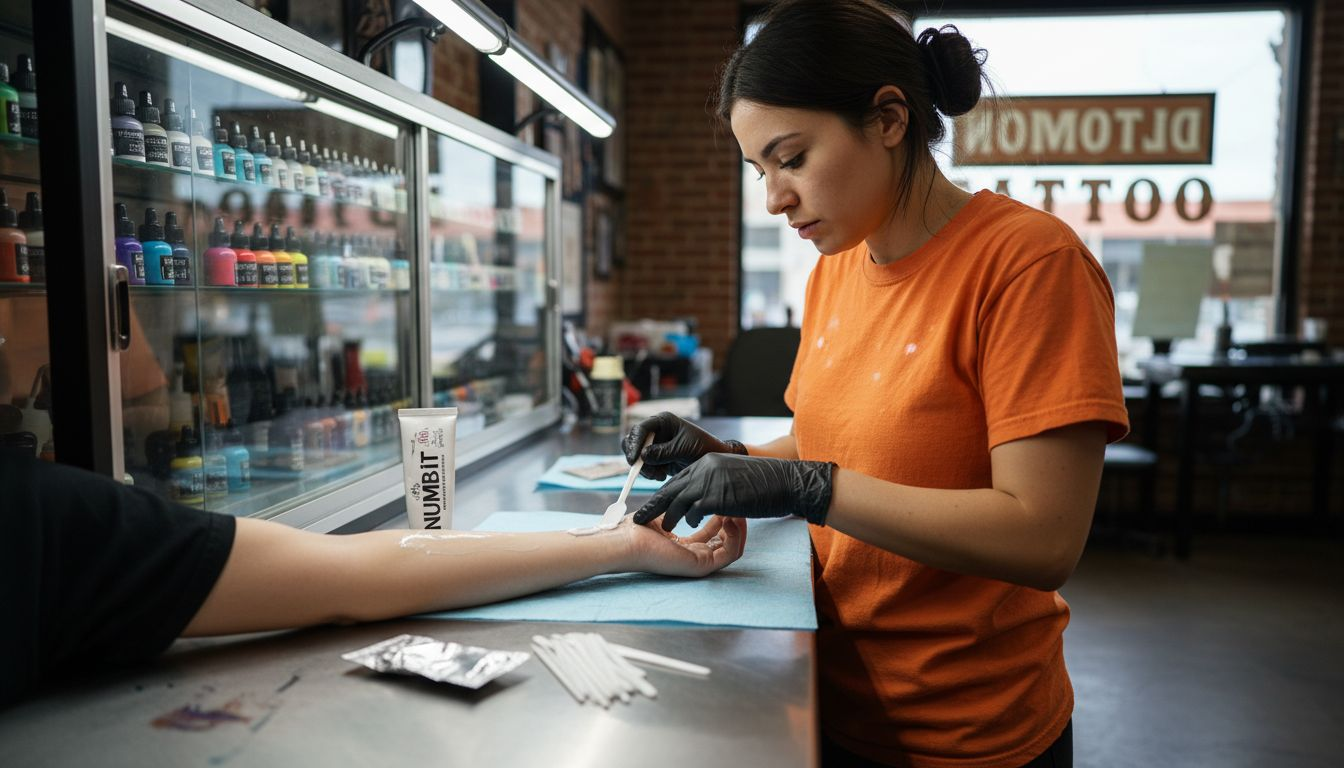
The transition from purely mechanical tools to medically informed pain management reflects a broader shift in understanding human physiology and comfort during invasive procedures. Tattoo artists and medical professionals began collaborating to develop more sophisticated numbing techniques that balanced effectiveness with safety, ultimately transforming the tattoo experience from a purely endurance-based ritual to a more comfortable and personalized art form.
Pro tip: Always consult with a professional tattoo artist about the most appropriate numbing method for your specific skin type and tattoo design.
Modern Numbing Creams: TKTX and Dermacain
Modern tattoo numbing technologies have revolutionized pain management in body art, offering unprecedented comfort for individuals seeking tattoos. TKTX numbing creams represent a significant advancement in external analgesic solutions designed to minimize discomfort during tattooing procedures.
Key characteristics of modern numbing cream technologies include:
- Fast-Acting Formulations: Rapid pain reduction within minutes of application
- Extended Numbness: Sustained pain relief lasting several hours
- Targeted Application: Precise coverage of specific tattoo areas
- Minimal Side Effects: Reduced skin irritation compared to traditional methods
Dermacain offers a comprehensive topical anesthetic solution that combines multiple active ingredients like procaine, tetracaine, and prilocaine. These advanced creams typically require 50-60 minutes of application with plastic wrap to enhance absorption, providing a scientifically engineered approach to pain management during tattoo sessions.
The evolution of numbing creams reflects a broader trend toward patient comfort and personalized pain management. Modern formulations balance effectiveness with safety, addressing previous limitations of early anesthetic techniques while providing tattoo enthusiasts with more control over their pain experience.
Pro tip: Always perform a skin patch test with numbing creams at least 24 hours before your tattoo to check for potential allergic reactions.
Risks, Effectiveness, and Safety Measures
Tattoo numbing methods come with significant safety considerations that every tattoo enthusiast must understand. FDA warnings highlight critical safety risks associated with improper use of topical anesthetic creams, including potential severe side effects that extend beyond typical skin reactions.
Key safety risks and precautions include:
- Ingredient Concentration: Potential dangers from excessive anesthetic levels
- Application Area: Risks increase when applied to large or broken skin surfaces
- Absorption Rates: Higher risk of systemic complications
- Individual Sensitivity: Varying reactions based on personal health conditions
Serious health complications can arise from misusing numbing creams, including potentially life-threatening conditions such as seizures and respiratory difficulties. Medical professionals emphasize the importance of following precise application guidelines, understanding personal health limitations, and consulting with healthcare providers before using any topical anesthetic.
To maximize safety, tattoo enthusiasts must prioritize professional guidance, carefully read product instructions, and remain vigilant about potential adverse reactions. Understanding the delicate balance between pain management and personal health is crucial in making informed decisions about numbing cream usage.
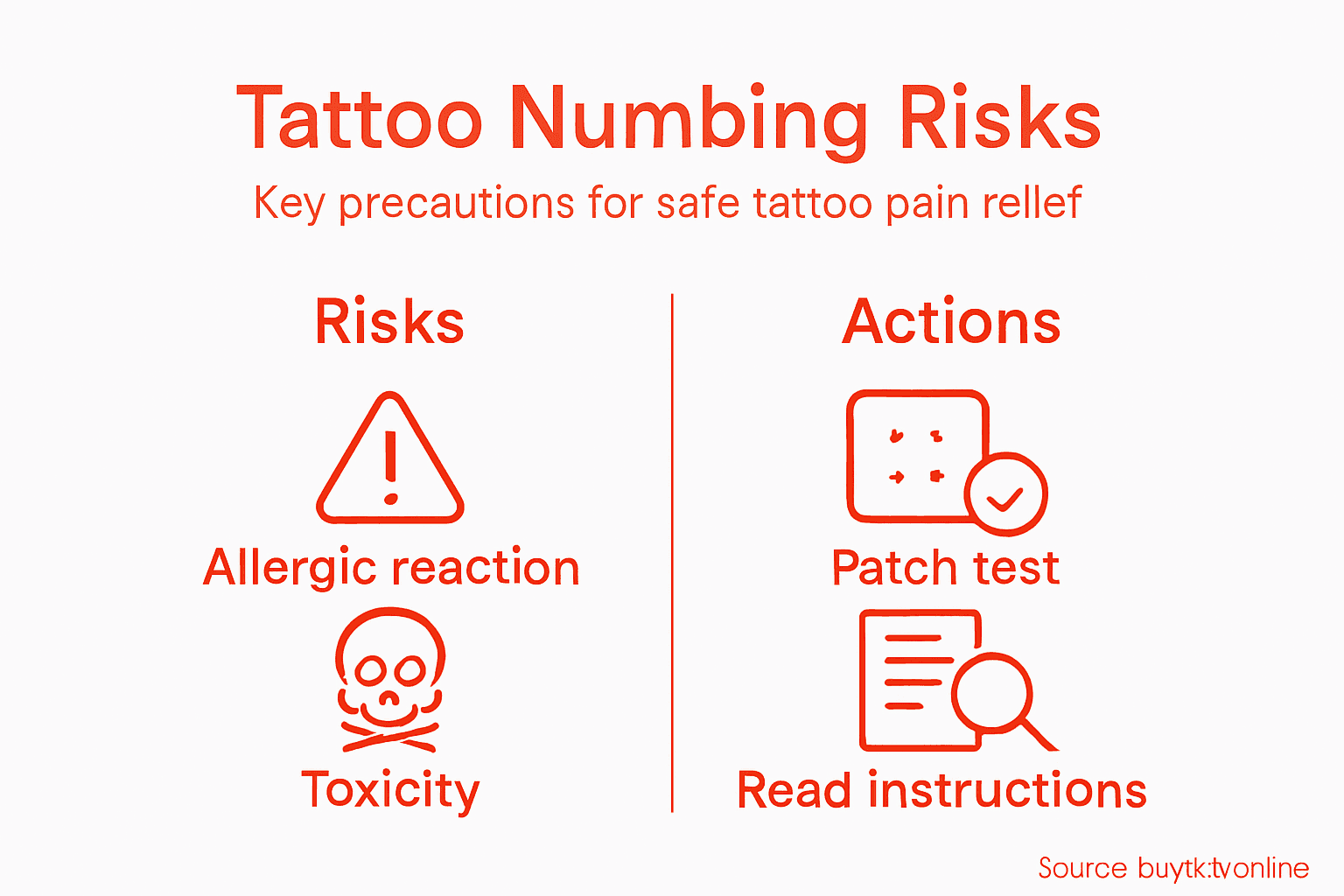
The table below summarizes key safety considerations for using tattoo numbing products:
| Concern | Risk Description | Recommended Action |
|---|---|---|
| Ingredient concentration | Excess anesthetic may cause toxicity | Use only approved dosage |
| Application area | Large areas increase absorption risks | Limit to small, intact skin zones |
| Sensitivity/allergies | Possible severe individual reactions | Always patch-test in advance |
| Application guidelines | Overuse may trigger complications | Follow product instructions |
Pro tip: Consult with both your tattoo artist and a healthcare professional before using any numbing cream to ensure personal safety and appropriate application.
Experience Pain-Free Tattoos with Proven Numbing Creams
The history of tattoo numbing methods shows how far pain management has come from ancient rituals to modern anesthetic creams. If you want to skip the discomfort of traditional tattooing and enjoy a nearly painless experience for up to three hours, look no further. Our Featured Products – TKTX obchod include TKTX and Dermacain creams, trusted across Europe for their fast-acting, long-lasting numbing effects. These creams block pain signals safely and effectively so you can focus on the art without the pain.

Don’t let pain hold you back from expressing yourself. Visit https://buytktx.online today to explore our full range of numbing solutions with free shipping on orders over 30 Euro and a customer satisfaction guarantee. Start your pain-free tattoo journey now and transform how you experience ink.
Frequently Asked Questions
What are the common methods of tattoo numbing?
Tattoo numbing methods primarily include topical creams, spray anesthetics, nerve block injections, and cold therapy. Topical creams with local anesthetics are the most commonly used for pain management during tattooing.
How do modern tattoo numbing creams work?
Modern tattoo numbing creams, such as TKTX and Dermacain, work by temporarily blocking nerve signals in the skin to reduce pain. They usually require 30-60 minutes of application before the tattoo process and can provide extended numbness for several hours.
Are there any risks associated with using tattoo numbing creams?
Yes, there are risks associated with tattoo numbing creams, including potential allergic reactions, toxic effects from excessive anesthetic concentrations, and complications if applied to large or broken areas of skin. It’s essential to follow application guidelines and consult with a healthcare provider if needed.
How have tattoo pain relief techniques evolved over time?
Tattoo pain relief techniques have evolved from ancient methods that relied on ritualistic practices and natural sedatives to modern topical anesthetics and techniques that prioritize comfort. The introduction of electric tattoo machines and advanced numbing creams has significantly transformed the tattoo experience, making it more bearable for clients.


