

No two tattoos feel the same, and that’s not just about the design. Where you place your tattoo matters just as much as how long you sit in the chair. Skin thickness, nerve density, and bone proximity are the main factors that determine how much a tattoo hurts, and these principles apply to everyone, whether you’re getting inked in Berlin, Barcelona, or Budapest. If you’re planning your first tattoo or adding to your collection, understanding pain zones can save you from a session you weren’t ready for.
Table of Contents
- What are tattoo pain zones?
- Tattoo pain chart: Least, moderate, and most painful zones
- Why do tattoos hurt more on some body parts?
- Are there really pain-free tattoo zones?
- Expert insights: What really affects tattoo pain?
- How to use tattoo pain zones when planning your artwork
- Enhance your tattoo comfort with trusted numbing solutions
- Frequently asked questions
Key Takeaways
| Point | Details |
|---|---|
| Pain varies by zone | Tattoo pain largely depends on body part, nerve density, and bone proximity. |
| No pain-free spots | All tattoos come with some pain but choosing low-sensitivity areas reduces discomfort. |
| Prepare for your session | Mental prep, hydration, and good habits can lessen your perceived tattoo pain. |
| Expert tips matter | Following artist and client comfort advice can make your tattoo session much more bearable. |
| Plan with pain zones | Use pain charts to select tattoo placements for a better first or next experience. |
What are tattoo pain zones?
Tattoo pain zones are distinct regions of the body that experience different levels of discomfort when tattooed. Think of your body as a map, where some territories are calm and others are rough terrain. The difference comes down to anatomy.
Four key factors determine how much a zone hurts:
- Skin thickness: Thicker skin absorbs needle impact better, reducing pain signals.
- Fat and muscle padding: More cushioning means less vibration reaching nerves and bone.
- Bone proximity: Areas where skin sits directly over bone, like the spine or ribs, transmit pain more intensely.
- Nerve density: High-nerve areas like the hands, feet, and neck are far more sensitive.
“Tattoo pain zones are determined primarily by skin thickness, fat padding, bone proximity, and nerve density.”
These principles are universal. Pain data is based on general human anatomy, so whether you’re a first-timer in Amsterdam or a seasoned collector in Rome, the same zones apply to you. If you want to go deeper on managing discomfort, pain management for tattoos is a great place to start.
With the basics set, let’s break down which specific areas of the body land in these different pain zones.
Tattoo pain chart: Least, moderate, and most painful zones
Not all pain is created equal. Here’s how common tattoo placements stack up on a scale from 2 to 10, where 2 is barely noticeable and 10 is intense.
| Body zone | Pain level (out of 10) | Key reason |
|---|---|---|
| Outer arm | 2 to 3 | Thick skin, good muscle padding |
| Thigh | 2 to 4 | Large muscle mass, fewer nerve endings |
| Calf | 3 to 4 | Moderate padding, low nerve density |
| Upper back | 3 to 5 | Wide flat surface, manageable sensitivity |
| Forearm | 4 to 5 | Some nerve exposure, moderate skin |
| Shoulder | 4 to 5 | Decent padding but bony edges |
| Chest | 5 to 6 | Thin skin near sternum, some bone |
| Stomach | 5 to 7 | Soft tissue but high nerve sensitivity |
| Ribs | 7 to 9 | Thin skin directly over bone |
| Spine | 8 to 10 | Bone proximity, dense nerve clusters |
| Feet and hands | 7 to 9 | Thin skin, many nerve endings |
| Neck and groin | 8 to 10 | Extremely high nerve density |
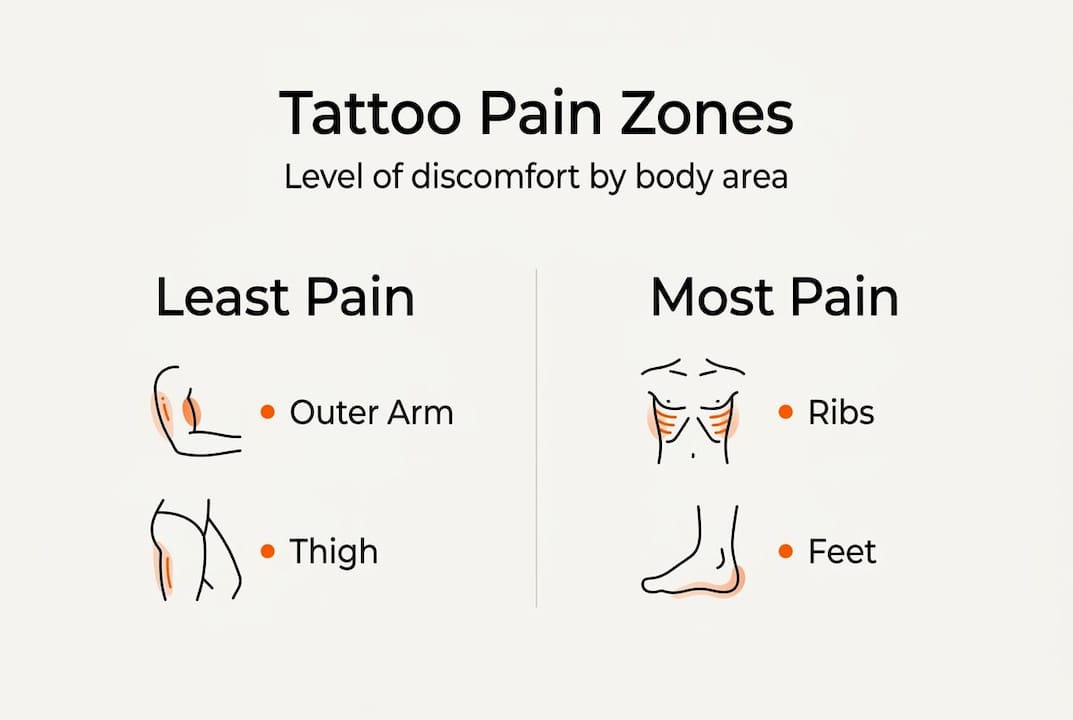
According to pain zone research, the least painful areas include the outer arm, thigh, calf, and upper back, while the most painful include the ribs, spine, feet, hands, neck, and groin.
Low-pain favorites for beginners:
- Outer upper arm
- Outer thigh
- Calf
- Upper back (away from the spine)
High-pain zones to approach with caution:
- Ribs and side torso
- Spine and lower back center
- Feet, ankles, and hands
- Neck and armpits
Use this chart when planning your next piece. If you’re new to tattooing, starting with a low-pain zone builds confidence and helps you understand your personal tolerance. For more ideas, check out pain free tattoo methods that work well for beginners.
Why do tattoos hurt more on some body parts?
Knowing the pain ratings is helpful, but why do certain spots actually hurt more? Let’s break down the science.
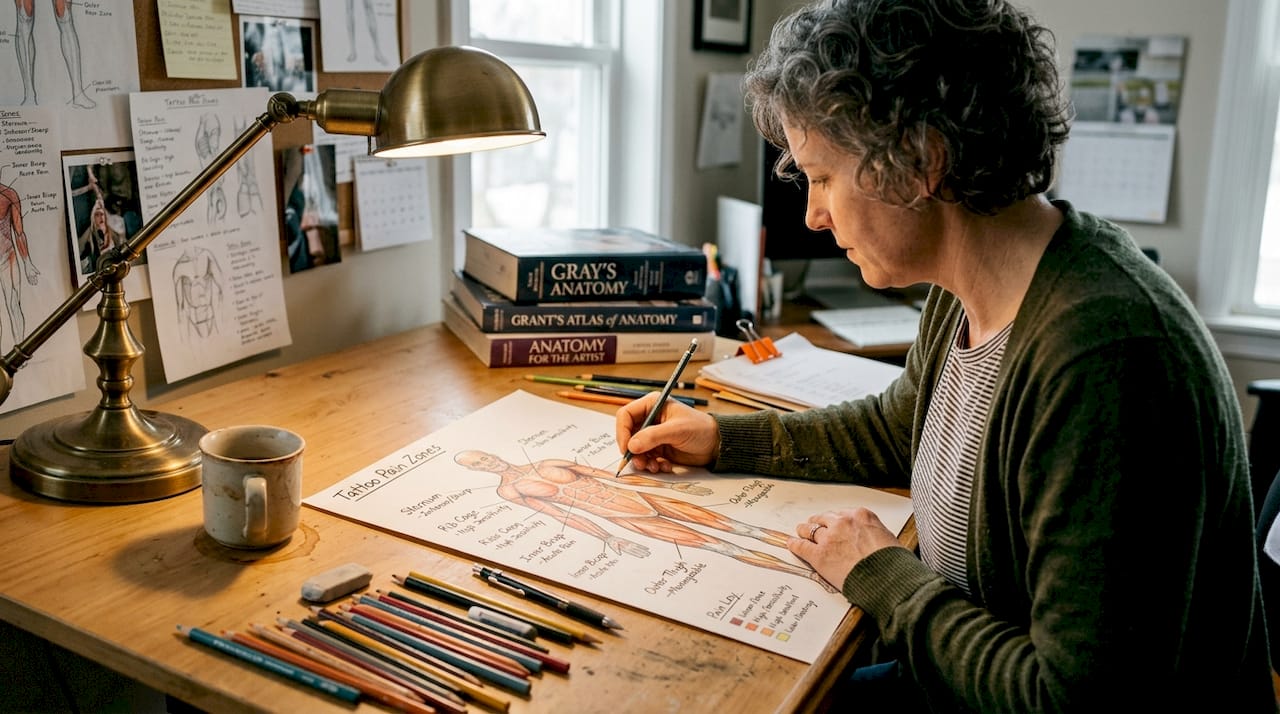
The needle used in tattooing punctures the skin thousands of times per minute. When that needle hits an area with thin skin and little fat, the vibration travels directly to nerves and bone. That’s why your ribs feel like a jackhammer compared to your thigh.
Beyond anatomy, several personal factors also affect how much pain you feel:
- Mental state: Anxiety amplifies pain signals. A calm mindset genuinely reduces how much you feel.
- Hydration: Dehydrated skin is less elastic and more sensitive to needle impact.
- Rest: Fatigue lowers your pain threshold significantly.
- Hormonal cycles: Some people report heightened sensitivity during certain phases of their menstrual cycle.
- Medications: Blood thinners and some supplements can increase sensitivity and bleeding.
As pain research confirms, pain is subjective and charts are averages. Mental preparation, hydration, and rest reduce pain perception more than your body location alone.
Interestingly, some experts note that after the initial sting, the body releases endorphins that create a mild natural high. Others caution that hormonal and menstrual cycles can significantly heighten sensitivity on certain days.
Pro Tip: Eat a solid meal two hours before your session, drink plenty of water the day before, and sleep well the night prior. These three steps alone can make a noticeable difference in how you handle the needle.
If you’re weighing your options for managing discomfort, reading about tattoo numbing cream pros and cons can help you decide what’s right for you. You can also explore tattoo client comfort strategies for a full picture of what works.
Are there really pain-free tattoo zones?
At this point, you might wonder if avoiding pain altogether is possible, so let’s tackle the myth of pain-free zones.
The honest answer is no. Every tattoo involves some level of discomfort because the process requires a needle breaking the skin. Even the least painful zones can feel sensitive depending on your personal threshold, the artist’s technique, and how long the session runs.
“There are no truly pain-free tattoo zones, but low-pain starting points are ideal for beginners and first-timers.”
That said, you can absolutely minimize discomfort with smart preparation. Here’s a practical checklist:
- Choose a low-pain zone for your first tattoo to build confidence.
- Sleep at least 7 to 8 hours the night before your appointment.
- Eat a balanced meal two hours before sitting down.
- Stay hydrated throughout the day leading up to your session.
- Communicate with your artist about taking short breaks if needed.
- Avoid alcohol for at least 24 hours before your appointment.
- Wear comfortable clothing that gives easy access to the tattoo area.
Pro Tip: Ask your tattoo artist about their preferred pacing. Many experienced artists build in natural pauses during longer sessions, which gives your nervous system a chance to reset and makes the overall experience far more manageable.
For a step-by-step look at how professionals handle pain during sessions, the tattoo numbing workflow guide is worth reading. You can also find more comfort-focused advice in the tattoo pain relief process resource.
Expert insights: What really affects tattoo pain?
Beyond the basics, here’s what artists and pain experts say about the real experience of tattoo pain.
One of the most surprising findings is that many people actually enjoy the sensation after the first few minutes. Endorphin release during tattooing can create a mild euphoric feeling, which is why some clients describe the experience as addictive rather than purely painful.
Here’s what experts consistently highlight:
- First-timers often overestimate pain because anxiety amplifies the anticipation.
- Experienced collectors tend to manage pain better because they know what to expect.
- Hormonal fluctuations can make the same spot feel very different on different days.
- Certain medications like blood thinners or aspirin increase sensitivity and should be avoided before sessions.
- Numbing creams are not universally endorsed by all artists, as some feel they can alter skin texture and affect ink absorption.
“The endorphin response is real, but so is the risk of heightened sensitivity from hormonal cycles or medications. Know your body before you book.”
For a practical breakdown of how to manage discomfort from start to finish, pain control for tattoos walks you through the full process step by step.
How to use tattoo pain zones when planning your artwork
Let’s finish with smart ways you can put all this pain zone knowledge to work for your next tattoo.
Planning your placement using pain zone knowledge helps you choose spots that match your tolerance and set realistic expectations before you sit down.
Here’s a simple process to follow:
- Identify your pain tolerance honestly. Have you handled pain well in the past, or do you tend to be sensitive?
- Pick a zone that matches your tolerance. First-timers should aim for outer arm, thigh, or calf.
- Talk to your artist about the size and detail of your design. More detail means more time in the chair.
- Schedule wisely. Avoid booking sessions during high-stress periods or when you’re already fatigued.
- Plan for aftercare before you even walk in. Have your products ready at home.
| Placement | Pain rating | Comfort tip |
|---|---|---|
| Outer arm | 2 to 3 | Great for long sessions, easy to access |
| Thigh | 3 to 4 | Wear loose shorts, easy to expose |
| Calf | 3 to 5 | Prop your leg up for comfort |
| Upper back | 4 to 5 | Lie face down, use a pillow |
| Forearm | 4 to 5 | Rest arm on a pad, stay relaxed |
| Ribs | 7 to 9 | Short sessions only, breathe steadily |
| Spine | 8 to 10 | Only for experienced collectors |
For a reliable pre-session routine, efficient tattoo numbing routines gives you a clear plan. And if you want to make sure you’re using numbing products safely, the safe tattoo numbing guide covers everything you need to know.
Enhance your tattoo comfort with trusted numbing solutions
Now that you know how to plan for pain, it’s time to look at products that can make your next session genuinely more comfortable. Preparation is everything, and the right numbing cream applied correctly before your appointment can reduce discomfort for up to three hours.

At buytktx.online, we offer two of the most trusted options available in Europe. Dermacain 50g tattoo care is a premium numbing cream designed for pre-tattoo application, delivering reliable relief across all body zones. For stronger coverage, TKTX 55% GOLD is one of our most popular formulas, trusted by clients across Europe for its fast-acting and long-lasting effect. We offer free shipping on orders over 30 Euro and a full satisfaction guarantee. If you’re not happy, simply return the product and we’ll refund you completely.
Frequently asked questions
Which tattoo pain zones hurt the least?
Areas with thicker skin and more muscle like the outer arm and thigh hurt least, typically rated 2 to 4 out of 10. These spots are ideal for first-timers or anyone with a lower pain threshold.
Do European tattoo clients experience more or less pain?
No, pain depends on anatomy and not geography. European clients report similar experiences as tattoo enthusiasts worldwide because pain zones are based on universal human anatomy.
Can numbing cream completely eliminate tattoo pain?
Numbing creams significantly reduce pain but may not fully eliminate it. Some artists caution against their use in certain areas due to potential effects on skin texture and ink absorption.
How can I best prepare for a painful tattoo session?
Stay hydrated, sleep well, eat a solid meal beforehand, and talk to your artist about pacing. Mental prep and hydration reduce pain perception more than most people expect.
Is there a way to make my first tattoo less painful?
Yes. Start with a low-pain area like the outer arm or thigh, follow pre-session comfort tips, and consider a quality numbing cream to take the edge off your first experience.


