

Most tattoo enthusiasts spend hours researching the best numbing cream, but almost nobody thinks twice about where they toss the tube afterward. That oversight can cost you big. Improper storage is one of the most common reasons numbing creams fail to deliver full pain relief during a tattoo session, leaving you squirming in the chair when you expected comfort. The active ingredients in these creams, typically lidocaine or prilocaine, are sensitive compounds that break down when exposed to the wrong conditions. Getting storage right is just as important as choosing the right product in the first place.
Table of Contents
- Why numbing cream storage matters for your tattoo experience
- Official guidelines for storing numbing creams
- Common mistakes and what to avoid
- Comparing home versus studio storage: Key differences
- How to store numbing cream properly: Step-by-step
- Find trusted, fresh numbing creams for your next tattoo
- Frequently asked questions
Key Takeaways
| Point | Details |
|---|---|
| Stable temperature matters | Numbing creams work best when stored below 30°C, away from heat and sun. |
| Moisture and sunlight ruin potency | Always keep creams in a dry spot and out of direct light for maximum effect. |
| Follow label instructions | Pharmaceutical and tattoo numbing creams have similar storage requirements; check packaging every time. |
| Avoid common mistakes | Never leave creams in cars, near windows, or unsealed. |
Why numbing cream storage matters for your tattoo experience
Numbing creams work because their active anesthetic ingredients stay stable and potent inside the tube. The moment those ingredients start to degrade, you lose effectiveness fast. Heat, direct sunlight, and excess moisture are the three biggest enemies of any topical anesthetic. A cream that sat on a sunny windowsill for two weeks may look perfectly fine but deliver only a fraction of its original numbing power.
“For pharmaceutical creams like EMLA (lidocaine/prilocaine), store below 30°C, do not freeze, at room temperature away from moisture and heat.”
Tattoo pain is already stressful enough without adding a preventable variable. When your numbing cream has been compromised by poor storage, you may notice it takes longer to kick in, covers a smaller area, or simply does not last through your session. Understanding why numbing may fail during a tattoo can help you connect the dots between storage habits and real results.
Here is what poor storage actually does to your cream:
- Heat above 30°C breaks down lidocaine and prilocaine molecules, reducing their binding ability
- Direct sunlight accelerates chemical degradation even through plastic packaging
- Moisture and humidity can alter the cream’s texture and allow bacterial growth
- Freezing temperatures can separate the emulsion, making the formula uneven and unreliable
- Unsealed tubes allow oxidation, which weakens the active compounds over time
These are not theoretical risks. They are the everyday reasons clients show up to their appointment with a cream that simply does not perform.
Official guidelines for storing numbing creams
Now that you know the stakes, here is what authoritative sources recommend for storing your numbing cream. The good news is that the rules are simple and consistent across both pharmaceutical and tattoo-specific products.
All major guidelines agree: store numbing creams below 30°C, do not freeze, and keep them in a dry, sealed environment out of sunlight. That covers the basics for products like TKTX, Dermacain, and medical-grade options alike.
| Storage condition | Recommended | Avoid |
|---|---|---|
| Temperature | 20°C to 25°C (room temp) | Above 30°C or below 0°C |
| Light exposure | Dark shelf or drawer | Direct sunlight or UV light |
| Humidity | Dry environment | Bathrooms, kitchens |
| Container | Original sealed packaging | Open tubes, non-original jars |
| Refrigeration | Not needed | Unless label specifically states |
Always check the expiration date before your session. An expired cream may still look normal but its pharmaceutical guidelines no longer apply, meaning potency is not guaranteed. Following a sterile numbing process from start to finish includes proper storage as a non-negotiable step. You should also review anesthetic cream safety basics to understand how storage connects to skin safety.
Pro Tip: Write the date you opened the tube directly on the packaging with a marker. Most numbing creams have a shelf life of 12 to 24 months unopened, but once opened, use them within 6 to 12 months for best results.
Common mistakes and what to avoid
Even when you know the rules, mistakes happen. Here is what to watch out for in daily life.
The most frequent storage errors are surprisingly easy to make. A tube left in a gym bag in a hot car, a jar sitting on a bathroom shelf next to a steamy shower, or a half-open tube forgotten in a jacket pocket. Each of these scenarios quietly destroys the cream’s effectiveness before you even realize it.
Tattoo-specific brands like TKTX align with pharma storage standards because the active ingredients are the same class of compounds used in medical settings. That means the same rules apply.
Here are the top mistakes to avoid:
- Leaving cream in a hot car. Temperatures inside a parked car can exceed 60°C in summer. Even 30 minutes can degrade your product significantly.
- Storing on a windowsill. UV light breaks down anesthetic compounds even through tinted glass.
- Not resealing the tube tightly. Air exposure causes oxidation. Always press out excess air and cap firmly after each use.
- Using product past its expiration date. The date is there for a reason. Expired cream is not just less effective, it can also irritate skin.
- Transferring cream to a different container. Non-original containers may react with the formula or introduce contaminants.
Pro Tip: Before your tattoo appointment, review a numbing application checklist to make sure your cream is stored, applied, and timed correctly. Also, knowing your numbing cream ingredients helps you understand exactly what you are protecting when you store it properly.
Comparing home versus studio storage: Key differences
Whether you are at home or in a studio, the basics are the same. Yet a few differences matter when it comes to consistency and reliability.
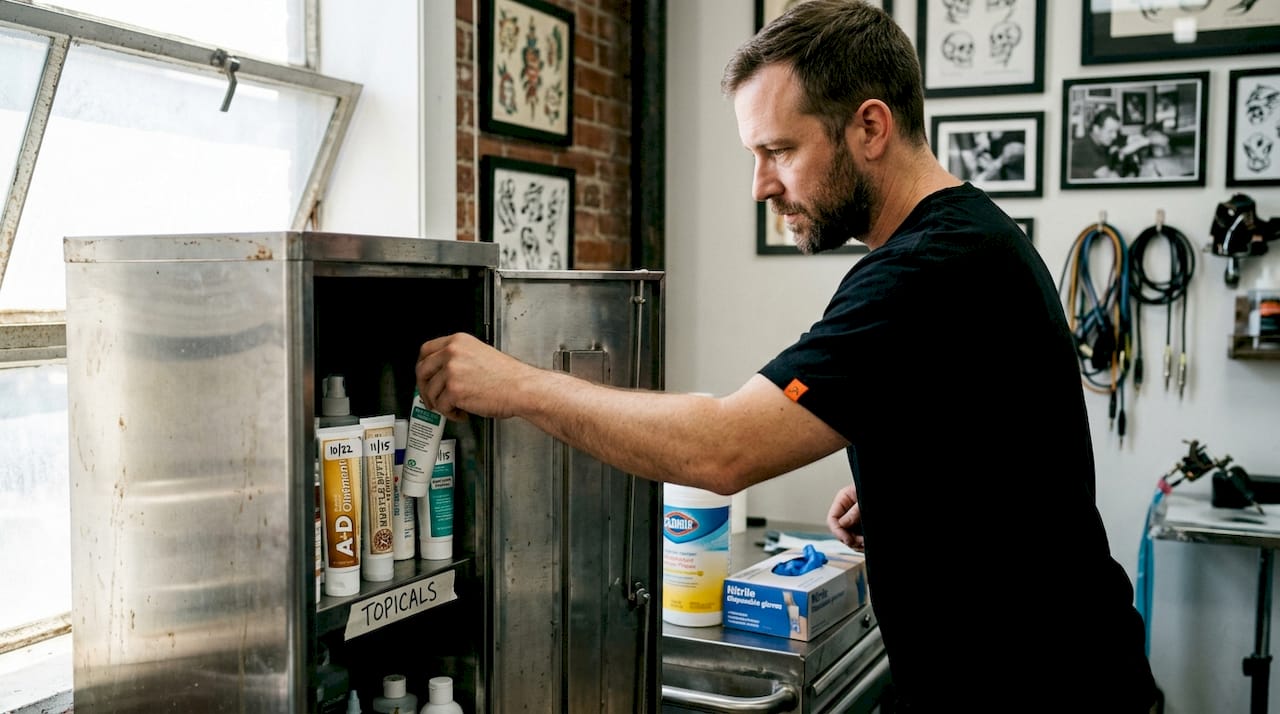
Professional tattoo studios typically store numbing creams in dedicated cabinets or lockers with controlled temperatures. Artists monitor batch numbers, check expiration dates regularly, and keep products away from heat sources as a standard practice. The environment is designed for product stability.
At home, the risks are higher simply because life is less controlled. Your bathroom cabinet gets steamy. Your bedroom window lets in afternoon sun. Your bag sits in a hot car. None of these are intentional, but all of them affect your cream.
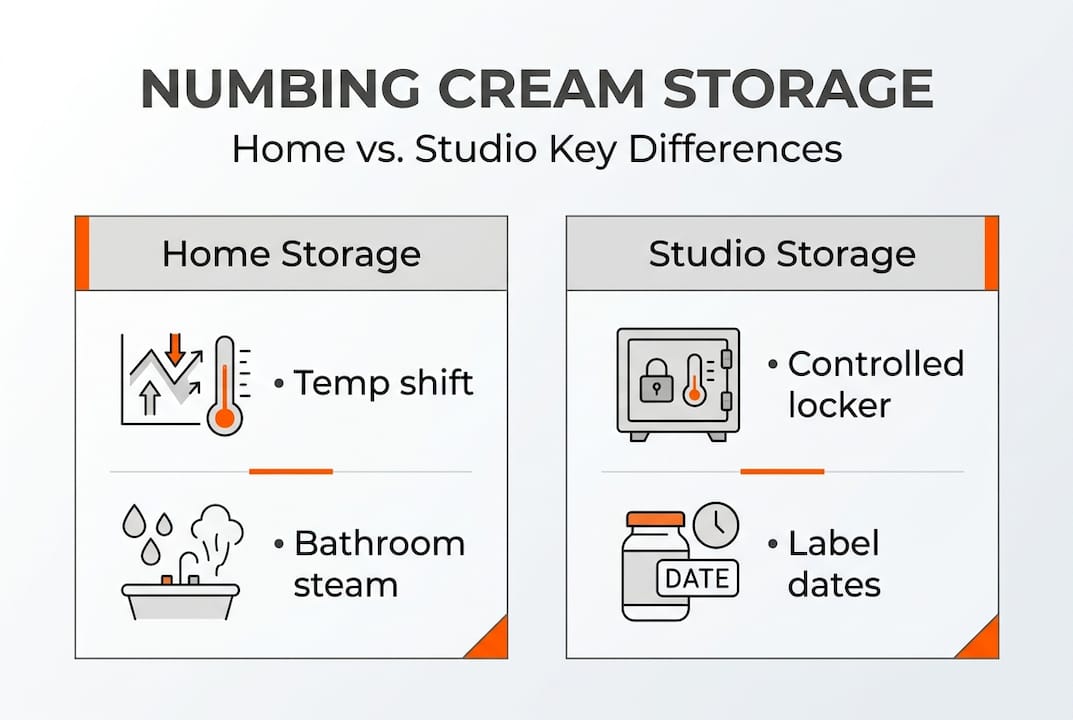
| Factor | Home storage | Studio storage |
|---|---|---|
| Temperature control | Variable, depends on habits | Consistent, climate-controlled |
| Light exposure | Often overlooked | Managed with closed cabinets |
| Expiration monitoring | Easy to forget | Tracked by batch number |
| Humidity risk | High (bathrooms, kitchens) | Low (dedicated storage areas) |
| Resealing habits | Inconsistent | Standard practice |
Home users can close this gap by mimicking studio habits. Dedicate a specific cool, dark drawer for your numbing cream and treat it like a professional supply. Learning about examples of numbing agents used in studios can also help you understand why professionals are so careful. A solid tattoo numbing workflow always starts with a properly stored product.
Key habits studios use that you should copy at home:
- Store in a cool, dark location away from heat sources
- Keep original packaging intact until the product is fully used
- Check expiration dates before every session
- Never leave product in direct sunlight or near a window
How to store numbing cream properly: Step-by-step
For safe, strong numbing, here is an easy storage process anyone can follow. All numbing creams, including popular brands and medical-grade products, share near-identical storage instructions, so this guide works across the board.
- Choose the right spot. Find a cool, dry shelf or drawer in your home. A bedroom closet shelf or a kitchen cabinet away from the stove both work well. Avoid bathrooms entirely.
- Keep the original packaging. The tube or jar is designed to protect the formula. Do not transfer the cream to another container. The original packaging also holds the expiration date and batch number.
- Seal tightly after every use. Cap the tube firmly and press out any excess air before closing. For jars, press the lid down until it clicks or seals completely.
- Mark the opening date. Write the date you first opened the product on the packaging. This helps you track how long it has been in use and whether it is still within its effective window.
- Check expiration regularly. Set a reminder every few months to check the date. If the cream is expired, discolored, or has a watery texture, replace it before your next session.
- Keep away from children and pets. Numbing creams contain active pharmaceutical compounds. Store them out of reach, ideally in a locked or high cabinet.
Following these steps consistently will help you extend numbing effects and get the full three hours of pain relief you are counting on.
Find trusted, fresh numbing creams for your next tattoo
You now know exactly how to store numbing cream for maximum potency. But none of that matters if the product you buy has already been sitting in poor conditions before it reaches you. That is where sourcing from a trusted supplier makes a real difference.

At buytktx.online, we store and ship TKTX 40% bundle and Dermacain 30g under proper conditions so the product arrives at your door fresh and fully potent. We ship across all of Europe with free shipping on orders over 30 Euro. Every order comes with our satisfaction guarantee: if the numbing cream does not work for you, simply send it back and we will refund you in full. When you buy TKTX creams from us, you are getting a product that has been handled correctly from warehouse to your hands.
Frequently asked questions
Does numbing cream need refrigeration?
No, most numbing creams should be stored at room temperature. Do not freeze or refrigerate unless the product label specifically instructs you to do so.
Can I leave numbing cream in my car or carry it on trips?
Avoid leaving numbing cream in a car, especially in summer. Temperature swings reduce potency quickly, and a hot car can ruin a tube in under an hour. Use an insulated bag when traveling.
How can I tell if my numbing cream has gone bad?
Check the expiration date first. Then look for signs of spoilage like a watery texture, color change, or unusual smell. If any of these appear, replace the product before your session.
What is the best spot at home to store numbing cream?
A cool, dry shelf or drawer away from sunlight and humidity is ideal. Store out of humid places like bathrooms and keep it away from windows and heat sources like radiators.


