

Finding reliable pain relief can feel like a challenge when you are preparing for a tattoo session in Central Europe. Every session is different and your physical and mental state shapes how much discomfort you experience from the needle. Addressing both the sharp sting and the stress that comes with tattooing is what effective pain management is all about. In this guide, you will discover why pain management in tattooing matters and what solutions like numbing creams can offer for artists and clients who value comfort and results.
Table of Contents
- What Pain Management in Tattooing Means
- Types of Tattoo Numbing Creams Explained
- How Numbing Creams Provide Pain Relief
- Safety, Legal Status, and Artist Guidelines
- Common Mistakes and Maximizing Effectiveness
Key Takeaways
| Point | Details |
|---|---|
| Pain Management is Essential | Effective pain management in tattooing involves addressing both physical discomfort and psychological factors, enhancing the overall experience. |
| Numbing Creams Are Not Equal | Different types of numbing creams vary in their active ingredients, effectiveness, and application techniques, affecting pain levels during sessions. |
| Application Timing Matters | Apply numbing cream at least 30-45 minutes before your appointment to ensure optimal penetration and effectiveness. |
| Communicate with Your Artist | Always inform your tattoo artist about the numbing cream used, as it can influence their technique and the outcome of your tattoo. |
What Pain Management in Tattooing Means
Pain management in tattooing goes beyond just making the experience more comfortable. It’s about understanding and controlling the sensory discomfort that occurs during the tattoo procedure. When you sit down in that chair, your body experiences real physiological stress. The needle punctures your skin thousands of times per minute, triggering nerve endings and creating an acute pain response. What pain management does is systematically address these physical and psychological factors to help you endure the session with minimal suffering.
The reality is that pain perception during tattooing depends on multiple interconnected factors. How long you spend in the chair, how much bleeding occurs, your stress levels, and even your mental state all influence how much discomfort you actually feel. Some clients breeze through a three-hour session while others struggle with thirty minutes on the same body part. This variance exists because pain isn’t purely physical. Your anxiety about the needle, your expectations about what it should feel like, and your ability to relax all shape your experience. Effective pain management targets both the physiological side (the actual nerve signals) and the psychological side (your mental response to those signals).
In practical terms, pain management strategies serve three core purposes. First, they reduce the actual sensory discomfort so you’re not sitting in agony while the artist works. Second, they improve your overall tattoo experience by allowing you to remain calm and cooperative, which actually helps your artist create better work. Third, they enable longer sessions with better physical endurance. Without pain management, a four-hour sleeve session becomes nearly impossible for most people. Your muscles tense up, your stress hormones spike, and your body enters fight-or-flight mode. With proper pain management, you can maintain the relaxed state necessary for quality tattooing.
Topical numbing creams represent one of the most practical approaches to pain management because they work directly at the source. These creams penetrate your skin and temporarily desensitize nerve endings, reducing the sensation of the needle before your artist even begins. But numbing creams work best when combined with other strategies. Psychological approaches like distraction and relaxation also significantly reduce pain perception. Some studios use music, conversation, or visual distractions to keep your mind occupied. Others focus on breathing techniques to keep your nervous system calm. The most effective pain management uses multiple tools working together rather than relying on a single solution.
Pro tip: Apply your numbing cream at least 30 to 45 minutes before your appointment and cover the area with plastic wrap to maximize absorption, then arrive early so the cream has time to fully activate before your artist begins working.
Types of Tattoo Numbing Creams Explained
Not all numbing creams are created equal. When you walk into a tattoo studio or browse online options, you’ll encounter different formulations, strengths, and brands. Understanding the main categories helps you choose what actually works for your skin and your tattoo session. The market breaks down into several distinct types, each with different active ingredients and effectiveness levels.
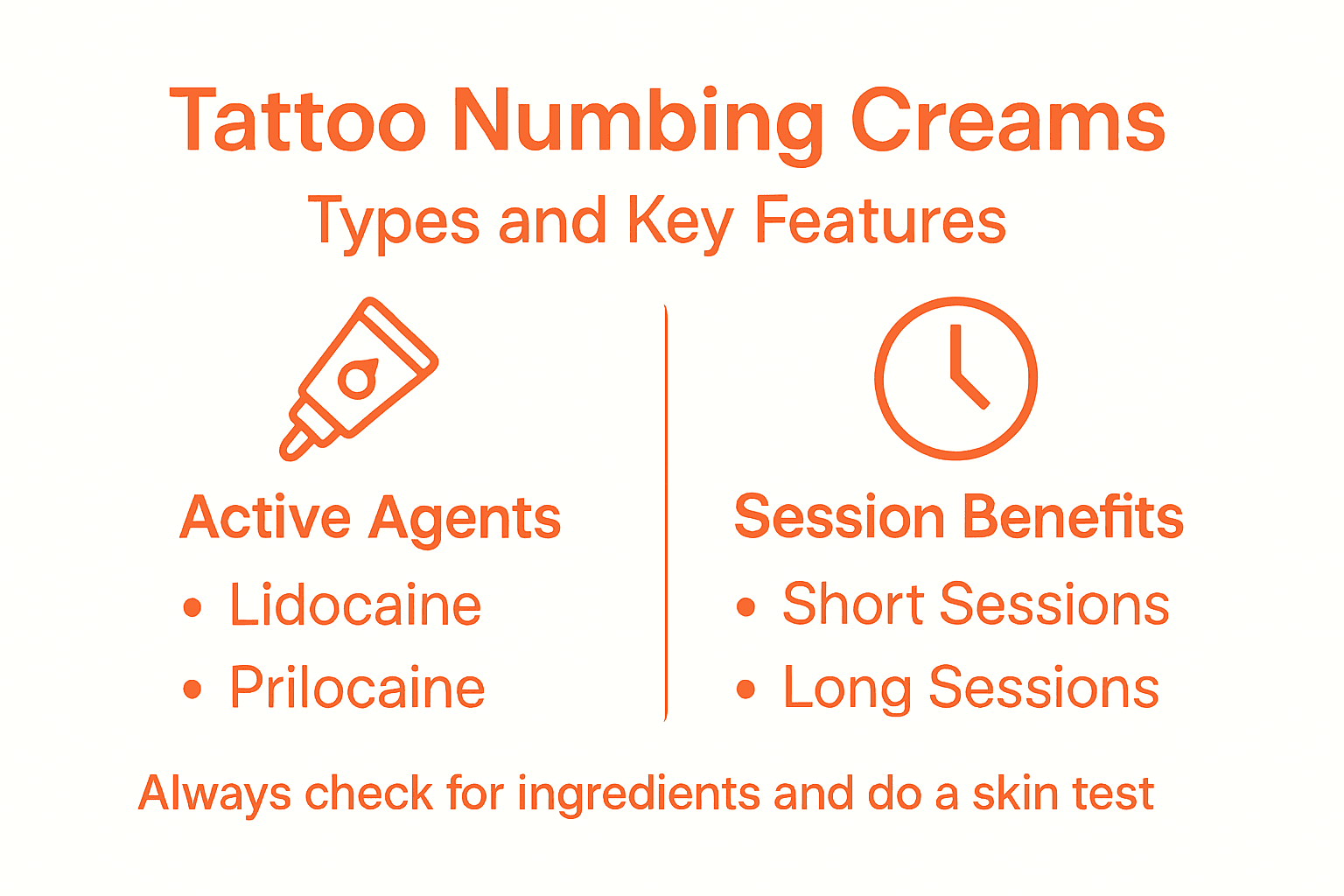
Lidocaine-based creams are the most common option you’ll find. Lidocaine works by blocking nerve signals in your skin, which means you feel less pain when the needle starts working. These creams typically contain between 4 and 10 percent lidocaine and create a surface-level numbing effect that lasts about one to two hours. They’re accessible, relatively affordable, and widely available across Europe. The downside is that lidocaine alone sometimes doesn’t penetrate deeply enough for longer sessions, especially if you’re getting work done on areas with thicker skin like your chest or thighs. Many users find lidocaine works better for lighter sessions or touch-ups rather than full-day tattoo marathons.
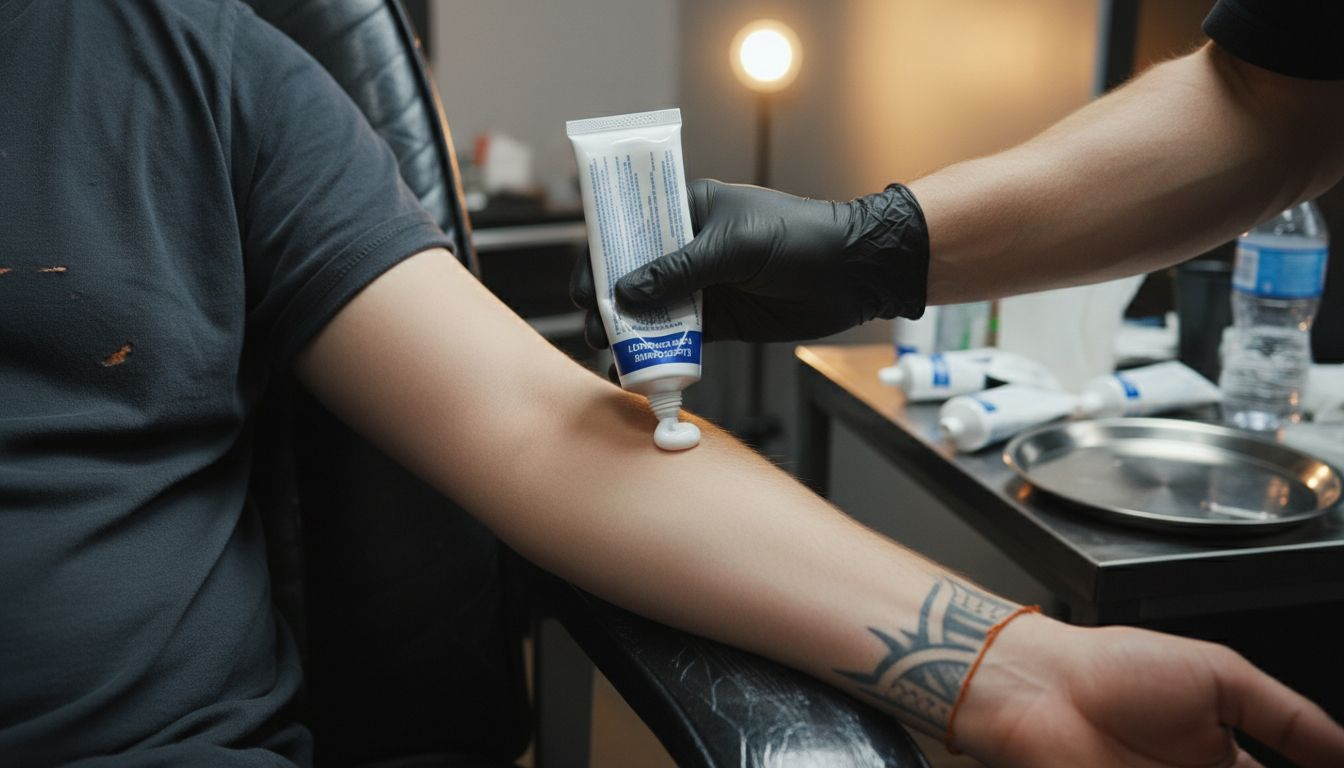
Prilocaine-based creams offer a different approach. Prilocaine penetrates deeper into the skin than lidocaine and provides longer-lasting numbness, often between two to three hours. This makes prilocaine ideal if you’re planning an extended session. The tradeoff is that prilocaine-based products sometimes cost more and may not be as readily available in all regions. Some tattoo artists actually prefer prilocaine because the longer-lasting effect means you stay more comfortable throughout the entire process, which translates to better sitting and better artwork.
Combination formulas blend multiple numbing agents for enhanced results. The most effective products use both lidocaine and prilocaine together, sometimes adding benzocaine or other supporting ingredients. These blends work faster than single-ingredient creams and deliver longer-lasting results. If you’ve used basic numbing cream before and felt like it wore off too quickly, a combination formula might be exactly what you need. Products like TKTX and Dermacain fall into this category, combining proven ingredients to deliver the deeper numbing for longer sessions that many Central European tattoo enthusiasts rely on.
Specialized formulations target specific needs. Some creams add moisturizing agents to prevent skin drying during the session. Others include ingredients that reduce inflammation and redness afterward. A few premium options incorporate vitamin E or aloe vera alongside numbing agents, protecting your skin while it’s being worked on. These extras might seem minor, but they genuinely impact how your tattoo heals and how you feel during the appointment.
The key difference between types comes down to active ingredient concentration and penetration depth. Higher concentrations work faster but may irritate sensitive skin. Deeper penetration lasts longer but sometimes takes more time to activate. Your skin type, the tattoo location, and session length should all influence which type you choose. Thin skin on your ribs needs different numbing than thick skin on your calf.
Here’s a quick comparison of tattoo numbing cream types and their practical benefits:
| Type of Cream | Numbing Depth | Typical Duration | Best for Sessions |
|---|---|---|---|
| Lidocaine-based | Surface layer only | 1-2 hours | Quick or small tattoos |
| Prilocaine-based | Deeper skin layers | 2-3 hours | Longer or complex work |
| Combination formulas | Fast, deep coverage | 2-4 hours | Extended large sessions |
| Specialized blends | Varies by formula | Varies, often longest | Healing and sensitivity |
Pro tip: Test your numbing cream on a small patch of skin 24 hours before your tattoo appointment to check for any allergic reactions or sensitivity, especially if you have reactive skin or are trying a new brand.
How Numbing Creams Provide Pain Relief
Understanding how numbing creams actually work transforms how you approach your tattoo session. These creams don’t just sit on top of your skin creating a placebo effect. They actively interfere with your body’s pain signaling system through real biochemical mechanisms. When you apply a numbing cream before your tattoo, you’re essentially sending a blocker into your skin that prevents pain messages from traveling to your brain. This is why the difference between using a quality numbing cream and going without is genuinely night and day.
At the molecular level, numbing creams work by delivering local anesthetic agents like lidocaine that penetrate through your skin layers. Once these molecules reach your nerve endings, they accomplish something remarkable. They target specific ion channels on nerve cell membranes called voltage-gated sodium channels. Numbing creams block these sodium channels, which prevents electrical signals from traveling along your nerves. Pain works through electrical impulses. Your tattoo needle triggers nerve endings, which generate electrical signals that travel to your brain and register as pain. When sodium channels are blocked, those electrical signals cannot propagate. The needle still punctures your skin, but your nervous system never sends the message to your brain that something painful is happening. This is why you might still feel pressure or vibration during the tattoo but experience minimal actual pain.
The timing and depth of penetration matter significantly. When you apply numbing cream, it takes time for the anesthetic agents to work through the outer layer of your skin (the epidermis) and reach the deeper layers where most pain receptors live. This is why tattoo artists recommend applying cream at least 30 to 45 minutes before your appointment. The longer you wait, the deeper the penetration and the more effective the numbness becomes. Different formulations penetrate at different rates. Basic single-ingredient creams might need 45 to 60 minutes for full effectiveness. Combination formulas with multiple anesthetic agents often work faster, sometimes reaching adequate numbness in 30 minutes. Premium products engineered for rapid penetration can deliver noticeable relief even sooner. This is why experienced tattoo enthusiasts across Central Europe often prefer advanced formulations that combine lidocaine, prilocaine, and additional penetrating agents.
The duration of numbness depends entirely on the formulation you choose. Standard lidocaine-based creams typically maintain effectiveness for one to two hours. Prilocaine-based options extend this to two to three hours. Combination formulas with enhanced ingredients can provide consistent numbness throughout extended sessions. Your body gradually metabolizes the anesthetic agents, which is why numbness eventually wears off. This metabolization happens differently depending on your individual skin chemistry, blood flow in the area being tattooed, and the specific cream formulation you used. Areas with more blood flow absorb and metabolize the anesthetic faster, while less vascular areas maintain numbness longer. This explains why your arm might stay numb longer than your ribs, even with the same cream applied at the same time.
What makes quality numbing creams effective also depends on how well they stay in contact with your skin. This is why experienced users cover their applied cream with plastic wrap. The wrap creates an occlusive barrier that prevents evaporation, keeps the cream concentrated against your skin, and actually enhances penetration. Without this barrier, some of the cream evaporates into the air rather than absorbing into your skin. You lose efficacy and waste product. Think of it like the difference between trying to water a plant without a pot versus using a container that holds the water against the soil. The wrap transforms how much of the cream’s potential actually reaches your nerve endings.
Pro tip: Apply your numbing cream, cover it with plastic wrap immediately, and leave it undisturbed for the full activation time without checking or adjusting it, as each time you lift the wrap you interrupt the penetration process and reduce overall effectiveness.
Safety, Legal Status, and Artist Guidelines
Before you apply any numbing cream to your skin before a tattoo session, you need to understand the legal landscape and safety considerations specific to Central Europe. The regulatory environment around numbing creams in tattooing is more complex than many people realize, and what’s legal in one country might face different restrictions in another. The European Union operates under REACH regulations that govern the use of substances in products meant for consumer use. These regulations restrict hazardous substances and require manufacturers to demonstrate that products are safe before they reach the market. However, REACH regulations specifically focus on tattoo inks and pigments rather than numbing creams used topically before the procedure. This creates a gap where numbing creams are treated as cosmetic or pharmaceutical products under different regulatory frameworks depending on their formulation and intended use.
The legal status of numbing creams varies considerably across European countries. In some nations, numbing creams are classified as cosmetics and fall under cosmetic product regulations. In others, they’re treated as over-the-counter topical anesthetics and must meet pharmaceutical standards. This means a product that’s perfectly legal to purchase and use in Poland might be categorized differently in Austria or the Czech Republic. What matters most is that you purchase numbing creams from reputable sellers who operate legally within their jurisdiction and follow product safety directives. The EU’s general product safety directive requires that all products sold must be safe for consumers. Numbing creams must not contain prohibited substances, and they should include clear labeling about their contents and proper application methods. When you buy from established suppliers with transparent ingredient lists and safety certifications, you’re significantly reducing any legal or health risks associated with the product.
From a tattoo artist’s perspective, transparency matters tremendously. Most professional tattoo artists prefer knowing in advance whether you’re using a numbing cream, and they want to know which product you’re using. This isn’t because they object to numbing creams. Rather, numbing creams can affect skin texture and how the skin responds during the tattoo process. Some creams leave the skin slightly slick or swollen, which can impact the artist’s precision and how ink sets into the skin. A skilled artist who knows you’re using numbing cream can adjust their technique accordingly. They might work with slightly different pressure, adjust their timing between passes, or modify how they wipe excess ink. This knowledge actually helps them deliver better results. Artists also need to know if you have any allergic reactions to the numbing cream you’ve applied, as combining certain creams with their sterilization procedures or ink can occasionally cause unexpected reactions.
Guidelines for responsible use include:
- Purchase only from reputable sellers who provide complete ingredient information and safety documentation
- Inform your tattoo artist about the specific numbing cream you’re using before your session begins
- Test the cream on a small patch of skin at least 24 hours before your appointment to check for allergic reactions
- Follow application instructions precisely, including activation time and coverage area
- Use only approved topical anesthetics designed for skin application, never products intended for other purposes
- Verify that the product complies with safety standards in your country
- Keep documentation of what you used in case you need to reference it later for any reason
The relationship between you, your artist, and your numbing cream works best when everyone operates with full transparency. Your artist isn’t trying to prevent you from managing pain. They’re trying to create the best possible tattoo while keeping you safe. By disclosing your numbing cream choice upfront, following local regulations, and choosing products from responsible manufacturers, you create an environment where everyone can do their job effectively. This approach protects your health, supports your artist’s work, and ensures you get the tattoo you’re actually paying for.
Pro tip: Bring the packaging and ingredient list of your numbing cream to your appointment so your artist can review the specific formulation and adjust their technique if needed for optimal results.
Common Mistakes and Maximizing Effectiveness
Most people who use numbing creams before their tattoos make at least one critical mistake that undermines the entire product. These errors range from timing issues to application problems to unrealistic expectations about what numbing creams can accomplish. Understanding these pitfalls and knowing how to avoid them transforms your numbing cream from moderately effective to genuinely life-changing for your tattoo experience. The difference between someone who gets real pain relief and someone who feels underwhelmed often comes down to execution rather than product quality.
One of the most common mistakes is applying numbing cream too close to your appointment time. Many people think applying cream 10 or 15 minutes before they sit down in the artist’s chair is sufficient. It’s not. The anesthetic agents need adequate time to penetrate through your skin’s outer layers and reach the nerve endings where the pain signals originate. This penetration process takes 30 to 60 minutes depending on the formulation and your individual skin. When you apply cream mere minutes before your session, you’re essentially wasting it. The cream hasn’t reached full effectiveness when the needle starts working. Another equally common mistake is applying too little cream. People underestimate how much product they actually need. You’re not trying to create a thin moisturizing layer. You need enough cream that it creates a visible, substantial coating across the entire area you’ll be tattooed. A general guideline is to use enough that the skin appears noticeably covered, not just lightly touched. Skimping on quantity directly reduces effectiveness.
The plastic wrap barrier is non-negotiable, yet many people skip this step entirely. Without covering your applied cream, the product begins evaporating immediately. You lose potency, and the cream dries out instead of penetrating. Covering with plastic wrap creates an occlusive environment that keeps the anesthetic agents concentrated against your skin and actively working. This single step roughly doubles the effectiveness of your numbing cream. If you’re not using plastic wrap, you’re essentially throwing away half your product’s potential. Similarly, people often make the mistake of wiping off the dried cream too aggressively before their appointment. Some cream will naturally dry and form a crusty layer. When you scrub this off harshly, you remove accumulated layers of product and interrupt the numbing effect. Instead, gently wipe away only the top dried crust while leaving behind the cream that has already penetrated. Your artist might also recommend leaving some cream residue on the skin immediately before starting, which provides ongoing numbing during the first few minutes of tattooing.
Another significant mistake involves unrealistic expectations about complete numbness. Numbing creams reduce pain substantially, but they don’t eliminate all sensation. You’ll still feel pressure, vibration, and movement. What changes is that sharp, intense pain becomes manageable discomfort. Understanding this distinction prevents disappointment. If you expect to feel literally nothing, you might interpret normal tattoo sensations as the cream failing when it’s actually working exactly as designed. Additionally, people often make the mistake of applying cream to only part of their tattoo area, then being surprised when unmumbed sections hurt more intensely. Numbing should cover the entire design area plus a small buffer zone around it. Your artist might also work across multiple zones, so protecting more area than you initially think you’ll need prevents painful surprises mid-session.
Maximizing effectiveness requires strategic planning around multiple factors. The order of operations matters significantly. Apply your cream first, then cover with plastic wrap immediately. Don’t wipe it off and reapply multiple times thinking more applications will help. Consistency matters more than repetition. Keep the covered area undisturbed during the entire activation period. Even lifting the wrap to check progress interrupts penetration. Arrive at your appointment slightly early so your artist has time to review what you’ve used and adjust their technique if needed. Communicate with your artist about your numbing cream choice at least a day before if possible, allowing them to prepare mentally for any adjustments they might need to make. Finally, hydrate well before your appointment. Better skin hydration actually improves how numbing creams work, as the anesthetic agents penetrate more efficiently through well-hydrated skin.
The following table summarizes the key factors that influence how well numbing creams work for tattoos:
| Factor | Impact on Effectiveness | How to Optimize |
|---|---|---|
| Application timing | Deeper penetration with more time | Apply 30-60 minutes before |
| Skin hydration | Enhances anesthetic absorption | Drink water, moisturize skin |
| Coverage method | Occlusion boosts potency | Use plastic wrap, full seal |
| Cream quantity | More product improves numbness | Apply thick, visible layer |
Pro tip: Apply your numbing cream, cover immediately with plastic wrap, set a timer for your specific cream’s recommended activation time, and resist the urge to check progress or reapply during that entire period, as consistency and uninterrupted contact time directly determine how effective the numbness will be.
Take Control of Your Tattoo Pain with Proven Numbing Creams
Experience true pain management during your tattoo sessions by choosing trusted solutions that deliver fast and long-lasting relief. The challenge of enduring sharp needle sensations and prolonged discomfort can be overwhelming without proper preparation. Our featured numbing creams like TKTX and Dermacain are specially formulated to block pain signals, penetrate deeply, and keep you comfortable for up to three hours. These products align perfectly with the article’s insights on effective pain management and the importance of applying creams early and using occlusive barriers for maximum effect.

Don’t let pain stop you from getting the tattoo you desire. Explore our collection of Featured Products – TKTX obchod for premium numbing creams that ship across Europe with free delivery on orders over 30 Euro. We guarantee your satisfaction or your money back when you return the unused product. Take the first step toward a pain-free tattoo experience by visiting our Home page – TKTX obchod or start right now at https://buytktx.online. Your next tattoo session deserves the best comfort possible—act now and feel the difference!
Frequently Asked Questions
What are the benefits of using numbing creams during tattooing?
Using numbing creams can significantly reduce sensory discomfort, improve overall tattoo experience, and enable longer sessions without excessive pain, making it easier for clients to relax during the procedure.
How long before my tattoo appointment should I apply the numbing cream?
It’s recommended to apply numbing cream at least 30 to 45 minutes before your tattoo appointment to allow adequate time for the cream to penetrate your skin and take effect.
What are the different types of numbing creams available for tattoos?
There are primarily four types of numbing creams: lidocaine-based creams, prilocaine-based creams, combination formulas blending multiple active ingredients, and specialized formulations that target specific needs like moisturizing or inflammation reduction.
How do numbing creams work to provide pain relief during tattooing?
Numbing creams work by delivering local anesthetic agents that block nerve pain signals from reaching the brain. They target specific ion channels in nerve cells, preventing the transmission of pain signals while allowing pressure sensations to still be felt.


