

Pain management is a top concern for every tattoo artist aiming to deliver a comfortable session in Central Europe. As clients’ pain thresholds and skin sensitivities can differ by gender and tattoo location, the challenge of keeping discomfort at bay is a constant one. Numbing creams stand out as a practical solution, blocking nerve signals to help clients stay calm and still, especially during intricate work on sensitive body areas. Discover how numbing creams enhance the tattoo experience while optimizing precision and satisfaction for both artists and clients.
Table of Contents
- Pain Relief In Tattooing Explained
- Types Of Tattoo Numbing Creams
- How Numbing Creams Enhance Comfort
- Safety, Effectiveness, And Risks
- Legal Considerations In Central Europe
- Best Practices For Tattoo Artists
Key Takeaways
| Point | Details |
|---|---|
| Pain Perception | Pain experience during tattooing varies based on body location, individual tolerance, and skin sensitivity, necessitating a tailored approach to pain management. |
| Numbing Cream Usage | Numbing creams significantly reduce discomfort by temporarily blocking pain signals, improving the overall tattooing experience for clients. |
| Safety Considerations | Clients should conduct patch tests and consult tattoo artists regarding numbing cream usage to minimize risks and ensure safety during the tattoo process. |
| Legal Regulations | Understanding local tattoo regulations is essential for both artists and clients, as laws can differ significantly between Central European countries. |
Pain Relief in Tattooing Explained
Tattooing involves complex interactions between needles and nerve endings, creating a sensory experience that varies dramatically between individuals. Nerve signal interruption plays a critical role in understanding how pain perception works during tattoo sessions. Different body regions respond uniquely to needle stimulation, making pain management a nuanced challenge for tattoo professionals.
Numbing creams function as topical anesthetics designed to temporarily block pain signals and reduce discomfort. Tattoo numbing technologies work by interrupting nerve communication in the dermis layer, providing targeted relief for sensitive skin areas. These specialized products do not completely eliminate pain but significantly lower its intensity, helping clients remain more comfortable during extended tattoo sessions.
The effectiveness of pain relief strategies depends on multiple physiological factors. Gender, individual pain tolerance, tattoo location, and skin sensitivity all contribute to how a client experiences needle penetration. Tattoo artists must approach pain management holistically, considering each client’s unique physical characteristics and emotional state. Advanced numbing techniques can help minimize client movement, creating smoother and more precise tattoo application.
Pro tip: Always conduct a small skin patch test with numbing cream 24 hours before the tattoo session to check for potential allergic reactions and ensure optimal pain management.
Types of Tattoo Numbing Creams
Tattoo numbing creams represent a diverse category of topical anesthetics designed to minimize pain during tattoo sessions. Local anesthetic compounds play a crucial role in interrupting nerve signals and reducing discomfort for clients. These specialized formulations work by temporarily blocking sodium channels in nerve cells, effectively diminishing pain perception during the tattooing process.
The primary active ingredients in tattoo numbing creams typically include lidocaine, benzocaine, tetracaine, and prilocaine. Each chemical compound offers unique characteristics in terms of onset time, duration, and pain reduction effectiveness. Lidocaine stands out as the most widely used and extensively researched anesthetic, providing reliable and consistent pain management for clients with varying skin sensitivities.
Here’s a quick comparison of common tattoo numbing cream ingredients:
| Ingredient | Onset Time | Duration | Preferred Use Case |
|---|---|---|---|
| Lidocaine | 20-30 minutes | 1-2 hours | Universal pain relief |
| Benzocaine | 10-15 minutes | Less than 1 hour | Quick, short sessions |
| Tetracaine | 30-45 minutes | 2-3 hours | Long, detailed tattoos |
| Prilocaine | 20-30 minutes | 1-2 hours | Sensitive or allergy-prone clients |
Numbing cream variations can be categorized based on their specific formulation and intended use. Some creams are designed for pre-tattoo application, while others are formulated for use during the tattooing process. Concentration levels vary, with professional-grade products offering more potent pain relief compared to over-the-counter alternatives. Factors such as skin type, tattoo location, and individual pain tolerance significantly influence the selection and effectiveness of a specific numbing cream.
Pro tip: Consult with your tattoo artist about the most appropriate numbing cream for your specific skin type and tattoo design to ensure optimal pain management and application performance.
How Numbing Creams Enhance Comfort
Tattoo comfort represents a critical aspect of the entire tattooing experience, transforming potentially stressful sessions into more manageable and positive interactions. Tattoo session quality directly correlates with the strategic application of numbing creams, which dramatically reduce client anxiety and physical discomfort. By mitigating pain responses, these specialized topical treatments enable clients to remain calm and still during intricate tattoo procedures.

The psychological benefits of numbing creams extend far beyond simple pain reduction. When clients feel more relaxed and less apprehensive about potential discomfort, they can engage more constructively with their tattoo artist. This improved mental state allows for better communication, more precise artwork placement, and a more collaborative creative process. Artists can work more efficiently and accurately when clients are not constantly tensing or moving due to pain sensations.
Numbing creams create a more controlled and predictable tattooing environment by minimizing involuntary client responses. Sudden movements caused by unexpected pain can compromise the quality of tattoo lines, shading, and overall design integrity. By providing a consistent pain management approach, these creams help artists maintain their technical precision and artistic vision. The result is a smoother, more professional tattoo experience that benefits both the client and the tattoo professional.
Pro tip: Apply numbing cream 30-45 minutes before your tattoo session and cover with medical-grade plastic wrap to maximize its pain-reducing effectiveness.
Safety, Effectiveness, and Risks
Numbing cream safety requires careful consideration and professional guidance to ensure optimal results during tattoo procedures. Tattoo numbing cream risks vary significantly based on individual skin types, application techniques, and specific product formulations. Understanding potential side effects and proper usage is crucial for minimizing complications and maintaining a safe tattooing experience.
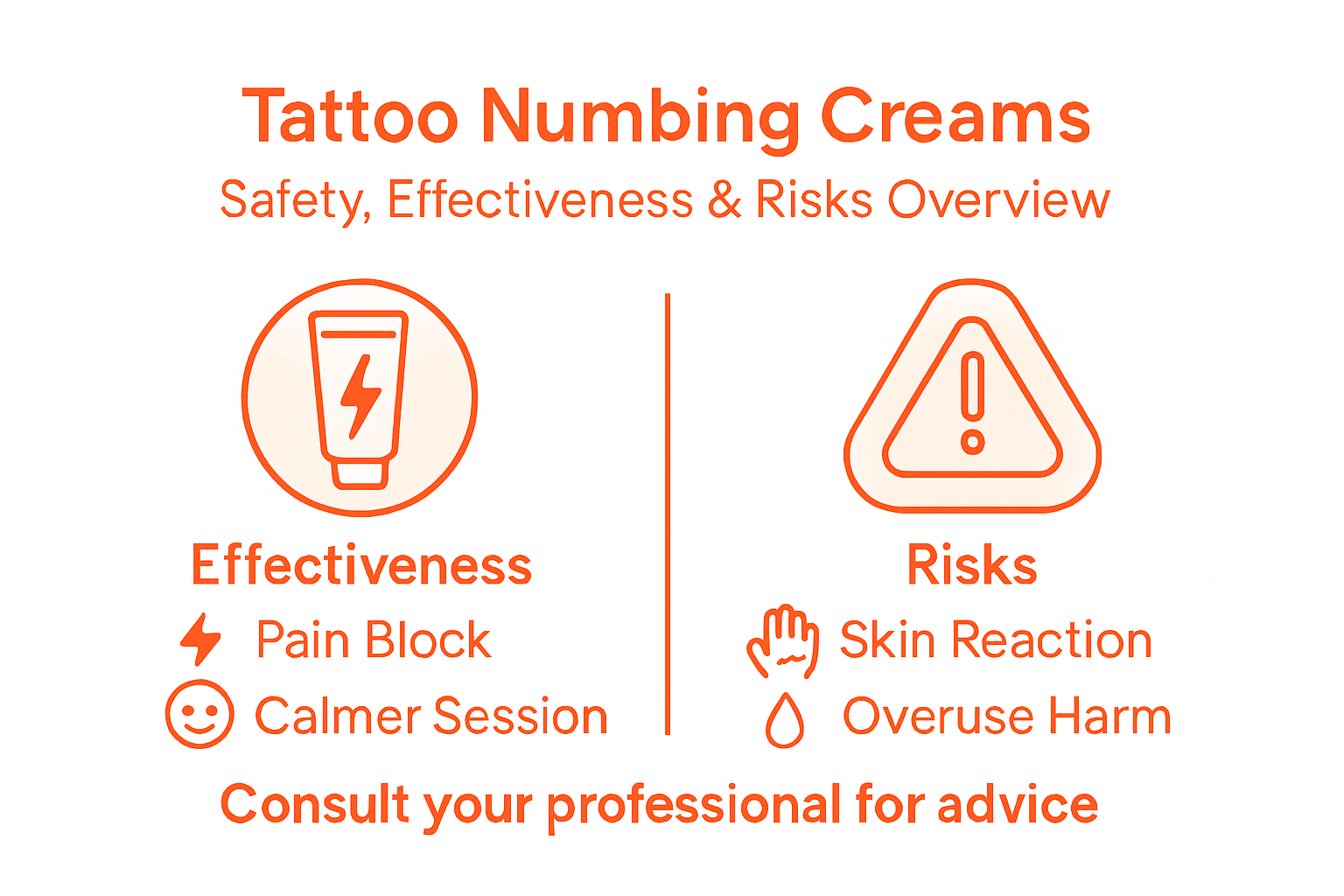
The effectiveness of numbing creams depends on multiple physiological factors, including skin sensitivity, pain threshold, and precise application methods. Some clients may experience mild side effects such as temporary skin irritation or localized allergic reactions. More serious risks include potential lidocaine toxicity if the product is misapplied or used in excessive quantities. Systemic numbing cream complications can range from mild skin reactions to more severe systemic responses that may impact cardiac or neurological functions.
Professional tattoo artists often approach numbing creams with caution, recognizing that these products can potentially alter skin texture and healing processes. Some artists may prefer to work on untreated skin to maintain optimal artistic precision and ensure consistent needle penetration. Clients should always consult with their tattoo professional before applying any numbing cream, discussing potential interactions, skin sensitivities, and appropriate application techniques to minimize risks and maximize comfort.
The table below summarizes key risks and safety tips for tattoo numbing cream users:
| Risk Factor | What to Watch For | Safety Tip |
|---|---|---|
| Skin irritation | Redness, itching, swelling | Patch test 24 hours before use |
| Allergic reactions | Rash, hives, burning sensation | Consult your tattoo artist and doctor |
| Overuse toxicity | Numbness spreading, dizziness | Follow dosage instructions precisely |
| Healing interference | Slower recovery, skin changes | Discuss concerns with your artist |
Pro tip: Always perform a small patch test 24 hours before your tattoo session to check for potential allergic reactions and consult with both your healthcare provider and tattoo artist about safe numbing cream usage.
Legal Considerations in Central Europe
Tattoo regulations across Central Europe present a complex landscape of legal requirements that professionals and clients must carefully navigate. Tattoo legislation variations demonstrate significant differences between countries, particularly regarding age restrictions, consent procedures, and professional standards. Understanding these nuanced legal frameworks is crucial for both tattoo artists and individuals seeking tattoo services.
Most Central European countries establish minimum age requirements typically ranging from 16 to 18 years old, with parental consent often mandatory for younger individuals. These legal stipulations aim to protect minors and ensure informed decision-making. Professional tattoo studios must maintain rigorous documentation processes, including age verification and consent forms, to comply with regional regulatory standards. Additional legal considerations often encompass hygiene protocols, professional certification requirements, and specific restrictions on tattoo placement or design.
Regional variations create a complex regulatory environment where tattoo professionals must remain continuously informed about local legal requirements. Some countries implement more stringent regulations, while others maintain more relaxed approaches to tattoo legislation. Tattoo artists must stay updated on changing legal landscapes, potential licensing requirements, and health department guidelines that can vary significantly between different Central European jurisdictions.
Pro tip: Always verify current local regulations with your municipal health department and professional tattooing associations to ensure full compliance with regional legal requirements.
Best Practices for Tattoo Artists
Tattoo artists play a pivotal role in managing client comfort and creating a positive tattooing experience. Client pain management strategies require a comprehensive understanding of physiological and psychological factors that influence pain perception. Professional artists must develop a holistic approach that combines technical expertise with empathetic client communication and strategic pain mitigation techniques.
Preparing clients for their tattoo experience involves multiple interconnected considerations. This includes comprehensive pre-session consultations that address potential pain concerns, discussing numbing cream options, and setting realistic expectations about the tattooing process. Artists should educate clients about factors that can influence pain sensitivity, such as hydration levels, nutrition, and overall physical condition. Recommending clients avoid alcohol, caffeine, and blood-thinning medications prior to their session can help minimize potential discomfort and complications.
During the actual tattooing process, artists can implement several advanced pain management techniques. These include offering strategic breaks during longer sessions, utilizing distraction conversation methods, and maintaining a calm, supportive environment. Professional artists should remain attentive to client body language and verbal cues, adapting their technique and pace to individual client tolerance levels. Understanding the physiological responses to pain and developing skills to help clients manage their anxiety can significantly improve the overall tattoo experience.
Pro tip: Create a personalized client comfort protocol that includes pre-session preparation, ongoing communication strategies, and adaptive pain management techniques to ensure a positive tattooing experience.
Experience True Comfort with Effective Tattoo Pain Relief
Understanding the complex nature of pain during tattoo sessions is key to creating a more comfortable experience. As the article explains, pain relief often hinges on interrupting nerve signals and managing sensitivity, especially in delicate skin areas. Clients face the challenge of enduring needle discomfort while artists strive for precision. Now you can bridge that gap with trusted numbing solutions like TKTX and Dermacain, known for their powerful and long-lasting effects.

Take control of your tattoo comfort by choosing numbing creams that guarantee up to 3 hours of pain-free tattooing. Our products are carefully formulated to reduce needle pain by blocking nerve communication effectively, helping you stay relaxed and still throughout the process. Shopping at buytktx.online means free shipping on orders over 30 Euro and a customer satisfaction guarantee with easy money-back returns. Do not wait to create a tattoo experience where pain does not hold you back. Visit our main website now and discover how your next tattoo session can be more comfortable than ever.
Frequently Asked Questions
What are tattoo numbing creams and how do they work?
Tattoo numbing creams are topical anesthetics that temporarily block pain signals to reduce discomfort during tattooing. They work by interrupting nerve communication in the skin’s dermis layer, providing targeted pain relief.
What are the common active ingredients in tattoo numbing creams?
Common active ingredients include lidocaine, benzocaine, tetracaine, and prilocaine. Each ingredient varies in onset time, duration, and effectiveness, making them suitable for different types of tattoo sessions.
How can I maximize the effectiveness of numbing cream before my tattoo session?
To maximize effectiveness, apply the numbing cream 30-45 minutes before your session and cover it with medical-grade plastic wrap. This helps the cream penetrate the skin better for optimal pain relief.
Are there any risks associated with using tattoo numbing creams?
Yes, potential risks include skin irritation, allergic reactions, and overuse toxicity. It’s important to perform a patch test and consult with your tattoo artist or healthcare provider before use to minimize these risks.


