

Many tattoo clients struggle with proper aftercare that leads to prolonged healing, persistent pain, or even infections that ruin their new ink. A structured aftercare workflow eliminates guesswork and ensures your tattoo heals beautifully while minimizing discomfort. This comprehensive guide covers everything from preparation and pain management to step-by-step care instructions tailored for tattoo clients across Europe. You’ll learn exactly what to do at each healing stage, how to avoid common mistakes, and when to seek professional advice for optimal results.
Table of Contents
- Understanding The Tattoo Aftercare Problem And Preparation Essentials
- Step-By-Step Tattoo Aftercare Workflow For Optimal Healing
- Common Tattoo Aftercare Mistakes And How To Avoid Them
- Expected Results And Verifying Your Tattoo’s Healthy Healing Progress
- Explore Premium Pain Management And Tattoo Care Products
- Tattoo Aftercare Workflow Frequently Asked Questions
Key takeaways
| Point | Details |
|---|---|
| Effective aftercare reduces healing time | Proper care protocols minimize infection risk and speed recovery by up to 40%. |
| Pain management enhances comfort | Using numbing products before tattooing ensures a pain-free experience for 3 hours. |
| Preparation prevents complications | Clean, hydrated skin before tattooing creates the foundation for lasting quality. |
| Structured routines ensure results | Following a day-by-day workflow guarantees optimal healing and vibrant color retention. |
Understanding the tattoo aftercare problem and preparation essentials
Tattoo aftercare failures often stem from confusion about what to do and when to do it. Clients receive conflicting advice from artists, friends, and online sources, leading to inconsistent care that compromises healing. The most common problems include infections from inadequate cleaning, prolonged pain from poor preparation, and faded colors from premature sun exposure or harsh products.
Proper skin preparation before tattooing is essential to prevent infections and promote healing. Your skin needs to be in optimal condition before the needle touches it. Start by cleansing the area thoroughly with antibacterial soap 24 hours before your appointment. Avoid alcohol, caffeine, and blood thinners for at least 48 hours, as these substances increase bleeding and make it harder for ink to set properly.
Hydration plays a critical role in how well your skin accepts ink and heals afterward. Drink at least 2 liters of water daily for three days before your session. Well-hydrated skin is more elastic, takes ink better, and recovers faster than dehydrated tissue.
Pain management starts before you sit in the chair. Choosing the right numbing product eliminates anxiety and allows your artist to work more efficiently. TKTX numbing creams provide 3 hours of guaranteed pain-free tattooing when applied correctly 60 to 90 minutes before your session.
Follow these essential skin preparation steps to maximize your results:
- Exfoliate gently 48 hours before to remove dead skin cells
- Moisturize daily for one week prior using fragrance-free lotion
- Shave the area 24 hours ahead to avoid razor burn during tattooing
- Avoid sun exposure and tanning for at least two weeks beforehand
- Eat a substantial meal 2 hours before to maintain stable blood sugar
Pro Tip: Apply a thin layer of petroleum jelly over your numbing cream and cover with plastic wrap for enhanced absorption. This occlusive technique intensifies the numbing effect and extends the pain-free window.
Step-by-step tattoo aftercare workflow for optimal healing
Your aftercare routine begins the moment your artist finishes and continues for 2 to 3 weeks depending on tattoo size and placement. Following a tattooing aftercare process ensures consistent healing and maintains the vibrancy of your new ink. The timeline breaks down into three critical phases, each requiring specific actions.
Immediate care happens in the first 24 hours. Your artist will apply a protective bandage or film that should remain in place for the time they specify, typically 2 to 4 hours for traditional bandages or up to 5 days for modern adhesive films. This initial protection prevents bacteria from entering the open wound while your skin begins its repair process.
Follow these steps immediately after removing the initial bandage:
- Wash your hands thoroughly with antibacterial soap before touching your tattoo
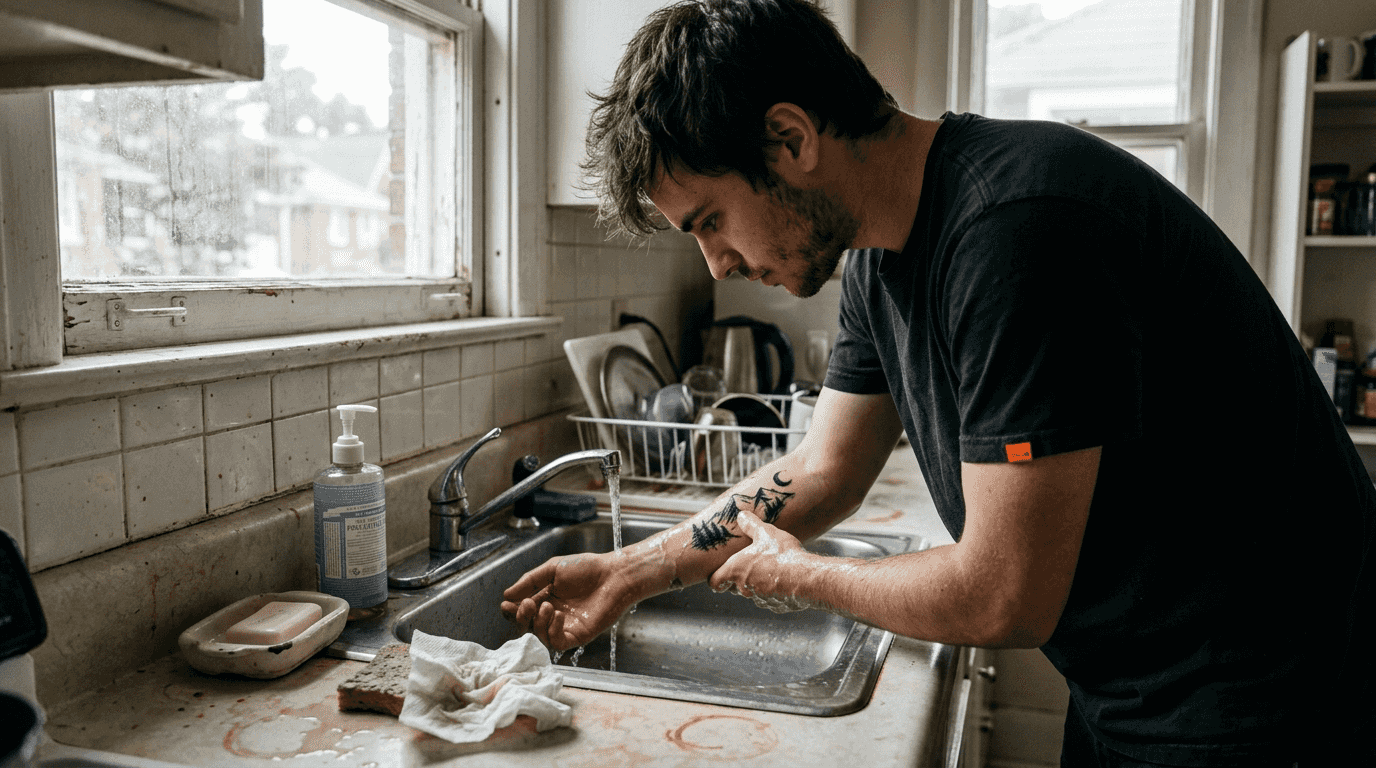
- Gently remove the bandage and rinse the area with lukewarm water
- Apply a small amount of fragrance-free antibacterial soap using clean fingertips
- Rinse completely and pat dry with a clean paper towel, never rubbing
- Allow the tattoo to air dry for 10 minutes before applying aftercare product
- Apply a thin layer of recommended ointment or cream, avoiding excess buildup
Days 1 through 3 focus on preventing infection while managing initial inflammation. Wash your tattoo 2 to 3 times daily using the gentle technique described above. Your skin will feel tight and may appear shiny as plasma forms a protective layer. This is normal and indicates proper healing.
Days 4 through 14 mark the peeling phase where your tattoo may itch intensely. Resist the urge to scratch, as this removes ink and creates patchy areas. Switch from heavy ointments to lighter, fragrance-free lotions to keep skin moisturized without clogging pores. Following a structured tattoo aftercare process improves healing and maintains color vibrancy throughout this critical period.
| Day Range | Care Activity | Recommended Products | Frequency |
|---|---|---|---|
| 0 to 3 | Gentle washing, heavy moisturizing | Antibacterial soap, petroleum-based ointment | 3 times daily |
| 4 to 7 | Light washing, moderate moisturizing | Fragrance-free soap, water-based lotion | 2 to 3 times daily |
| 8 to 14 | Minimal washing, light moisturizing | Mild cleanser, light lotion | 1 to 2 times daily |
| 15+ | Normal hygiene, occasional moisturizing | Regular soap, standard lotion | As needed |
Pain management during healing varies by individual tolerance and tattoo location. Most discomfort peaks in the first 48 hours and gradually subsides. Over-the-counter pain relievers like ibuprofen reduce inflammation and ease soreness, but avoid aspirin as it thins blood and may cause continued oozing.
Pro Tip: Keep a dedicated set of clean paper towels and a travel-size bottle of fragrance-free lotion in your bag for on-the-go care. This ensures you can maintain your routine even when away from home, preventing the dry, tight feeling that leads to cracking.
Common tattoo aftercare mistakes and how to avoid them
Even well-intentioned clients make critical errors that compromise their tattoo’s appearance and healing timeline. Understanding these pitfalls helps you navigate the recovery process with confidence. Avoiding common aftercare mistakes can reduce the risk of infections and prolong tattoo vibrancy significantly.
Over-washing strips your skin of natural oils that aid healing. While cleanliness matters, washing more than 3 times daily during the first week actually slows recovery. Each wash removes protective plasma and beneficial bacteria your body produces to repair tissue. Limit washing to morning, evening, and after activities that cause sweating.
Scratching or picking at scabs represents the most damaging mistake clients make. As your tattoo heals, it forms a protective layer that eventually peels away naturally. Removing this layer prematurely pulls out ink, creating light spots and uneven color distribution that may require touch-ups. If itching becomes unbearable, gently slap the area or apply a cold compress instead of scratching.
Sun exposure during the healing phase causes multiple problems. UV rays penetrate healing skin more easily, leading to sunburn that damages both your skin and the tattoo beneath. Sunburned tattoos often heal with distorted lines and faded colors. Keep your new tattoo covered or indoors for at least 2 weeks, and apply SPF 50+ sunscreen after healing completes.
Key tattoo aftercare essentials to avoid include:
- Using scented lotions or petroleum jelly after day 3, which clogs pores and traps bacteria
- Submerging your tattoo in pools, hot tubs, or baths before complete healing
- Wearing tight clothing that rubs against the fresh tattoo and irritates skin
- Applying too much moisturizer, creating a breeding ground for bacteria
- Exercising intensely in the first 48 hours, causing excessive sweating and rubbing
- Ignoring signs of infection like increasing redness, warmth, or pus discharge
Never ignore signs of infection. If you notice spreading redness, increasing pain after day 3, yellow or green discharge, or fever, contact your doctor immediately. Early intervention prevents serious complications and protects your health and investment.
Realistic expectations prevent unnecessary worry. Your tattoo will look its worst around days 4 to 7 when peeling peaks. The colors will appear dull and the design may seem patchy. This temporary appearance is normal and resolves as new skin forms. Trust the process and maintain your routine rather than panicking and changing products mid-healing.
Expected results and verifying your tattoo’s healthy healing progress
Recognizing normal healing patterns versus warning signs empowers you to take appropriate action when needed. Recognizing healthy signs and differentiating them from complications helps clients act appropriately throughout the recovery timeline. Most tattoos follow a predictable healing sequence that you can monitor daily.
Healthy healing begins with mild redness and swelling that peaks within 24 hours and gradually decreases over 3 to 5 days. Your tattoo will feel warm to the touch initially, similar to a mild sunburn. Clear or slightly cloudy fluid may seep from the tattoo in the first 48 hours as your body produces plasma to protect the wound. This fluid dries into a thin, shiny layer that eventually flakes off.
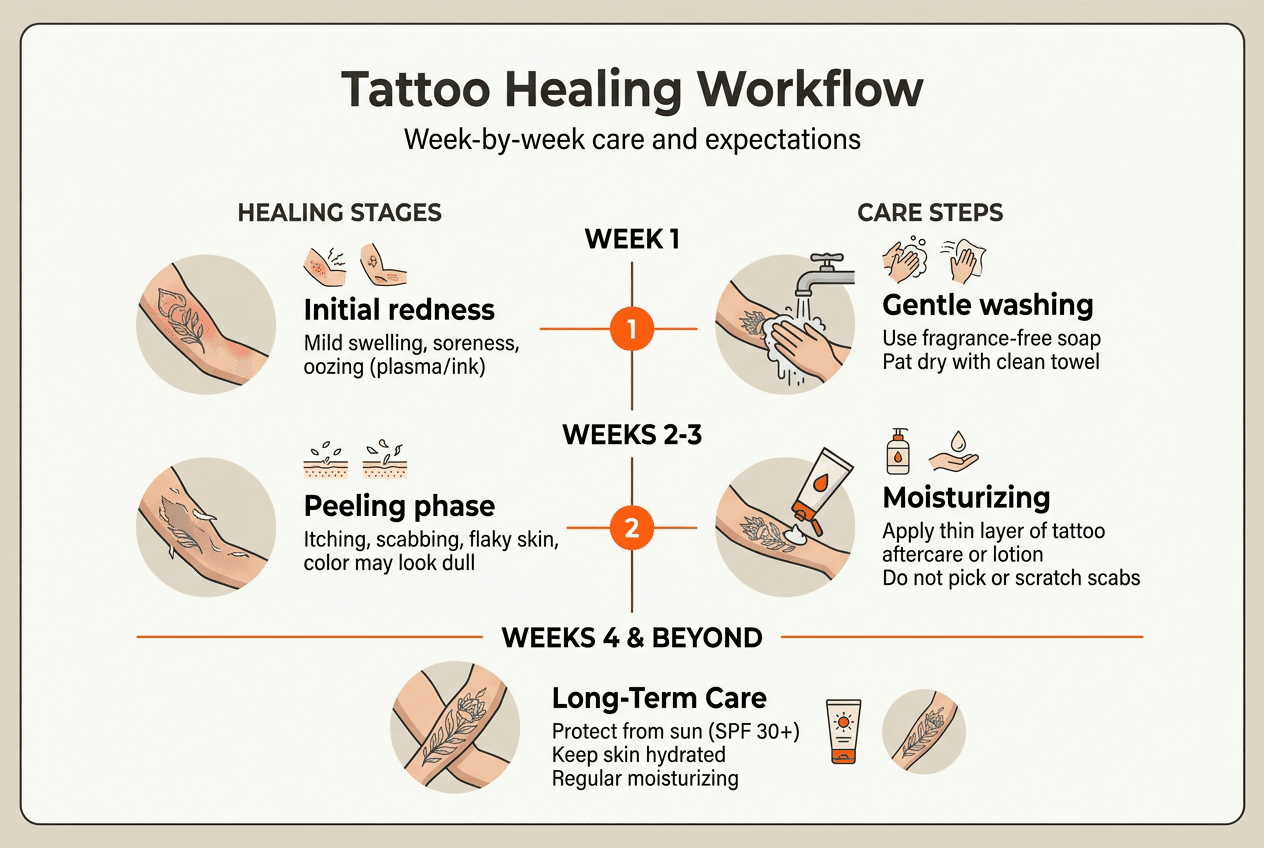
Peeling typically starts around day 4 and continues through day 10. The skin comes off in small flakes similar to a healing sunburn, revealing fresh skin underneath. Colors appear muted during this phase but brighten once peeling completes. By week 3, your tattoo should look vibrant with clear lines and even color distribution.
| Healthy Signs | Problematic Symptoms |
|---|---|
| Mild redness decreasing after 48 hours | Spreading redness or red streaks after day 3 |
| Clear to light yellow fluid in first 2 days | Thick yellow, green, or foul-smelling discharge |
| Warm sensation diminishing over 5 days | Increasing heat or burning sensation after day 4 |
| Itching during peeling phase (days 4 to 10) | Severe pain or throbbing that worsens over time |
| Skin flaking off in small pieces | Large scabs forming or skin oozing continuously |
| Colors appearing dull then brightening | Significant color loss or patchy areas after healing |
Perform these simple daily checks to monitor your tattoo aftercare verification progress:
- Compare redness to the previous day using photos taken in consistent lighting
- Gently touch the area to assess temperature and check for increasing warmth
- Observe any discharge for changes in color, consistency, or smell
- Note pain levels on a scale of 1 to 10 to track improvement or worsening
- Check surrounding skin for spreading inflammation or unusual texture changes
Seek professional medical advice if you experience fever above 100.4°F, chills, or general malaise alongside tattoo symptoms. These signs indicate a systemic infection requiring immediate treatment. Contact your tattoo artist for aesthetic concerns like excessive ink loss or uneven healing that may need touch-ups once fully healed.
Long-term maintenance preserves your tattoo’s appearance for decades. After complete healing at 4 weeks, apply broad-spectrum SPF 50+ sunscreen whenever the tattoo will be exposed to sunlight. UV protection prevents fading and keeps colors vibrant. Moisturize regularly to maintain skin elasticity and prevent the cracking that makes tattoos look aged. Annual touch-ups may be necessary for areas subject to frequent friction or sun exposure.
Explore premium pain management and tattoo care products
You’ve learned the complete aftercare workflow, and now it’s time to equip yourself with products that make the process easier and more effective. TKTX numbing creams transform the tattooing experience by eliminating pain for 3 hours, allowing your artist to work without interruptions from your discomfort. Our formulation provides consistent, reliable numbing that works for clients across Europe.

Dermacain offers premium aftercare specifically formulated for tattoo healing. Unlike generic lotions, Dermacain contains ingredients that reduce inflammation, prevent infection, and maintain color vibrancy throughout the recovery process. Combine our 3x TKTX 40% numbing cream bundle with Dermacain 50g premium tattoo care for a complete pain management and aftercare solution. We guarantee your satisfaction with a full money-back policy if you’re not completely happy. Simply return the product and receive a complete refund. Plus, enjoy free shipping on all orders over 30 Euro throughout Europe.
Tattoo aftercare workflow frequently asked questions
How soon after tattooing should I start the aftercare routine?
Begin your aftercare routine immediately after removing the initial bandage your artist applied, typically 2 to 4 hours post-session for traditional wraps. If your artist used a modern adhesive film like Saniderm, leave it on for 3 to 5 days as directed before starting the washing routine. The timing depends on the protection method used, so always follow your specific artist’s instructions.
What are the safest options to manage tattoo pain effectively?
TKTX numbing creams applied 60 to 90 minutes before your session provide the safest, most effective pain management for tattooing. These topical anesthetics work locally without systemic effects, unlike oral pain medications that can thin blood. After tattooing, over-the-counter ibuprofen reduces inflammation and manages soreness, while ice packs applied over a clean barrier provide additional relief. Check our safe tattoo numbing guide for detailed application instructions.
Can I use regular lotions or do I need special tattoo aftercare products?
Regular lotions often contain fragrances, dyes, and additives that irritate healing tattoos and increase infection risk. Specialized tattoo aftercare products like Dermacain are formulated without these irritants and include ingredients that actively support healing. While fragrance-free, dye-free basic lotions work in a pinch, dedicated tattoo products deliver better results and faster healing. The investment in proper aftercare products protects the money you spent on quality artwork.
How do I know if my tattoo is healing properly or if I need medical attention?
Proper healing shows decreasing redness, mild warmth that fades within 5 days, and clear to light yellow fluid only in the first 48 hours. Seek medical attention immediately if you notice spreading redness after day 3, thick or colored discharge, increasing pain or heat, fever, or red streaks extending from the tattoo. These symptoms indicate infection requiring professional treatment. Take photos daily to track changes objectively rather than relying on memory.
What should I do if my tattoo starts peeling earlier or later than expected?
Peeling timing varies based on tattoo size, location, and your individual healing rate, typically starting between days 3 and 5. Earlier peeling often occurs with smaller tattoos or areas with thinner skin, while larger pieces or thicker skin areas may not peel until day 7. As long as you’re not experiencing infection symptoms and the peeling consists of small flakes rather than large scabs, the timing variation is normal. Continue your regular aftercare routine regardless of when peeling begins.
How long until my tattoo is fully healed and I can resume normal activities?
Surface healing completes in 2 to 3 weeks when skin appears normal and peeling stops, but complete healing takes 4 to 6 weeks as deeper layers repair. You can resume light exercise after 1 week and swimming after 3 weeks once the surface is fully closed. However, wait the full 4 to 6 weeks before exposing your tattoo to intense sun, harsh chemicals, or activities that cause significant friction. Patience during this period ensures your tattoo looks perfect for years to come.


