

Many people assume tattoo numbing creams are either completely harmless or dangerously risky, but the reality is far more nuanced. These products can effectively reduce discomfort during tattoo sessions, yet misuse carries real health risks. This guide explores how popular creams like TKTX and Dermacain work, their safety profiles, and best practices for European users. You’ll gain the knowledge needed to make informed decisions about using numbing products for your next tattoo.
Table of Contents
- How Do Tattoo Numbing Creams Work? Understanding The Science
- Is Tattoo Numbing Safe? Exploring Risks And Side Effects
- Comparing Popular Numbing Creams: Effectiveness And Legal Status In Europe
- Best Practices For Safe And Effective Numbing Cream Use During Tattooing
- Explore Top-Rated Numbing Creams For Safer Tattoos
Key takeaways
| Point | Details | |-------|---------|| | Mechanism of action | Topical anesthetics block sodium channels in nerve cells to prevent pain signals from reaching the brain. | | Safety concerns | Systemic absorption can cause serious cardiovascular and neurological side effects when products are overused. | | Legal landscape | European regulations vary widely; many countries restrict numbing cream supply to licensed professionals only. | | Effectiveness factors | Individual skin type, anesthetic concentration, and application technique significantly impact pain relief results. | | Best practices | Following manufacturer dosing guidelines and consulting professionals minimizes risks while maximizing effectiveness. |
How do tattoo numbing creams work? Understanding the science
Topical anesthetics in products like TKTX and Dermacain reduce tattoo pain through a straightforward biological process. Active ingredients including lidocaine, prilocaine, and tetracaine block sodium channels in nerve cells to prevent pain signals from traveling to your brain. When applied to skin before tattooing, these compounds penetrate the epidermis and upper dermis where needles cause discomfort.
Concentration matters significantly for effectiveness. TKTX Black 55% contains a high percentage of anesthetic agents compared to milder formulations, delivering stronger numbing effects. The cream must remain on skin long enough for molecules to diffuse through tissue layers and reach nerve endings.
Several factors influence how well these products work for you:
- Individual skin thickness and composition affect absorption rates
- Tattoo depth determines how deeply anesthetics must penetrate
- Application duration impacts total concentration reaching nerves
- Body location matters since skin varies across anatomical sites
These topical anesthetics primarily affect sensory nerves in shallow skin layers. They create a temporary window of reduced sensation lasting several hours depending on formulation strength. Understanding this mechanism helps you set realistic expectations for pain management during your tattoo session.
Pro Tip: Different body areas have varying skin thickness and nerve density, so the same cream may provide different levels of numbness on your arm versus ribs.
Is tattoo numbing safe? Exploring risks and side effects
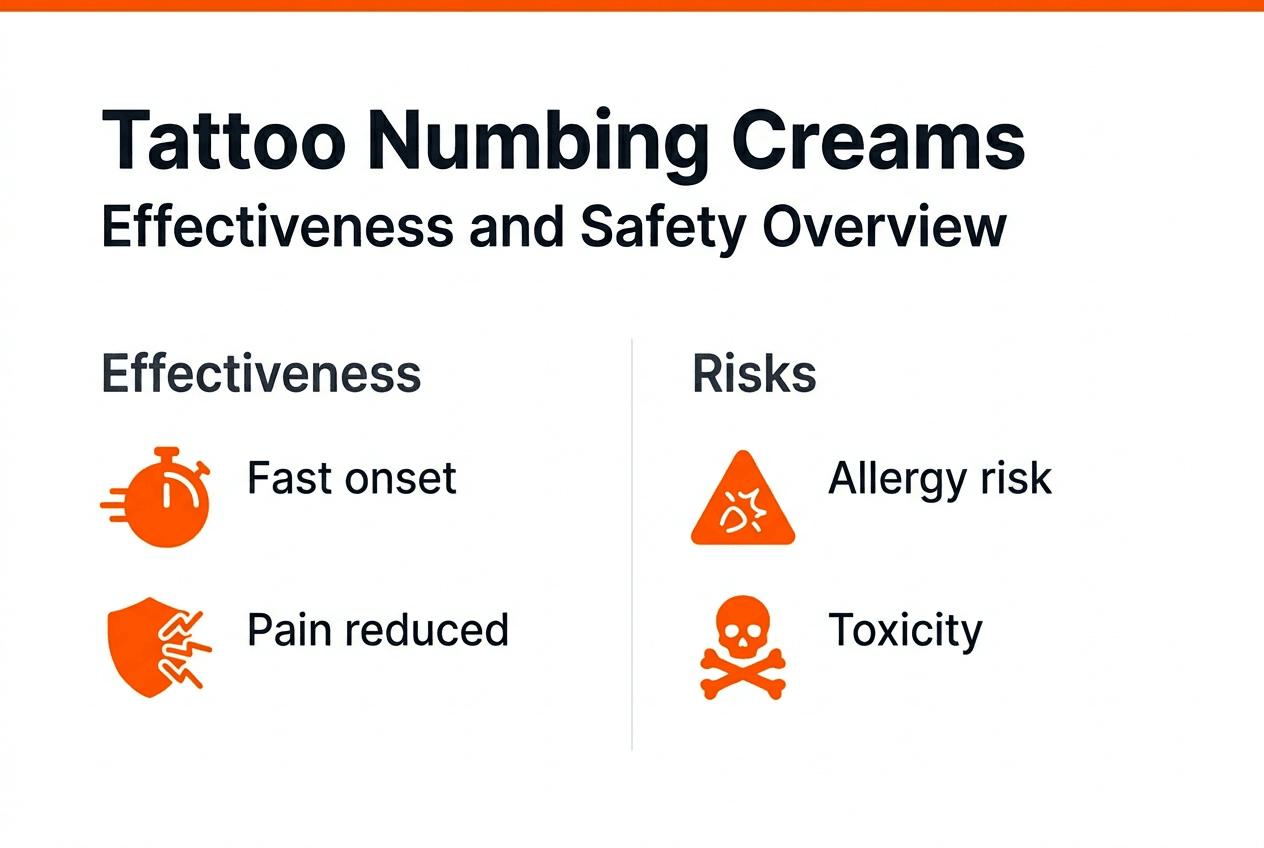
While numbing creams offer pain relief benefits, they carry documented safety risks you must understand before use. The primary concern involves systemic absorption causing toxicity including central nervous system and cardiovascular complications. When too much anesthetic enters your bloodstream, serious side effects can occur.
Potential adverse reactions include:
- Seizures from CNS overstimulation
- Heart arrhythmias affecting normal cardiac rhythm
- Tachycardia causing rapid heartbeat
- Hypertension raising blood pressure dangerously
- Methemoglobinemia reducing blood oxygen capacity
Epinephrine-containing formulations pose additional risks. One case report documented severe toxicity when anesthetic gel with epinephrine was overused, causing cardiovascular complications requiring emergency treatment. Applying large quantities or using products near your heart or on broken skin dramatically increases absorption rates.
Prilocaine specifically carries a rare but serious risk of methemoglobinemia, a condition where hemoglobin cannot effectively carry oxygen through your body. This becomes dangerous when oxygen delivery to tissues drops below safe levels.
European legal restrictions exist precisely because these risks are real. Many countries limit supply and application to licensed healthcare providers or pharmacies to prevent improper use.
Unlicensed products imported from outside Europe may lack proper safety testing, sterility standards, or accurate ingredient labeling. Using such creams exposes you to unknown contamination risks. Even legitimate products become dangerous when instructions are ignored or excessive amounts are applied.

Understanding these anesthetic cream safety concerns helps you weigh benefits against potential harms. Responsible use requires following all guidelines carefully and recognizing when professional medical advice is needed.
Comparing popular numbing creams: effectiveness and legal status in Europe
Choosing the right numbing product involves understanding both effectiveness and legal availability across Europe. TKTX and Dermacain represent two popular options, each with distinct characteristics affecting performance and compliance.
| Product | Anesthetic Concentration | Best For | Legal Considerations |
|---|---|---|---|
| TKTX 55% Gold | High lidocaine/prilocaine | Maximum numbing strength | Restricted in some EU countries |
| Dermacain | Balanced multi-ingredient | Sensitive skin compatibility | Varies by national regulation |
| Generic Lidocaine 5% | Standard concentration | Mild procedures | Widely available with prescriptions |
Research shows formulation matters for pain control. One clinical trial found lignocaine 7% and tetracaine 7% cream offers better analgesia than lignocaine and prilocaine 5% cream when applied under similar conditions. This suggests higher concentrations and specific ingredient combinations provide superior numbing effects.
Legal landscapes vary dramatically across Europe. The UK exemplifies strict regulations where tattoo artists are advised against applying numbing creams themselves, leaving clients responsible for obtaining and using licensed products. Germany, France, and other nations maintain different rules governing who can supply and apply these anesthetics.
Many tattooists cannot legally provide numbing creams during appointments due to these restrictions. You may need to purchase products independently from licensed pharmacies or authorized online retailers. Using unlicensed creams carries both health and legal risks including potential fines or complications if adverse reactions occur.
Pro Tip: Always verify that any numbing cream you purchase meets your country’s regulatory standards and comes from an authorized supplier to ensure safety and legality.
When selecting products, consider both your pain sensitivity and the tattoo’s complexity. Larger pieces covering sensitive areas benefit from stronger formulations, while smaller designs may require only moderate numbing. Consulting your tattooist about their experience with various top tattoo anesthetics helps you make informed choices matching your specific needs.
Best practices for safe and effective numbing cream use during tattooing
Proper application technique determines both safety and effectiveness when using tattoo numbing creams. Following evidence-based practices minimizes risks while maximizing pain relief during your session.
Start with dosage control. Apply only the manufacturer-recommended amount to avoid systemic toxicity. More cream does not necessarily mean better numbing, but it does increase absorption into your bloodstream. Measure carefully and resist the temptation to overapply.
Timing matters significantly:
- Read product instructions for specific recommended application windows
- Apply cream 30 to 60 minutes before your appointment starts
- Use occlusion (covering with plastic wrap) only if manufacturer guidelines specify this technique
- Allow sufficient penetration time without exceeding maximum recommended duration
Skin condition affects both safety and results. Never apply numbing products to broken, inflamed, or irritated skin where absorption rates skyrocket. Healthy intact skin provides a natural barrier limiting how much anesthetic enters your system.
Key safety precautions include:
- Avoid applying near your heart or on mucous membranes
- Do not use on large body surface areas simultaneously
- Discontinue use immediately if you experience dizziness, confusion, or heart palpitations
- Store products away from heat and direct sunlight
- Purchase only from authorized retailers with proper licensing
Be aware that numbing reduces your body’s natural pain feedback mechanism. This warning system normally signals when tissue damage is occurring. Without it, you might not notice if your tattooist is working too deeply or if inflammation develops during the session.
Pro Tip: Test a small amount of any new numbing cream on your inner forearm 24 hours before your tattoo appointment to check for allergic reactions or sensitivity.
Adhering to manufacturer recommendations on dosage and application time is crucial for preventing complications. When uncertain about product choice or usage, consult both your tattoo artist and a healthcare professional. They can provide personalized guidance based on your medical history and tattoo plans.
Keep this safe numbing application checklist handy before your appointment to ensure you follow all critical steps. Preparation and caution make the difference between a comfortable experience and a dangerous situation.
Explore top-rated numbing creams for safer tattoos

After learning about safe numbing cream practices, you’re ready to explore trusted product options designed for effective pain relief during tattoo sessions. Our carefully selected range includes licensed formulations meeting European safety standards for your peace of mind.
Discover premium choices like TKTX 40% with free shipping when you purchase multiple tubes, making it economical for larger tattoo projects. For maximum numbing strength, TKTX 55% Gold cream delivers powerful anesthetic effects lasting up to three hours. Those with sensitive skin appreciate Dermacain premium tattoo care formulated for gentle yet effective pain management.
All products ship free across Europe on orders over 30 euros, and we guarantee your satisfaction with a money-back return policy. Browse detailed product pages featuring customer reviews and application instructions to find the perfect numbing solution for your next tattoo.
Is tattoo numbing safe? Frequently asked questions
How long before tattooing should I apply numbing cream?
Apply numbing cream 30 to 60 minutes before your tattoo appointment begins. This timing allows anesthetic ingredients sufficient time to penetrate skin layers and reach nerve endings. Always follow specific product instructions since formulations vary in recommended application windows.
What are the main risks of tattoo numbing creams?
The primary risks involve systemic toxicity when anesthetics absorb into your bloodstream excessively. This can cause seizures, heart arrhythmias, rapid heartbeat, and dangerous blood pressure changes. Prilocaine specifically may cause methemoglobinemia affecting oxygen transport. Following dosage guidelines strictly prevents most complications.
Are all tattoo numbing creams legal in Europe?
No, legality varies significantly between European countries. Many nations restrict numbing cream supply to licensed pharmacies or medical professionals only. Some jurisdictions prohibit tattoo artists from applying these products directly. Always verify your country’s specific regulations and purchase from authorized retailers to ensure compliance.
Can numbing cream completely eliminate tattoo pain?
Numbing creams significantly reduce discomfort but rarely eliminate sensation entirely. Effectiveness depends on your individual pain threshold, skin type, tattoo location, and product strength. Expect substantial relief rather than complete absence of feeling. Deeper tattoo work may still cause some sensation even with strong anesthetics.
What should I do if I experience side effects after using numbing cream?
Remove the cream immediately and wash the area thoroughly with soap and water. If you develop dizziness, confusion, rapid heartbeat, difficulty breathing, or bluish skin discoloration, seek emergency medical attention right away. These symptoms may indicate serious systemic toxicity requiring professional treatment. Learn more about safety of tattoo numbing creams to recognize warning signs early.


