

Many tattoo enthusiasts believe any moisturizer will help their ink heal properly, but this misconception leads to fading, scarring, and prolonged discomfort. Up to 40% of tattoo complications stem from poor aftercare choices, especially using the wrong creams. Pain management and complication prevention depend entirely on selecting formulations designed for wounded skin. This article unpacks which creams deliver real results, why ingredients matter more than brand names, and how both artists and clients benefit from science-backed aftercare that reduces pain while protecting your investment.
Table of Contents
- Why aftercare matters: Healing, pain, and your tattoo’s future
- Creams explained: Types, ingredients, and what really matters
- Pain control and itch: How creams make tattoo healing more comfortable
- Navigating risks: When aftercare creams go wrong
- Creams for artists: Boosting client satisfaction and results
- Next-level tattoo care: Discover premium creams for healing and comfort
- Frequently asked questions
Key Takeaways
| Point | Details |
|---|---|
| Proper cream choice matters | The right cream reduces complications, speeds healing, and lowers pain during tattoo recovery. |
| Ingredients are critical | Look for panthenol, aloe, or shea butter and avoid fragrances or heavy petroleum over time. |
| Switch after a week | Start with lubricating ointment, then move to a breathable balm after 3–7 days for best results. |
| Creams boost artist reputation | When artists recommend the right formulas, clients are happier, return more, and require less troubleshooting. |
| Less is more for healing | Too much cream can cause bubbling or slow down recovery, so apply thin layers only as needed. |
Why aftercare matters: Healing, pain, and your tattoo’s future
Your fresh tattoo is an open wound. The needle punctures your skin thousands of times, depositing ink while creating trauma that leaves tissue vulnerable to infection, moisture loss, and inflammation. Without proper care, you face extended pain, itching that tempts you to scratch, and complications like ink fallout or raised scarring.
Common problems include:
- Infection from bacteria entering open wounds
- Color fading when healing disrupts ink retention
- Scarring from excessive inflammation or picking
- Prolonged discomfort that affects daily activities
Poor aftercare choices directly cause these issues. Up to 40% of complications trace back to using products that suffocate skin, introduce irritants, or fail to support the repair process. Pain and itch often signal that your chosen cream isn’t working. Understanding the tattoo aftercare process helps you avoid these pitfalls and protect both comfort and results.
Creams explained: Types, ingredients, and what really matters
Not all creams serve the same purpose. Choosing the right formulation for each healing stage makes the difference between smooth recovery and setbacks.
Occlusive vs. breathable formulations
Occlusive ointments like Aquaphor create a barrier that locks in moisture during the first few days when your tattoo weeps plasma. They prevent scabbing and protect against external contaminants. However, overuse traps bacteria and delays healing. After the initial phase, breathable balms allow oxygen exchange while maintaining hydration, supporting faster tissue repair without infection risk.
Repairing balms with active ingredients
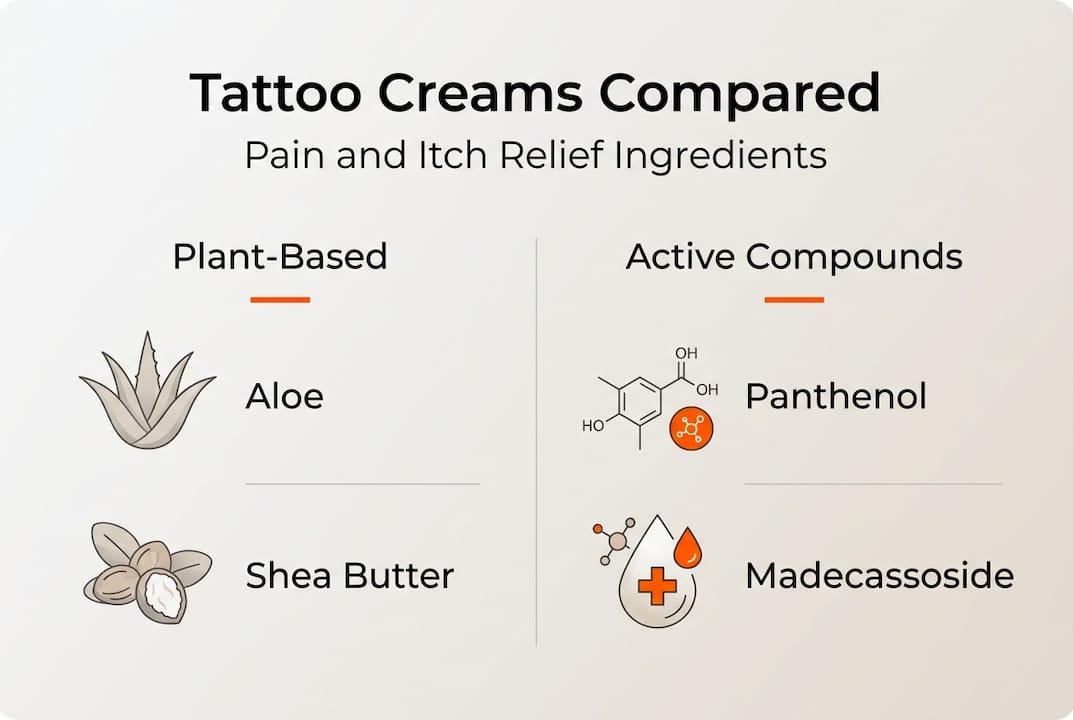
Modern formulations replace traditional antibiotic ointments with ingredients like panthenol and madecassoside. These compounds accelerate cell regeneration, reduce inflammation, and match antibiotics for healing effectiveness without antibiotic resistance concerns. European brands like TattooMed and Selmi Swiss prioritize these actives specifically for tattoo recovery.
Botanicals for pain and itch relief
Panthenol, aloe, and shea butter soothe nerve endings and calm inflammatory responses that cause discomfort. Unlike petroleum-based products that simply coat skin, these ingredients actively reduce the sensations that make healing miserable. They’re especially valuable for clients with low pain tolerance or large pieces that itch intensely during the peeling phase.
| Cream Type | Best For | Key Benefit | When to Avoid |
|---|---|---|---|
| Occlusive ointment | Days 1-3 | Prevents scabbing | After initial healing |
| Breathable balm | Days 4-21 | Supports oxygen exchange | On fresh wounds |
| Repairing formula | Full healing cycle | Accelerates cell turnover | Never (safe throughout) |
| Botanical blend | Pain/itch management | Calms nerve responses | Allergies to specific plants |
Pro Tip: Check ingredient lists for fragrances, dyes, or alcohol. These additives irritate healing skin and counteract the benefits of active compounds. Stick with formulations designed specifically for tattoo pain management rather than general skincare products.
Understanding these distinctions helps you match products to your skin’s needs at each stage. The right cream supports your body’s natural repair while minimizing the discomfort that makes aftercare challenging. Explore tattoo aftercare essentials to build a complete recovery routine.
Pain control and itch: How creams make tattoo healing more comfortable
Pain and itch drive most client complaints during recovery. The burning sensation from inflammation and the maddening itch during peeling test your patience and threaten your results if you scratch.
Panthenol and botanical ingredients outperform standard ointments for comfort. Panthenol converts to vitamin B5 in your skin, where it reduces inflammatory markers and supports moisture retention at the cellular level. Aloe and shea butter contain compounds that interrupt pain signals before they reach your brain, providing relief without numbing agents.
Clinical evidence supports these benefits. Repairing balms with panthenol and madecassoside matched topical antibiotics for healing time and inflammation reduction in controlled trials. By day 21, 100% of participants using these balms showed complete improvement with no difference in outcomes compared to antibiotic users. The key advantage: fewer side effects and better comfort scores throughout recovery.
“Clients consistently report less discomfort when using creams formulated with soothing botanicals rather than petroleum-based products. The difference shows up in both their feedback and the quality of healed work.” — Professional tattoo artist feedback
Consistent application matters as much as ingredient selection. Thin layers applied 2-3 times daily maintain the therapeutic concentration needed for pain relief without over-moisturizing. This approach keeps your tattoo pain relief process on track while supporting optimal healing conditions.
Pro Tip: Apply cream after washing with lukewarm water and patting dry. Damp skin absorbs active ingredients more effectively, maximizing their pain-relieving benefits. This timing also prevents the buildup that causes bubbling or delayed healing.
For comprehensive comfort during both the session and recovery, understanding pain relief in tattooing and how numbing effectiveness varies by body area helps you prepare for the complete experience.
Navigating risks: When aftercare creams go wrong
Even quality creams cause problems when used incorrectly. Recognizing these mistakes helps you avoid setbacks that extend healing time or damage your tattoo.
Common aftercare errors:
- Applying heavy ointments beyond the first week traps bacteria and prevents oxygen from reaching healing tissue
- Using products with fragrances or dyes introduces irritants that inflame sensitive skin
- Over-moisturizing with thick layers creates a breeding ground for infection and causes ink to bubble out
- Ignoring your skin type leads to breakouts on oily skin or excessive dryness on naturally dry skin
- Continuing steroids or medicated creams interferes with the natural healing cascade your body needs
Avoid fragrances, steroids, and heavy petroleum on oily or acne-prone skin. These ingredients clog pores and trigger breakouts that complicate healing. Switch from ointments to breathable balms after 3-7 days, when your tattoo stops weeping and begins the regeneration phase.
Adjusting for your skin type:
Oily skin needs lightweight, non-comedogenic formulations that won’t trigger breakouts. Look for gel-based or water-based balms that absorb quickly. Dry skin requires richer formulations with ceramides or fatty acids that reinforce your moisture barrier. Combination skin benefits from adjusting application frequency rather than switching products.
Pro Tip: If you notice bubbling, redness that spreads beyond the tattoo border, or increased pain after three days, you’re likely over-moisturizing or reacting to an ingredient. Strip back to gentle washing with antibacterial soap and minimal balm application until symptoms resolve. When handling sensitive skin before tattooing, discuss your concerns with your artist to prevent reactions.
Comparing tattoo creams for pain relief helps you identify formulations that match your skin’s needs without triggering complications.
Creams for artists: Boosting client satisfaction and results
Professional artists who guide clients toward effective aftercare see measurable benefits in their business and reputation.
How proper cream recommendations elevate your practice:
- Reduced touch-up requests when clients heal without color loss or patchiness
- Fewer panic calls about infection symptoms or healing concerns
- Better online reviews mentioning comfortable recovery experiences
- Stronger client relationships built on trust and expertise
- Portfolio pieces that heal true to your vision without fading or scarring
Proper creams enhance client satisfaction by minimizing the complications that lead to disappointment. When clients experience less pain and itch, they associate that comfort with your skill and care. This perception drives referrals and repeat business more effectively than any marketing campaign.
“Recommending science-backed aftercare products positions you as an expert who cares about results beyond the chair. Clients remember the artist who helped them heal comfortably, not just the one who created beautiful line work.”
Sharing specific product recommendations with ingredient explanations demonstrates your commitment to their outcome. Provide written aftercare instructions that explain why you suggest particular creams and how to use them correctly. This guidance prevents the trial-and-error approach that leads to complications.
Invest time in understanding aftercare essentials for artists so you can answer client questions confidently and adjust recommendations based on individual skin types or healing responses.
Next-level tattoo care: Discover premium creams for healing and comfort
Choosing the right aftercare cream isn’t just about healing. It’s about protecting your investment, maintaining vibrant color, and experiencing comfort throughout recovery. Generic moisturizers and pharmacy ointments weren’t formulated for tattooed skin’s unique needs.
Dermacain represents the premium standard for tattoo aftercare in Europe. Handpicked for clients and artists who expect superior results, it combines the soothing botanicals and active ingredients discussed throughout this article. The formulation supports every healing stage without the risks associated with heavy ointments or irritating additives.

Explore Dermacain 50g premium care for larger pieces or Dermacain 30g tattoo care for smaller work. Both options deliver the science-backed comfort and healing support your skin deserves. With free shipping on orders over 30 Euro across Europe and a satisfaction guarantee, you can invest in aftercare that matches the quality of your ink.
Frequently asked questions
Can I use regular moisturizer instead of tattoo-specific creams?
Tattoo-specific balms are safer because regular moisturizers contain fragrances or occlusives that interfere with healing. Specialized formulations avoid these irritants while delivering ingredients that support wounded skin.
How long should I apply aftercare cream on a new tattoo?
Apply ointment for the first 3-7 days, then switch to lighter balms as healing progresses. Continue using breathable formulations until peeling completes and your skin returns to normal texture.
What cream ingredients are best for pain and itch relief?
Panthenol, aloe, and shea butter effectively reduce pain and itch during tattoo healing. These botanicals calm inflammation and soothe nerve responses without numbing agents.
Are antibiotic ointments necessary for tattoo aftercare?
Studies show repairing balms with panthenol or madecassoside work as well as antibiotics for healing. They provide equivalent results without contributing to antibiotic resistance.
What happens if I over-moisturize my tattoo?
Applying too much cream causes bubbling or delays healing. Use thin layers and let your skin breathe between applications to maintain proper moisture balance.


