

Many people assume that injections represent the gold standard for pain relief in any situation. But for tattoo clients across Europe, that assumption falls apart quickly. The reality is that the two main numbing options, topical creams and injections, are not equal in a tattoo context. One is practical, accessible, and designed for exactly this kind of procedure. The other is invasive, legally restricted, and rarely seen inside a tattoo studio. By the time you finish reading, you’ll know exactly how both methods compare, which one is safer and more realistic for European clients, and why products like TKTX and Dermacain have become the go-to choice for pain-free tattoo sessions.
Table of Contents
- The basics: How topical and injection numbing work
- Comparing pain relief: What clients actually experience
- Safety and legality: What’s allowed in European tattooing
- Why topicals are preferred in real tattoo sessions
- Our take: The real-world decision for pain-free tattoos
- Get effective, easy pain relief for your next tattoo
- Frequently asked questions
Key Takeaways
| Point | Details |
|---|---|
| Topicals are preferred | Most tattoo clients in Europe choose topical numbing creams due to ease, safety, and effectiveness. |
| Injections raise risks | Injection numbing is painful, riskier, and legally restricted for tattoo sessions. |
| Legal and safe options | Over-the-counter creams like TKTX and Dermacain are widely available and legal for tattoo pain relief. |
| Lasting pain relief | Properly applied topical creams typically provide 2 to 4 hours of effective numbing for most tattoos. |
The basics: How topical and injection numbing work
Before comparing the two, it helps to understand what each method actually does to your skin and nerves.
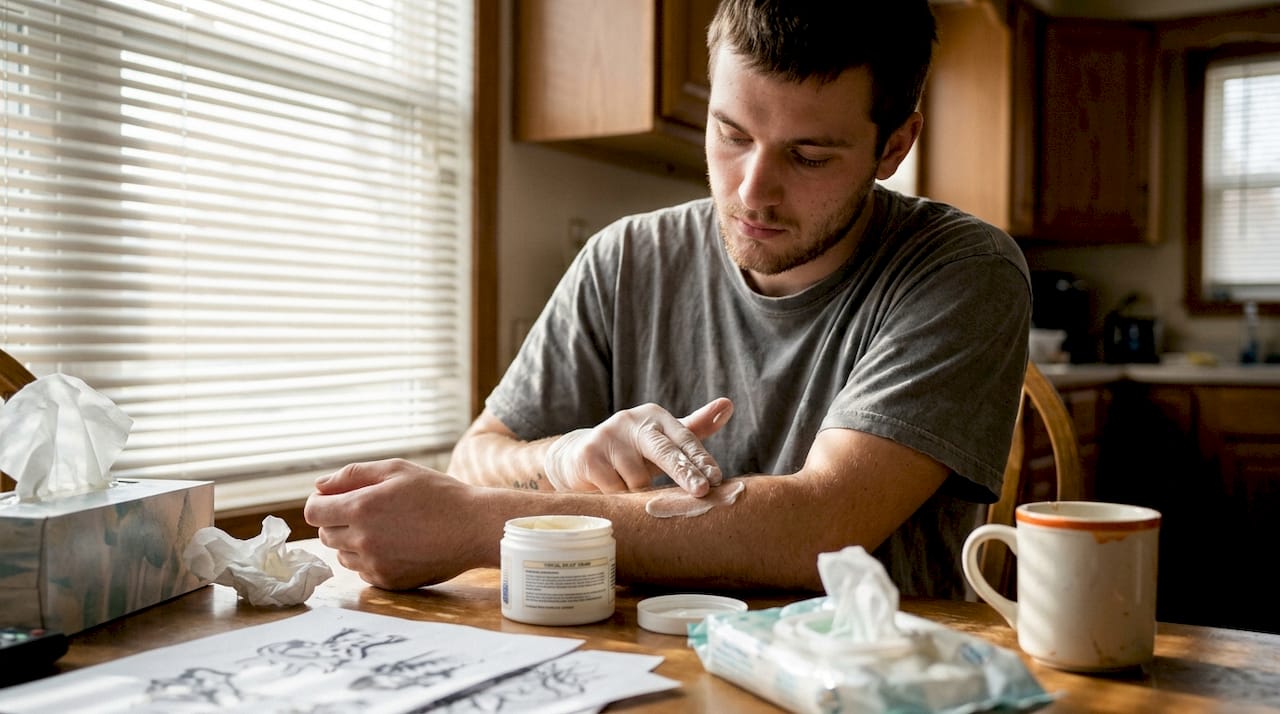
Topical anesthesia means applying a numbing cream, gel, or spray directly onto the surface of your skin. Products like TKTX and Dermacain contain active ingredients such as lidocaine, prilocaine, or benzocaine. These ingredients penetrate the upper layers of skin and temporarily block the nerve signals that carry pain messages to your brain. No needles involved. You apply the cream, cover it with plastic wrap to boost absorption, wait 45 to 60 minutes, and the area goes numb.
Injection anesthesia works differently. A healthcare professional injects a liquid anesthetic, most commonly lidocaine, directly beneath the skin. This blocks nerves at a deeper level and takes effect almost immediately. It’s the same approach used in dental procedures and minor surgeries.
Both methods block pain signals, but they differ significantly in onset time, depth of numbing, and who can actually administer them. Here’s a quick breakdown:
- Topical creams: applied by the client at home or before the session, no medical training required
- Injection anesthetics: administered only by licensed healthcare professionals
- Topicals take 45 to 60 minutes to activate; injections work within minutes
- Topicals numb the surface layers; injections reach deeper tissue
- Topical preferred for tattoos due to non-invasive application, self-administration, and lower risk
For more background on how these products are used in the tattoo world, the guide on topical anesthetics in tattooing breaks it down in plain language.
Pro Tip: Apply your topical cream generously and cover the area with plastic wrap. Thin or uneven application leads to patchy numbing. More coverage, better results.
Comparing pain relief: What clients actually experience
Understanding how each method works, let’s see how they actually feel and perform in practice.
For most tattoo clients, the experience with topical creams is straightforward. You apply the cream before your session, the skin becomes noticeably less sensitive, and the tattooing process feels far more manageable. There’s no discomfort during application, no waiting room anxiety about a shot, and no need to coordinate with a doctor.
Injections are a different story. The shot itself is painful, sometimes more painful than the tattoo. There’s also a real risk of swelling, bruising, or distorted skin texture at the injection site, which can actually interfere with the tattooing process. Injection numbing provides deeper, faster anesthesia but is significantly more painful during administration and riskier.
Here’s how the two methods compare across the factors that matter most to tattoo clients:
| Factor | Topical cream | Injection |
|---|---|---|
| Pain during application | None | Moderate to high |
| Time to take effect | 45 to 60 minutes | 5 to 10 minutes |
| Duration of numbing | 2 to 4 hours | 1 to 3 hours |
| Depth of numbing | Surface layers | Deep tissue |
| Client satisfaction | High | Lower (due to admin pain) |
| Availability in Europe | OTC or online | Prescription only |
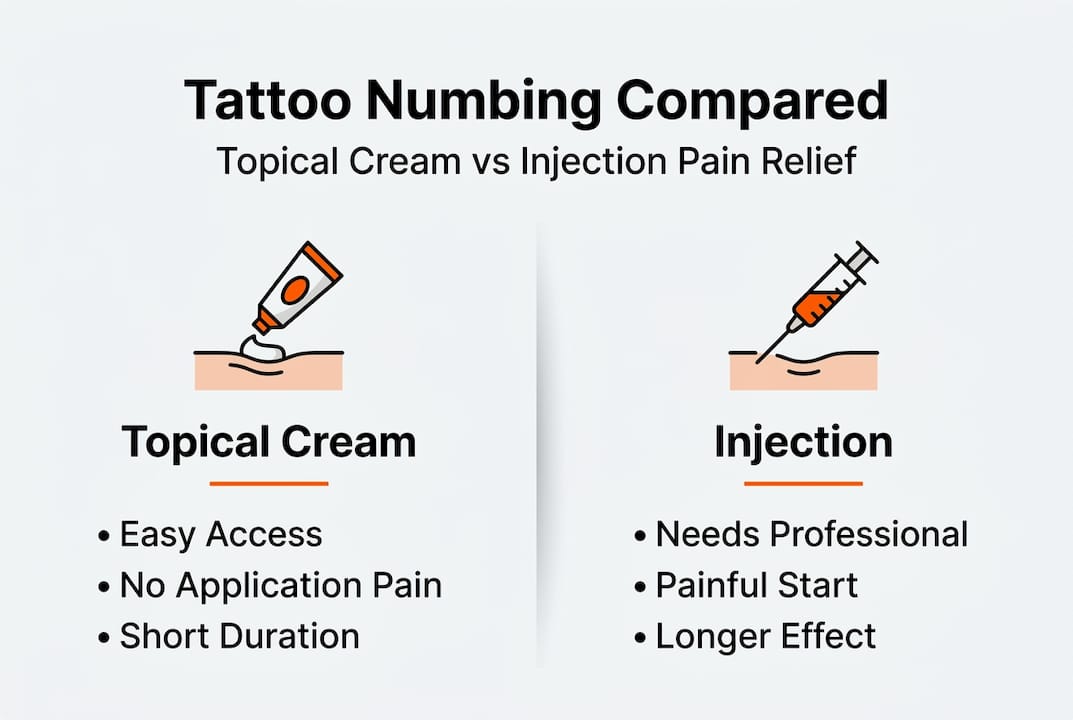
The numbers back this up. Topicals are effective for 2 to 4 hours, reduce pain up to 85%, and are preferred by 70% of clients in studies.
Here’s a numbered comparison of the three most important practical factors:
- Effectiveness duration: Topical creams last long enough for most tattoo sessions without needing reapplication
- Pain during administration: Creams cause zero discomfort during application; injections add their own pain on top of the tattoo
- Client satisfaction: Clients using topicals report higher overall satisfaction because the experience is simpler and less stressful
For a deeper look at how these two approaches stack up, the article on topical vs injectable anesthesia covers the clinical side in more detail. You can also explore how anesthetic cream for tattoos works specifically for skin procedures.
Safety and legality: What’s allowed in European tattooing
Effectiveness is important, but safety and legality matter too, especially in Europe’s regulated tattoo industry.
Topical numbing creams containing up to 5% lidocaine are widely available across Europe, both in pharmacies and through online retailers. Clients regularly purchase and apply these products themselves before their appointments. No prescription needed. No medical visit required. This is the standard practice across the continent.
Injections are a completely different category. Only licensed healthcare professionals can legally administer injectable anesthetics. Tattoo artists are not authorized to inject anything, regardless of country. In Europe, topicals like TKTX and Dermacain are regulated OTC products; injections require a prescription and a professional, making them impractical for routine tattoo use.
Here’s a clear breakdown of what’s available and under what conditions:
| Method | Availability | Who can administer | Typical use in tattoos |
|---|---|---|---|
| Topical cream (up to 5% lidocaine) | OTC and online | Client (self-applied) | Very common |
| Topical cream (above 5% lidocaine) | Prescription only | Professional or client with Rx | Uncommon |
| Injectable anesthetic | Prescription only | Licensed healthcare professional | Extremely rare |
| DIY injection | Illegal | Nobody | Never |
Key safety considerations every client should know:
- Lidocaine toxicity is possible if too much cream is applied over a large area; always follow dosage instructions
- Skin reactions such as redness or mild irritation can occur, especially with first-time use
- Injection risks include bruising, swelling, nerve damage, and skin distortion that can affect the tattoo
- Allergic reactions are rare but possible with both methods; patch testing is always a smart move
For a broader look at what goes into these products, the overview of examples of numbing agents is worth reading. You can also check the breakdown of numbing ingredients for tattoos to understand what’s actually in the creams you’re using.
Why topicals are preferred in real tattoo sessions
Knowing the facts, here’s what really happens in tattoo studios and why most artists and clients pick topicals.
The biggest practical advantage of topical creams is independence. You don’t need a doctor’s appointment. You don’t need a prescription. You apply the cream yourself at home or in the studio waiting area, and you walk into your session already numb. That simplicity is hard to beat.
TKTX and Dermacain are specifically formulated to cover the typical tattoo session window. Effective 2 to 4 hour topical numbing is confirmed in wound care and tattoo reviews, with no direct tattoo injection studies available, reinforcing that topicals are the preferred choice for minor skin procedures.
Pro Tip: Once you apply the cream, cover the area tightly with plastic wrap (occlusion). This traps heat and moisture, pushing the active ingredients deeper into the skin for stronger numbing. Don’t skip this step.
Here’s why tattoo artists consistently prefer clients to use topical creams rather than injections:
- Creams don’t alter the texture or tension of the skin the way injections can
- Injections can cause puffiness or swelling that makes precise line work harder
- Artists can read the client’s natural skin response with creams; injections can mask important feedback
- No medical coordination is needed, keeping the session focused on the artwork
- Topicals are safer and easier to manage if something unexpected happens
For a full look at how creams fit into the overall session experience, the guide on pain management in tattooing is a practical resource.
Our take: The real-world decision for pain-free tattoos
The medical world has a tendency to rank interventions by depth and speed. By that logic, injections win. But that framework doesn’t translate to tattoo studios, and applying it here is a mistake.
In practice, injections are superior for depth in medical procedures but impractical for tattoos: they add pain and risk, require a clinician, and can mask feedback, risking overworked skin. That last point matters more than people realize. A tattoo artist relies on subtle cues from your skin during a session. When those cues are chemically suppressed by a deep injection, the risk of overworking an area goes up.
We’ve seen clients come in convinced that a stronger, deeper numbing method must be better. It rarely is. What protects the client and the artwork is ease of use and safe boundaries, not just depth of numbness. Topical creams hit that mark consistently.
No reputable European studio will inject anesthetics for a tattoo. The legal restrictions are clear, the logistics are impractical, and the risks simply don’t justify it. For the comparison of injectables vs topicals in tattooing, the answer for tattoo clients is almost always the same: creams win.
Injections only make sense in rare cases involving complex medical needs or surgeon-administered procedures. For everything else, topicals are the right call.
Get effective, easy pain relief for your next tattoo
If you’ve made it this far, the takeaway is clear: topical numbing creams are overwhelmingly the best choice for tattoo pain relief across Europe. They’re safe, legal, effective for 2 to 4 hours, and you can use them without a prescription or a doctor’s visit.

At buytktx.online, we carry regulated, high-quality products trusted by clients all over Europe. You can browse Dermacain 50g premium tattoo care for a reliable, professional-grade option, or go straight for TKTX 40 numbing for strong, proven results. If you want maximum strength, TKTX 55 gold is our most powerful formula. Orders over 30 Euro ship free, and every purchase is backed by our full satisfaction guarantee.
Frequently asked questions
Are topical numbing creams safe for all tattoo clients?
Most healthy adults can use topical creams safely, but clients should check for allergies and use the product as directed. Anyone with specific medical conditions should consult a pharmacist or doctor first.
Why don’t tattoo studios in Europe use injection numbing?
Studios avoid injections due to strict legal, safety, and professional restrictions. Only licensed healthcare professionals are authorized to administer injectable anesthetics, making it completely impractical in a standard tattoo setting.
How long does topical numbing last during a tattoo?
Topical creams like TKTX or Dermacain typically provide effective numbing for 2 to 4 hours, which is long enough for the majority of tattoo sessions without needing reapplication.
Can I buy topical numbing creams like TKTX without a prescription in Europe?
Yes. TKTX and Dermacain are regulated OTC products in most European countries, available in pharmacies and online. Always choose reputable, regulated products to ensure safety and consistent results.


