

Finding the right numbing solution for your next tattoo session in Central Europe can make all the difference between anxiety and confidence at the studio. The tattooing process relies on proper skin anatomy knowledge and the use of safe, affordable anesthetic options to manage pain effectively. Whether you are a seasoned tattoo artist or a first-time client, understanding how numbing creams and anesthetic techniques work ensures a smoother experience and high customer satisfaction. This guide dives into the essentials of skin layers, anesthetics, and pain management strategies for lasting tattoo comfort.
Table of Contents
- Skin Layers Explained For Tattooing
- Types Of Anesthetics Used On Skin
- How Numbing Creams Affect Tattoo Pain
- Safety, Allergies, And Legal Requirements
- Common Pitfalls In Tattoo Pain Management
Key Takeaways
| Point | Details |
|---|---|
| Understanding Skin Layers is Crucial | Knowledge of the epidermis, dermis, and hypodermis is essential for effective tattoo placement and longevity. |
| Choose the Right Anesthetic | Selecting appropriate anesthetic types can significantly enhance comfort during tattoo sessions. |
| Manage Pain Expectations | Recognize that numbing creams don’t eliminate all pain; individual tolerance varies. |
| Consult Artists for Best Practices | Communication with your tattoo artist about pain management and skin sensitivities is key to a positive experience. |
Skin Layers Explained for Tattooing
Understanding the complex anatomy of human skin is crucial for anyone considering a tattoo. The skin is not just a simple external covering, but a sophisticated multilayered organ that plays a critical role in how tattoo ink settles and remains permanent.
Tattooing primarily involves three distinct skin layers: the epidermis, dermis, and hypodermis. Each layer has unique characteristics that impact the tattooing process. Detailed skin anatomy research reveals the intricate mechanisms behind ink retention and skin interaction.
Here’s a breakdown of each skin layer’s role in tattooing:
-
Epidermis: The outermost protective barrier
- Continuously renews itself
- Not the primary layer for ink deposit
- Provides initial skin protection
-
Dermis: The critical ink placement layer
- Located beneath the epidermis
- Where tattoo ink is permanently deposited
- Contains fibroblasts and collagen fibers that hold ink particles
- Immune system interactions in this layer determine ink permanence
-
Hypodermis: The supportive subcutaneous layer
- Composed of fat and connective tissue
- Not directly involved in ink retention
- Should be avoided during tattooing to prevent ink spread
The precise placement of ink in the dermis is essential. Tattoo ink placement techniques must target this specific layer to ensure the tattoo remains crisp, clear, and long-lasting. If ink is deposited too superficially or deeply, it can result in blurred lines, premature fading, or uneven coloration.
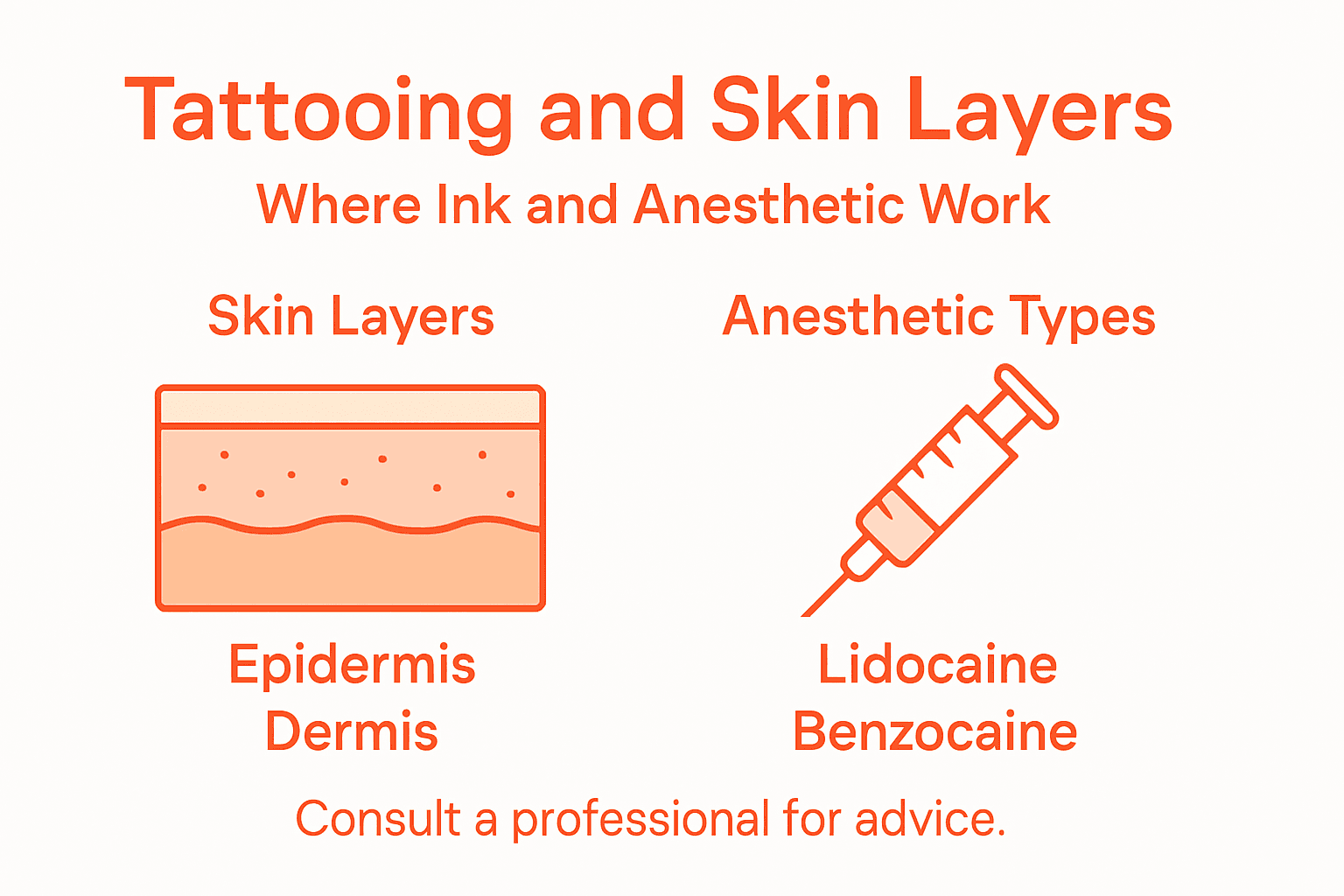
Here’s a concise overview of how each skin layer affects tattoo longevity and appearance:
| Skin Layer | Role in Tattooing | Effect on Tattoo Quality | Risks if Ink Placed Here |
|---|---|---|---|
| Epidermis | Protective barrier | Temporary or fading tattoos | Rapid fading, possible distortion |
| Dermis | Ink retention zone | Strong color, clear outlines | Ideal ink placement; minimal risk |
| Hypodermis | Fat/connective support | Blurred, uneven appearance | Ink migration, irregular shapes |
Pro tip: Always consult an experienced tattoo artist who understands skin anatomy and can expertly place ink in the dermis for optimal tattoo quality and longevity.
Types of Anesthetics Used on Skin
Tattooing involves complex pain management strategies, and understanding the various types of anesthetics can significantly improve the overall experience for both artists and clients. Local anesthetic mechanisms play a crucial role in blocking pain signals and making tattoo sessions more comfortable.
Anesthetics used in tattooing can be broadly categorized into two primary chemical groups:
-
Ester-based Anesthetics
- Benzocaine
- Tetracaine
- Shorter duration of action
- More likely to cause allergic reactions
-
Amide-based Anesthetics
- Lidocaine (most commonly used)
- Prilocaine
- Bupivacaine
- Mepivacaine
- Longer lasting and more stable
- Lower allergic reaction risk
The most prevalent anesthetic in tattoo preparation is lidocaine, renowned for its exceptional pain-blocking capabilities. Topical anesthetic combinations like EMLA cream, which blend lidocaine and prilocaine, offer enhanced numbing effects by creating a eutectic mixture that penetrates skin more effectively.
Anesthetic application methods vary, including:
- Topical creams
- Gels
- Sprays
- Patches
- Injectable formulations
Each method targets nerve endings differently, blocking sodium channels and preventing pain signal transmission. The choice depends on the tattoo’s size, location, and individual pain tolerance.
Below is a quick reference for common anesthetic application methods and their best use scenarios:
| Method | Best Use Case | Duration of Effect |
|---|---|---|
| Cream | Small tattoos, sensitive skin | 1-2 hours |
| Gel | Quick sessions, easy removal | Less than 1 hour |
| Spray | Large areas, fast application | 30-60 minutes |
| Patch | Extended numbing for sessions | Up to 2 hours |
| Injection | Deep numbing, detailed work | Several hours |
Proper anesthetic selection can transform a potentially painful tattoo experience into a comfortable, manageable procedure.
Pro tip: Always consult with your tattoo artist about the most appropriate anesthetic for your specific tattoo design and personal pain threshold.
How Numbing Creams Affect Tattoo Pain
Numbing creams play a crucial role in transforming the tattoo experience for individuals with lower pain tolerance or sensitive skin. Tattoo pain management techniques primarily rely on these topical solutions to reduce discomfort during the tattooing process.
The primary mechanism of numbing creams involves blocking nerve signal transmission in the skin:
-
Nerve Signal Interruption
- Prevents pain receptors from sending signals to the brain
- Uses active ingredients like lidocaine
- Provides localized, temporary pain relief
-
Pain Perception Reduction
- Lessens sensory input from tattoo area
- Does not completely eliminate pain
- Varies based on individual pain threshold
Understanding the limitations of numbing creams is essential for managing expectations. These topical anesthetics are not a magical solution but rather a helpful tool in pain management. They typically work by:
- Temporarily desensitizing skin surface
- Reducing nerve sensitivity
- Creating a mild protective barrier
- Minimizing immediate pain perception
Numbing creams provide relief, but they do not guarantee a completely painless tattoo experience.
The effectiveness of these creams depends on several factors, including application technique, individual skin sensitivity, and the specific tattoo location. Some areas of the body are more responsive to numbing agents than others, making it crucial to consult with your tattoo artist about the most appropriate pain management strategy.
Pro tip: Apply numbing cream 30-45 minutes before your tattoo session and cover with plastic wrap to enhance its effectiveness and absorption.
Safety, Allergies, and Legal Requirements
Topical anesthetics for tattoos are subject to stringent safety regulations across Europe. Cosmetic product safety protocols ensure that numbing creams undergo comprehensive testing before reaching consumers.
Key safety considerations include:
-
Potential Allergic Reactions
- Risk of skin sensitization
- Individual variability in chemical responses
- Importance of patch testing
- Potential for contact dermatitis
-
Regulatory Compliance
- EU Cosmetic Products Regulation mandates thorough assessments
- Manufacturers must prove product safety
- Strict ingredient restrictions
- Comprehensive toxicological evaluations
The regulatory landscape for topical anesthetics is complex and multifaceted. Chemical sensitization research highlights the importance of understanding potential risks associated with chemical agents used in numbing products.
Key legal requirements for tattoo numbing products include:
- Detailed ingredient labeling
- Maximum concentration limits for active ingredients
- Clear usage instructions
- Potential side effect disclosures
- Manufacturer safety certifications
European regulations prioritize consumer protection through rigorous product testing and ingredient monitoring.
Individuals with known skin sensitivities, allergies, or medical conditions should consult healthcare professionals before using any topical anesthetic. This is particularly important for those with a history of adverse reactions to similar products.

Pro tip: Always request a complete ingredient list and perform a small patch test 24 hours before your tattoo to check for potential allergic reactions.
Common Pitfalls in Tattoo Pain Management
Navigating pain management during tattoo sessions can be challenging for both clients and artists. Tattoo pain management research reveals numerous misconceptions that can significantly impact the overall tattooing experience.
Common misconceptions about tattoo pain include:
-
Unrealistic Pain Expectations
- Believing numbing creams eliminate 100% of pain
- Assuming pain levels are consistent across body areas
- Underestimating session duration and discomfort
- Neglecting individual pain tolerance variations
-
Preparation Failures
- Not consulting with tattoo artist beforehand
- Skipping patch tests for numbing products
- Failing to understand body location sensitivity
- Overlooking personal health conditions
Tattoo pain myths often stem from a lack of comprehensive understanding about the tattooing process. Individuals frequently make critical errors that can compromise their comfort and the quality of their tattoo.
Key pitfalls to avoid include:
- Applying numbing cream incorrectly
- Choosing inappropriate pain management strategies
- Ignoring artist recommendations
- Overestimating personal pain threshold
- Neglecting post-tattoo care instructions
Effective pain management requires realistic expectations and proactive communication with your tattoo artist.
Understanding these potential issues can help clients prepare more effectively and minimize discomfort during their tattoo experience. Knowledge truly is the best pain management tool.
Pro tip: Discuss your specific pain concerns and medical history with your tattoo artist at least one week before your appointment to develop a personalized pain management strategy.
Experience Pain-Free Tattooing with Expert Skin Care
Understanding the precise role of the dermis and how anesthetics like lidocaine block pain signals reveals why proper numbing is vital for a comfortable tattoo session. If you want to avoid the common pitfalls of ineffective pain management and enjoy a smooth, lasting tattoo, addressing your pain before the needle touches the skin is essential. Our premium tattoo numbing creams like TKTX and Dermacain guarantee up to three hours of effective pain relief to keep you calm and confident throughout your session.

Take control of your tattoo experience today by choosing effective numbing creams tailored for ink placement. With free shipping across Europe on orders over 30 Euro and a customer satisfaction guarantee, there is no better time to ensure your pain management strategy matches your tattoo goals. Visit https://buytktx.online now and prepare to transform your tattoo session into a virtually pain-free journey.
Frequently Asked Questions
What are the main layers of skin involved in tattooing?
Tattooing primarily involves three layers of skin: the epidermis (outer protective barrier), the dermis (main layer for ink deposit), and the hypodermis (subcutaneous layer for support). The ink is permanently deposited in the dermis, which is crucial for the tattoo’s longevity and appearance.
How do numbing creams work during a tattoo session?
Numbing creams work by blocking nerve signal transmission to the brain, using active ingredients like lidocaine to provide localized pain relief. They temporarily desensitize the skin surface, reducing pain perception, though they do not completely eliminate pain.
What are the differences between ester-based and amide-based anesthetics?
Ester-based anesthetics, such as benzocaine and tetracaine, typically have a shorter duration of action and a higher likelihood of allergic reactions. In contrast, amide-based anesthetics, like lidocaine and prilocaine, are longer-lasting, more stable, and have a lower risk of causing allergies.
What precautions should I take when using topical anesthetics for tattoos?
You should consult your tattoo artist about the most appropriate anesthetic for your tattoo, conduct a patch test before application to check for allergic reactions, and ensure to follow all usage instructions and dosage guidelines to avoid potential side effects.


