

Finding the right numbing products can feel confusing when legal requirements change and client comfort expectations keep rising. For tattoo artists across Central Europe, choosing between TKTX, Dermacain, and other options means balancing safe pain management with strict regulatory standards. This guide explains the active ingredients and legal obligations set by European agencies so you can confidently protect your clients and your practice.
Table of Contents
- Defining Tattoo Numbing Creams And Uses
- Active Ingredients And Types Of Numbing Creams
- Regulatory Standards For Tattoo Numbing In Central Europe
- Safety Obligations And Labeling Requirements
- Legal Risks And Liabilities For Tattoo Artists
Key Takeaways
| Point | Details |
|---|---|
| Tattoo Numbing Creams | Specialized topical anesthetics, such as Lidocaine and Benzocaine, are designed to minimize pain during the tattooing process. |
| Ingredient Regulation | Central Europe has strict regulations ensuring the safety and efficacy of active ingredients in numbing creams. |
| Safety and Labeling Requirements | Manufacturers must comply with stringent EU regulations regarding ingredient disclosure and safety testing for consumer protection. |
| Legal Responsibilities for Artists | Tattoo artists face significant legal risks, including ensuring product compliance and maintaining proper client safety protocols. |
Defining Tattoo Numbing Creams and Uses
Tattoo numbing creams represent specialized topical anesthetics designed to minimize pain during the tattooing process. Topical anesthetic formulations typically contain a strategic blend of nerve-blocking compounds that temporarily reduce skin sensitivity.
These medical-grade creams usually incorporate multiple active ingredients to achieve effective pain management:
- Lidocaine: Primary numbing agent (2-5% concentration)
- Benzocaine: Secondary pain reduction ingredient (5-20% concentration)
- Tetracaine: Additional nerve signal blocking compound
Numbing creams function by interrupting nerve signal transmission in the targeted skin area. When applied before tattooing, these specialized products create a temporary barrier that prevents pain receptors from sending discomfort signals to the brain. This allows tattoo artists to work more precisely and helps clients experience a more comfortable tattooing procedure.
Modern numbing cream formulations go beyond basic pain reduction. Advanced versions may include supplementary ingredients designed to:
- Minimize potential bleeding
- Reduce inflammation
- Extend numbness duration
- Provide smoother application
Pro-Tipp: Always consult with your tattoo professional about appropriate numbing cream application techniques and potential skin sensitivities before your tattoo session.
Active Ingredients and Types of Numbing Creams
Local anesthetic ingredients play a critical role in managing pain during tattoo procedures. In Central Europe, numbing creams are carefully regulated to ensure patient safety and effective pain management.
The primary active ingredients in professional tattoo numbing creams include:
-
Lidocaine: Most common local anesthetic
- Concentration typically between 2-5%
- Directly blocks nerve impulse transmission
-
Benzocaine: Secondary pain reduction compound
- Concentration ranges from 5-20%
- Tetracaine: Additional nerve signal interruption agent
- Prilocaine: Alternative anesthetic with specific monitoring requirements
Each ingredient functions differently to interrupt pain signals. Lidocaine works by temporarily blocking sodium channels in nerve cells, preventing pain message transmission. Benzocaine provides surface-level numbness, while tetracaine offers deeper nerve signal interruption.
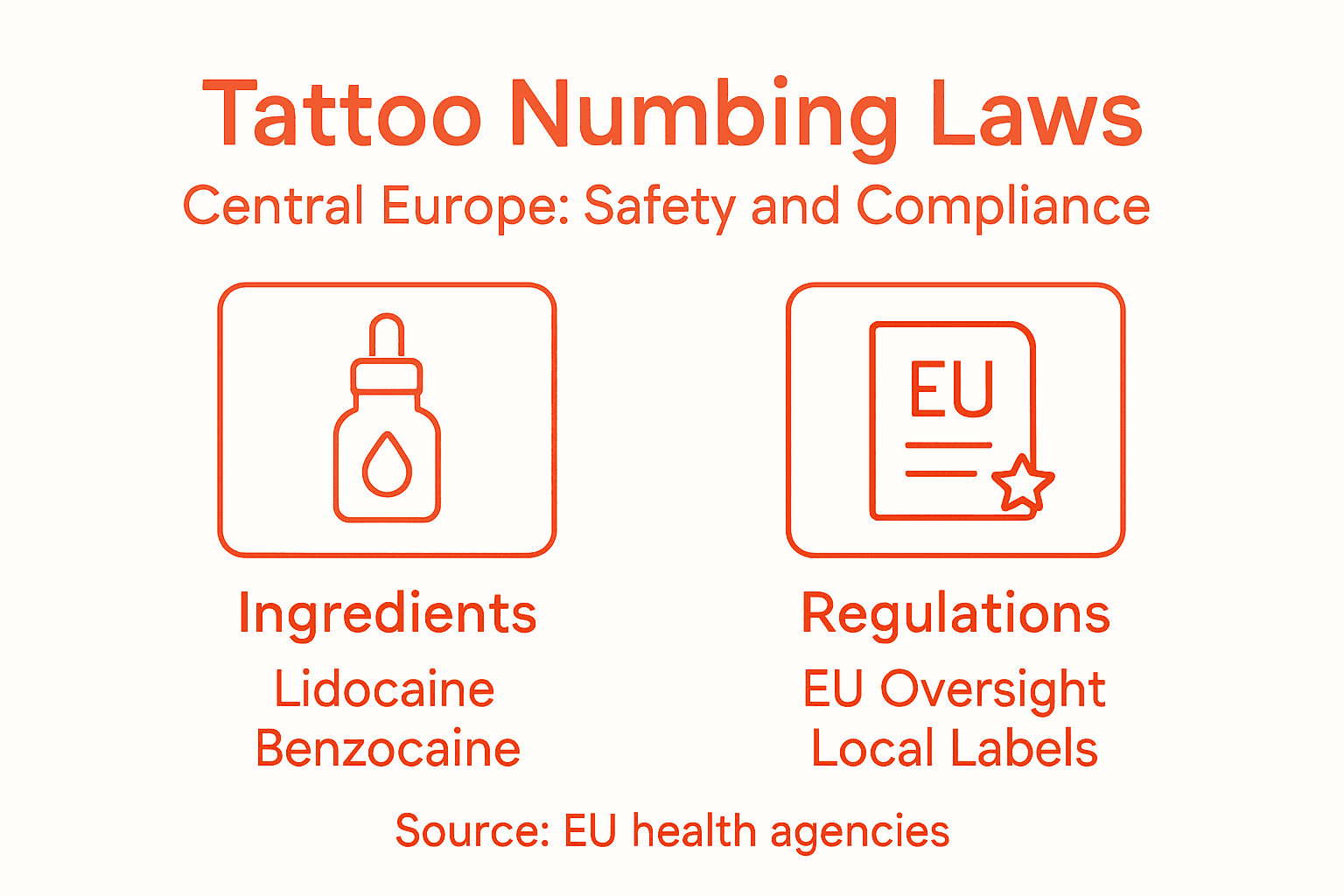
Here’s a side-by-side look at how common numbing cream ingredients differ:
| Ingredient | Typical Use in Cream | Depth of Numbing | Notable Considerations |
|---|---|---|---|
| Lidocaine | Core anesthetic | Medium to deep | Highly effective, rapid onset |
| Benzocaine | Surface effects | Surface level | Slower onset, prolonged effect |
| Tetracaine | Signal blocker | Deep tissue | Potential for prolonged numbness |
| Prilocaine | Alternative option | Medium to deep | Requires professional monitoring |
Advanced numbing cream formulations in Central Europe often combine multiple ingredients to achieve comprehensive pain management. These sophisticated products aim to:
- Minimize potential tissue damage
- Reduce inflammation
- Provide longer-lasting numbness
- Ensure smoother tattoo application
Regulatory bodies in Central Europe closely monitor topical anesthetic concentrations to maintain patient safety and prevent potential medical complications.
Pro-Tipp: Always verify the specific ingredient composition and recommended application techniques with a professional tattoo artist or medical expert before using numbing creams.
Regulatory Standards for Tattoo Numbing in Central Europe
European Chemicals legislation governs the complex regulatory landscape for tattoo numbing products across Central Europe. The REACH Regulation (EC) No. 1907/2006 establishes stringent guidelines for chemical safety in topical products, ensuring consumer protection and product quality.
Key regulatory standards for tattoo numbing creams include:
-
Chemical Composition Restrictions
- Limit on hazardous chemical concentrations
- Mandatory safety screening for all ingredients
-
Ingredient Transparency Requirements
- Complete disclosure of active components
- Detailed documentation for each ingredient
-
Safety Evaluation Protocols
- Comprehensive testing for potential health risks
- Evaluation of long-term skin interaction
The European Medicines Agency plays a crucial role in establishing quality standards for topical products. Their guidelines address critical aspects of product development, including:
- Pharmaceutical composition analysis
- Safety evaluation procedures
- Equivalence demonstration requirements
- Market authorization protocols
Manufacturers must provide extensive documentation proving the safety and efficacy of their numbing cream formulations before obtaining market approval in Central European countries.
Central European countries implement multiple layers of regulatory oversight to protect consumers. Each nation maintains specific additional requirements that complement the broader European Union standards, creating a comprehensive safety framework for topical anesthetic products.
This table summarizes regulatory bodies and their distinct oversight roles:
| Oversight Body | Primary Responsibility | Key Area of Focus |
|---|---|---|
| European Commission | Sets EU-wide chemical rules | Ingredient restrictions |
| European Medicines Agency | Standards for topical drugs | Safety and efficacy testing |
| National Health Ministries | Local implementation and review | Country-specific requirements |
Pro-Tipp: Consult official regulatory bodies and conduct thorough research before developing or marketing any tattoo numbing cream to ensure full compliance with Central European safety standards.
Safety Obligations and Labeling Requirements
EU Cosmetic Regulations establish comprehensive safety standards for tattoo numbing products in Central Europe. These stringent requirements ensure consumer protection and product transparency across member states.
Mandatory labeling requirements for tattoo numbing creams include:
-
Product Identification
- Responsible Person contact information
- Complete manufacturer details
- Batch number and production date
-
Safety Information
- Explicit ingredient lists
- Potential allergen warnings
- Recommended usage instructions
-
Regulatory Compliance
- Certification markings
- Safety testing documentation
- Expiration date
New European Union regulations implemented in 2022 impose strict restrictions on chemical compositions. These rules specifically prohibit:
- Carcinogenic substances
- Skin sensitization agents
- Potentially harmful chemical compounds
Manufacturers bear full legal responsibility for ensuring complete compliance with safety and labeling standards across Central European markets.
Central European countries maintain additional local regulations that complement broader EU guidelines. These nuanced requirements create a multi-layered approach to consumer protection, ensuring that every tattoo numbing product undergoes rigorous safety evaluation.

Pro-Tipp: Always review the most recent regulatory documentation and consult local health authorities to verify current labeling and safety compliance requirements for tattoo numbing products.
Legal Risks and Liabilities for Tattoo Artists
Tattoo artist legal responsibilities encompass complex regulatory requirements that extend far beyond basic professional practice. In Central Europe, artists face significant legal exposure related to product selection, application techniques, and client safety protocols.
Key legal risks for tattoo professionals include:
-
Professional Licensing Violations
- Operating without proper certification
- Expired or invalid professional credentials
- Insufficient continuing education documentation
-
Product Compliance Risks
- Using non-approved numbing creams
- Failing to verify ingredient safety
- Improper product storage and handling
-
Client Safety Liabilities
- Adverse reaction documentation
- Informed consent procedures
- Proper application techniques
Potential legal consequences for non-compliance range from administrative fines to potential criminal charges. Tattoo artists must navigate a complex landscape of:
- National regulatory frameworks
- Chemical safety directives
- Consumer protection legislation
- Hygiene and health standards
Legal exposure extends beyond immediate product application, encompassing comprehensive risk management and client protection strategies.
Unlicensed tattooing or improper product usage can trigger significant civil liability. Artists may face substantial financial penalties and professional sanctions for failing to adhere to established safety protocols and regulatory requirements.
Pro-Tipp: Maintain comprehensive documentation, regularly update professional certifications, and consult legal experts to minimize potential liability risks in tattoo practice.
Ensure Legal Safety and Comfort with Trusted Tattoo Numbing Creams in Central Europe
Navigating the legal aspects of tattoo numbing in Central Europe can be challenging due to strict regulations and safety obligations. To protect yourself and your clients from potential liabilities, it is vital to use medically approved and compliant numbing creams. Our selection at Featured Products – TKTX obchod includes trusted brands like TKTX and Dermacain. These products guarantee up to 3 hours of pain-free tattoo sessions while meeting rigorous European safety standards.

Take control of your tattoo experience today by choosing reliable numbing creams from TKTX obchod. We offer free shipping on orders over 30 Euro and provide a customer satisfaction guarantee with easy returns. Visit our Home page – TKTX obchod now to shop with confidence and ensure your next tattoo procedure is both legally safe and comfortably painless.
Frequently Asked Questions
What are tattoo numbing creams, and how do they work?
Tattoo numbing creams are specialized topical anesthetics designed to reduce pain during tattooing. They contain active ingredients like lidocaine, benzocaine, and tetracaine that block nerve signals in the skin to prevent discomfort during the tattooing process.
Are there any regulations regarding the use of tattoo numbing creams?
Yes, tattoo numbing creams are subject to regulatory standards that govern their safety and chemical composition. Manufacturers must comply with strict guidelines to ensure the products are safe for consumer use, including limiting hazardous substances and providing complete ingredient transparency.
What are the legal responsibilities of tattoo artists when using numbing creams?
Tattoo artists are legally responsible for ensuring they use approved numbing creams, verify ingredient safety, and document proper application techniques. Non-compliance can lead to administrative fines or even criminal charges, as well as liabilities related to client safety.
What labeling requirements must be met for tattoo numbing products?
Tattoo numbing creams must include product identification, a complete list of ingredients, potential allergen warnings, usage instructions, regulatory compliance markings, and expiration dates. These mandatory labeling requirements ensure consumers are well-informed about the products they use.