

Almost every American tattoo enthusiast has heard someone debate the true power of numbing creams. For Central European clients, the desire for a pain-free tattoo experience is growing as comfort during appointments becomes a priority. Over 60 percent of first-time tattoo clients report that pain is their top concern, making guaranteed satisfaction with numbing creams an appealing option. This guide explains what really works, clears up common myths, and highlights facts every tattoo lover should know.
Table of Contents
- Tattoo Numbing Creams Defined And Debunked
- Active Ingredients And How They Work
- Different Types Of Tattoo Numbing Products
- Safety, Side Effects, And Legal Aspects In Europe
- How To Apply Numbing Creams Effectively
- Common Mistakes And Real-World Results
Key Takeaways
| Point | Details |
|---|---|
| Numbing Creams Aid Pain Management | Tattoo numbing creams contain active ingredients like lidocaine, providing temporary pain relief during sessions. |
| Consultation with Professionals is Essential | Always discuss the use of numbing creams with your tattoo artist and perform a skin patch test prior to application. |
| Effectiveness Varies by Individual | Pain reduction effectiveness is influenced by skin type, metabolism, and the specific technique used for application. |
| Understand Potential Side Effects | Be aware of possible side effects, including skin irritation or unexpected pain resurgence during the tattooing process. |
Tattoo Numbing Creams Defined and Debunked
Tattoo numbing creams are specialized topical anesthetics designed to minimize pain during tattoo sessions. These products contain active ingredients like lidocaine that temporarily interrupt nerve signal transmission, creating a localized pain-blocking effect. Dermatologist recommendations suggest these creams typically require 30-60 minutes to activate and can provide pain relief for 1-4 hours.
However, professional tattoo artists often express skepticism about numbing cream usage. Many artists warn that these creams can significantly interfere with the tattooing process, potentially compromising tattoo quality. The primary concerns include:
- Inconsistent pain perception
- Potential skin texture alterations
- Risk of unexpected pain resurgence during tattooing
- Possible allergic reactions
The effectiveness of numbing creams depends on several critical factors: proper skin preparation, correct application technique, and individual physiological responses. While these products promise pain reduction, they are not a universal solution. Tattoo enthusiasts should carefully consider potential trade-offs between temporary comfort and potential artistic compromise.
Pro tip: Always consult with your tattoo artist before applying any numbing cream and perform a small skin patch test to check for potential allergic reactions.
Active Ingredients and How They Work
Lidocaine and prilocaine are the primary active ingredients in most professional tattoo numbing creams, designed to interrupt pain signal transmission during tattoo sessions. These specialized topical anesthetics work by temporarily desensitizing nerve endings, creating a localized pain-blocking mechanism that reduces discomfort without completely eliminating sensation.
The pain reduction process involves complex neurological interactions. When applied to the skin, these numbing agents penetrate the epidermal and dermal layers, blocking sodium channels in nerve cells. This biochemical interruption prevents pain signals from being transmitted to the brain, effectively creating a temporary regional anesthesia. The duration and intensity of numbness depend on several factors:
- Concentration of active ingredients
- Individual skin sensitivity
- Specific anatomical location
- Application technique
- Metabolic rate of the individual
While numbing creams provide significant pain mitigation, they are not a perfect solution. Different body areas respond differently to these topical anesthetics, with some regions experiencing more pronounced numbness than others. Tattoo enthusiasts should understand that these creams reduce pain perception but do not eliminate the entire sensory experience of getting a tattoo.
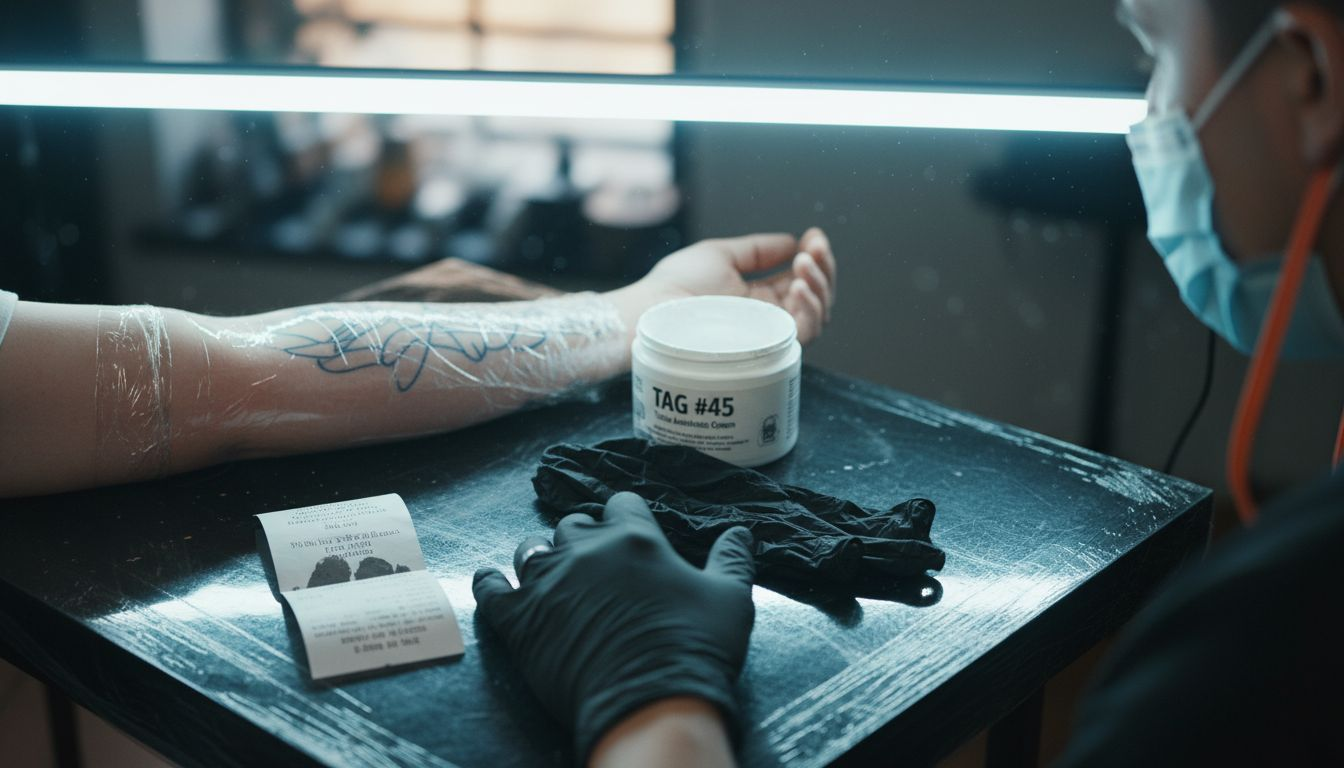
Pro tip: Apply numbing cream at least 45 minutes before your tattoo session and cover the area with plastic wrap to enhance absorption and effectiveness.
Different Types of Tattoo Numbing Products
Tattoo numbing products come in diverse formulations designed to address various pain management needs during tattoo sessions. The primary types include creams, sprays, patches, and topical gels, each offering unique characteristics for pain reduction and application convenience.
Creams represent the most common numbing product, providing comprehensive skin coverage and typically containing lidocaine or prilocaine as primary active ingredients. These topical anesthetics work by blocking nerve signals and creating a temporary pain-blocking effect. Some advanced formulations combine multiple anesthetic agents like lidocaine and prilocaine (EMLA) to enhance pain mitigation and extend numbness duration.
The primary variations in numbing products include:
- Cream-based products: Slow absorption, longer-lasting effect
- Spray formulations: Rapid application, shorter duration
- Lidocaine patches: Controlled anesthesia for larger areas
- Topical gels: Quick-absorbing, targeted pain relief
Choosing the right numbing product depends on several individual factors such as skin sensitivity, tattoo location, session duration, and personal pain tolerance. Tattoo enthusiasts should carefully consider these variables when selecting a numbing solution to ensure optimal comfort and minimal interference with the tattooing process.
Here’s a comparison of the main types of tattoo numbing products available:
| Product Type | Application Method | Duration of Effect | Best Use Case |
|---|---|---|---|
| Cream | Spread thickly on skin | 1-4 hours | Large or complex tattoos |
| Spray | Spritz over target area | 20-60 minutes | Quick sessions or touch-ups |
| Patch | Adhere to skin surface | 1-2 hours | Broad, flat skin regions |
| Gel | Rub onto small zones | Up to 1 hour | Fine detail or outlines |
Pro tip: Consult with your tattoo artist about the most appropriate numbing product for your specific tattoo placement and personal pain threshold.
Safety, Side Effects, and Legal Aspects in Europe
Tattoo numbing products require careful consideration in the European market, where regulatory standards for topical anesthetics are stringently monitored. The primary safety concerns revolve around potential allergic reactions, skin sensitivity, and the appropriate concentration of active ingredients like lidocaine and prilocaine.
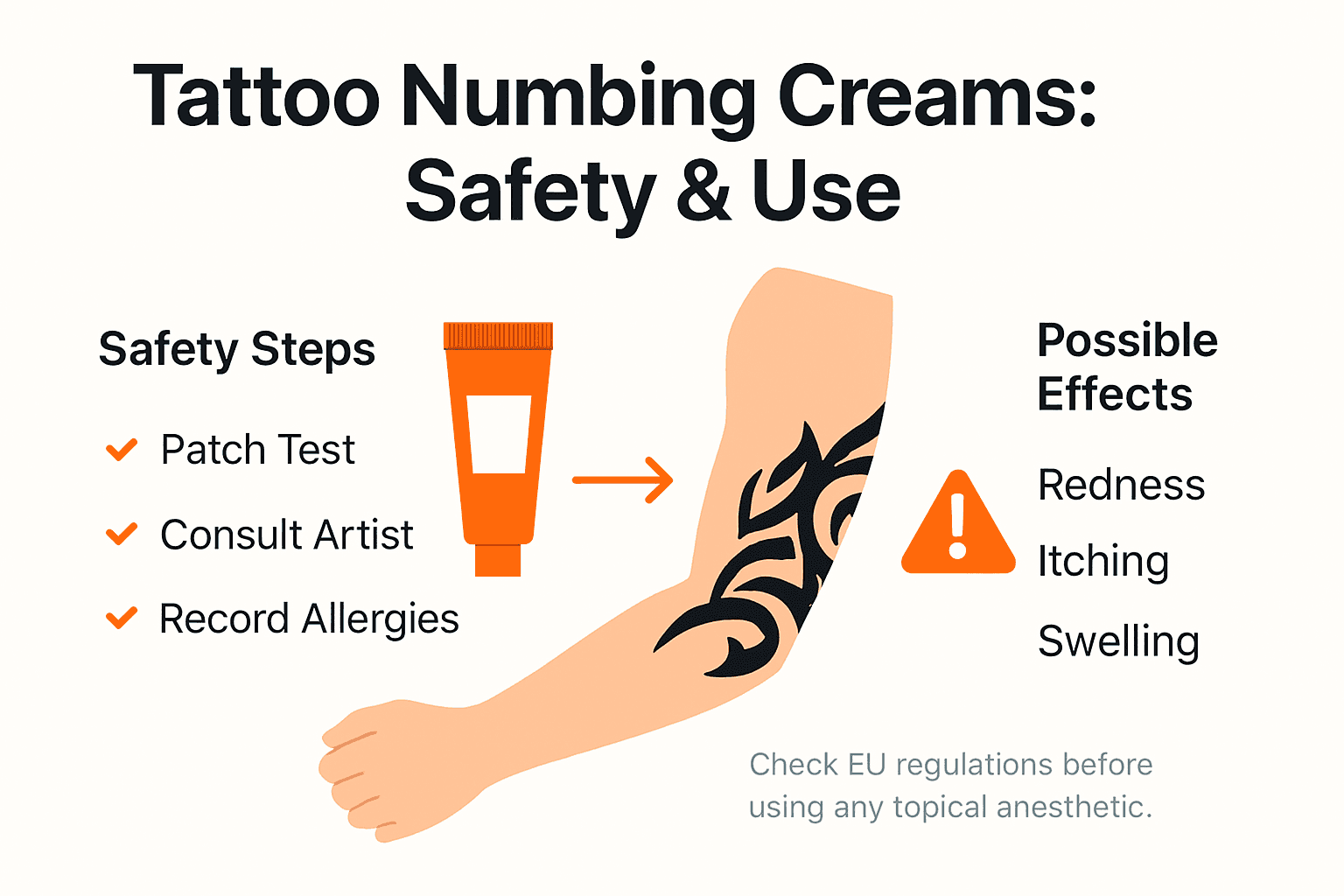
Potential side effects associated with numbing creams can vary significantly among individuals. Common reactions include:
- Temporary skin redness
- Mild itching or burning sensations
- Localized swelling
- Potential allergic contact dermatitis
- Temporary skin discoloration
European Union regulations mandate strict controls on topical anesthetic products, requiring clear labeling of active ingredients, maximum concentration limits, and comprehensive user warnings. Professional tattoo artists and healthcare providers recommend conducting a preliminary skin patch test at least 24 hours before tattoo application to identify potential adverse reactions. This precautionary approach helps mitigate risks and ensures a safer experience for tattoo enthusiasts across European countries.
The legal landscape surrounding numbing creams in Europe is complex, with variations between different national regulations. Some countries require prescription for higher-concentration anesthetic products, while others permit over-the-counter sales with specific concentration restrictions. Consumers must be aware of their specific country’s regulations and consult healthcare professionals when uncertain about product usage.
The table below highlights key safety and legal considerations for tattoo numbing creams in Europe:
| Aspect | Summary for Consumers | Expert Recommendation |
|---|---|---|
| Allergen Risk | Reactions possible, especially with lidocaine | Always do a patch test |
| Regulation | Stringent EU rules, country laws may vary | Verify laws and ingredients |
| Prescription Needed | Higher concentrations sometimes restricted | Consult healthcare provider if unsure |
| Label Requirements | EU demands clear ingredient disclosure | Read packaging thoroughly |
Pro tip: Always keep a detailed record of any previous allergic reactions and discuss your medical history with both your tattoo artist and a healthcare professional before using numbing products.
How to Apply Numbing Creams Effectively
Proper application of tattoo numbing creams is crucial for maximizing pain reduction and ensuring optimal results. The process requires careful preparation, precise technique, and attention to several critical steps that can significantly impact the cream’s effectiveness during your tattoo session.
The application process involves a systematic approach:
- Skin Preparation
- Thoroughly clean the tattoo area
- Gently exfoliate to remove dead skin cells
- Ensure skin is completely dry before application
- Cream Application
- Apply a thick, uniform layer covering the entire tattoo area
- Use generous amount of cream for complete coverage
- Cover with occlusive plastic wrap to enhance absorption
Timing is critical when using numbing creams. Most products require 30-60 minutes of absorption time before peak effectiveness. During this period, avoid excessive movement or sweating that might reduce the cream’s potency. Just before your tattoo appointment, carefully remove the cream using sterile medical swabs to prevent potential contamination or interference with the tattooing process.
Individual factors like skin type, metabolism, and pain tolerance can influence the cream’s performance. Some people might experience faster or slower absorption, so it’s essential to follow the specific product instructions and potentially do a test application before your actual tattoo session.
Pro tip: Avoid consuming caffeine and practice relaxation techniques before your appointment to potentially improve the numbing cream’s absorption and effectiveness.
Common Mistakes and Real-World Results
Tattoo numbing cream application involves several critical pitfalls that can significantly impact the overall tattoo experience. Professional tattoo artists consistently highlight the complex challenges associated with improper numbing cream usage that extend beyond simple pain management.
The most frequent mistakes clients make include:
- Insufficient cream application
- Incorrect timing of cream removal
- Failing to communicate with tattoo artist
- Overlooking individual skin sensitivity
- Expecting complete pain elimination
Real-world results demonstrate that numbing creams are not a universal solution. While they can reduce pain perception, they often introduce unexpected complications during the tattooing process. The altered skin texture can modify needle interaction, potentially extending tattoo session duration and affecting ink absorption. Some clients experience unexpected sensations like rebound pain once the numbing effect dissipates, creating additional discomfort.
Professional tattoo artists recommend a nuanced approach to numbing cream usage. Understanding that these products are tools, not guarantees, helps manage expectations. Individual physiological responses vary widely, meaning what works perfectly for one person might produce suboptimal results for another. Careful consultation with both healthcare professionals and experienced tattoo artists can help navigate potential challenges.
Pro tip: Always perform a preliminary skin patch test and discuss your numbing cream intentions with your tattoo artist at least 24 hours before your scheduled appointment.
Experience a Pain-Free Tattoo Session with Trusted Numbing Creams
The article highlights the challenges many face with tattoo pain and the mixed results from numbing creams. If you’re concerned about inconsistent pain relief, skin sensitivity, or the timing of application, using scientifically formulated products like TKTX and Dermacain can make a real difference. These numbing creams guarantee up to 3 hours of effective pain relief, helping you stay comfortable throughout your tattoo session without compromising the quality or your skin’s health.

Discover the proven solution for managing tattoo discomfort by visiting our website. We proudly serve customers all across Europe with free shipping on orders over 30 Euro and a satisfaction guarantee that lets you buy with confidence. Don’t let pain hold you back from your next tattoo. Take control now with TKTX and Dermacain numbing creams and enjoy a smoother, more comfortable tattoo experience. Learn more about how to apply and maximize benefits here.
Frequently Asked Questions
What are tattoo numbing creams?
Tattoo numbing creams are topical anesthetics designed to minimize pain during tattoo sessions by containing active ingredients like lidocaine that temporarily block nerve signals.
How long does it take for tattoo numbing cream to work?
Most tattoo numbing creams require 30-60 minutes to activate and can provide pain relief for 1-4 hours, depending on the product and individual factors.
What are the different types of tattoo numbing products?
Tattoo numbing products include creams, sprays, patches, and gels. Each type varies in application method, duration of effect, and best use case for managing pain during tattoo procedures.
Are there any side effects from using numbing creams?
Yes, potential side effects include temporary skin redness, mild itching, localized swelling, and in some cases, allergic reactions. It’s crucial to perform a patch test before the tattoo session.


