

The thought of tattoo pain can stop even the most excited first-timers from booking their session. For many in Central Europe, finding ways to reduce discomfort is just as important as choosing the right tattoo design. Tattoo numbing products can diminish pain sensation by up to 85 percent, letting you focus on your art rather than the ache. This guide unpacks how these specialized creams and sprays work, the safest options, and what to know before your next appointment.
Table of Contents
- What Are Tattoo Numbing Products?
- Types and Key Ingredients Explained
- How Numbing Creams Reduce Tattoo Pain
- Safety, Application, and Common Risks
- Tattoo Numbing Myths and Artist Opinions
Key Takeaways
| Point | Details |
|---|---|
| Tattoo Numbing Products | These are topical solutions that reduce pain by blocking nerve signals during tattooing sessions. |
| Active Ingredients | Common ingredients include Lidocaine, Benzocaine, and Tetracaine, each providing varying levels of pain relief. |
| Application Timing | Numbing products typically activate in 20-60 minutes and offer pain relief for 2-4 hours, making them suitable for sensitive areas. |
| Safety Guidelines | Proper application is crucial; consult your tattoo artist and perform patch tests to avoid allergic reactions and ensure safe use. |
What Are Tattoo Numbing Products?
Tattoo numbing products are specialized topical solutions designed to minimize pain during tattoo procedures. These innovative anesthetic creams and sprays provide temporary relief by blocking nerve signals in the skin, making tattoo sessions more comfortable and manageable.
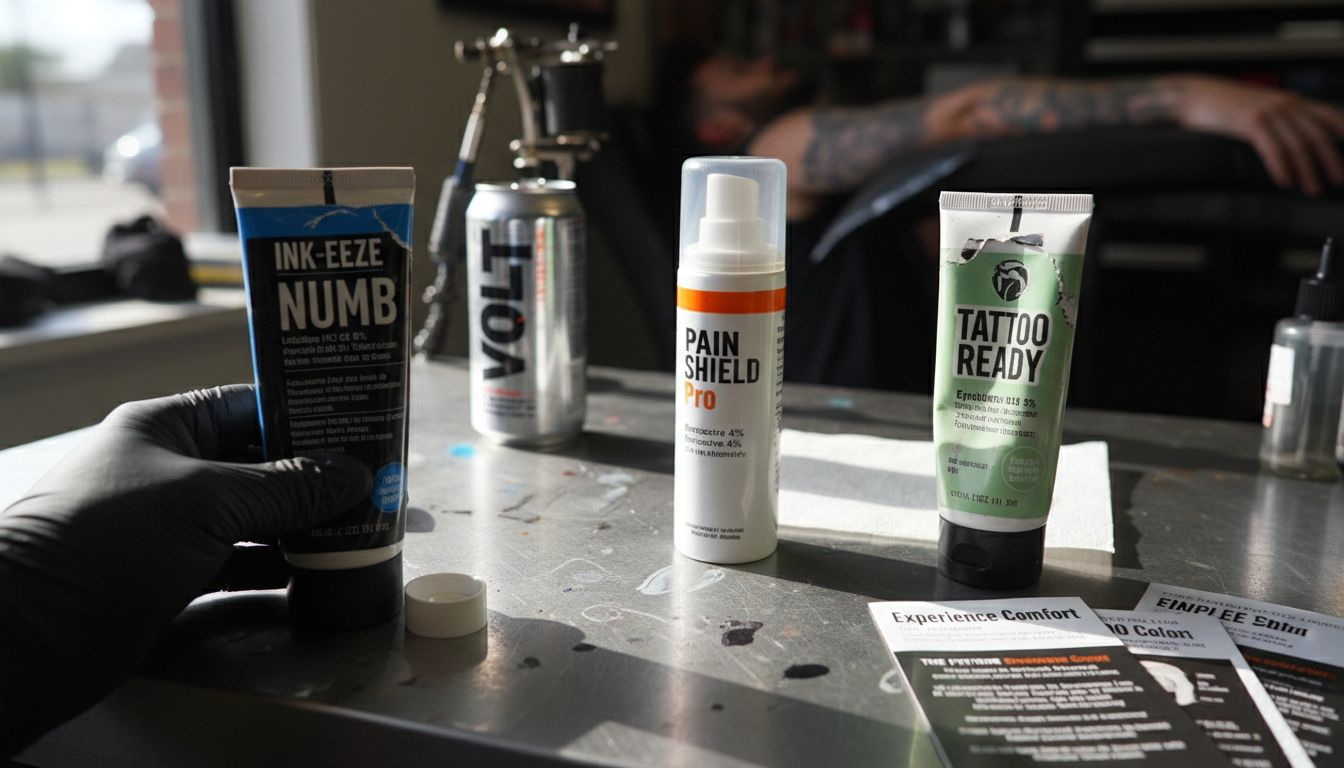
Modern numbing products work through sophisticated mechanisms that temporarily interrupt nerve transmission in targeted skin areas. They typically contain active ingredients like:
- Lidocaine: Primary numbing agent that blocks sodium channels
- Benzocaine: Surface-level pain blocker
- Tetracaine: Deep tissue anesthetic
These products are strategically designed to provide relief during tattooing. Professional tattoo numbing creams can diminish pain sensation by up to 85%, allowing clients to endure longer and more precise tattoo sessions without significant discomfort.
Numbing products come in various forms, including:
- Topical creams
- Spray applications
- Pre-procedure gels
Most numbing products activate within 20-60 minutes after application and provide pain relief lasting approximately 2-4 hours. This makes them particularly beneficial for individuals with low pain tolerance or those getting tattoos in sensitive body areas.
Here’s a quick comparison of common tattoo numbing product formats and their unique characteristics:
| Format Type | Application Area | Onset Time | Best For |
|---|---|---|---|
| Cream | Large skin surfaces | 30-60 minutes | Extended sessions, coverage |
| Spray | Small targeted areas | 15-30 minutes | Quick touch-ups, detailed work |
| Gel | Moderate areas | 20-40 minutes | Fast absorption, minimal mess |
| Patch | Localized spots | 40-60 minutes | Pre-planned, small tattoos |
Pro tip: Always consult with your tattoo artist before applying any numbing product to ensure compatibility with their specific tattooing technique.
Types and Key Ingredients Explained
Tattoo numbing products encompass a diverse range of topical solutions designed to minimize pain during tattoo sessions. These specialized formulations work through different mechanisms and ingredient combinations to provide targeted pain relief for tattoo enthusiasts.
The primary types of numbing products include:
- Creams: Thick, spreadable formulations that provide extended coverage
- Sprays: Quick-application solutions for precise targeting
- Gels: Lightweight, fast-absorbing options with smooth application
- Patches: Pre-treatment adhesive solutions for extended numbing
Key active ingredients play crucial roles in pain management for these products:
- Lidocaine: The most common and powerful numbing agent
- Blocks sodium channels in nerve cells
- Provides rapid and extensive pain relief
- Concentrations typically range from 4-5% for tattoo applications
- Benzocaine: A surface-level anesthetic
- Works quickly on skin’s outer layers
- Ideal for minor pain reduction
- Often used in combination with other numbing agents
- Tetracaine: A potent deep-tissue anesthetic
- Penetrates deeper skin layers
- Provides longer-lasting numbness
- Frequently used in professional-grade numbing solutions
Professional-grade numbing products can reduce pain sensation by up to 85%, making extensive tattoo sessions more manageable for clients.
Some advanced numbing products also incorporate complementary ingredients like prilocaine and epinephrine, which can enhance the numbing effect and reduce skin inflammation during tattoo procedures.
Pro tip: Always perform a small patch test with numbing products to check for potential allergic reactions before full application.
How Numbing Creams Reduce Tattoo Pain
Tattoo numbing creams work through a sophisticated neurological mechanism designed to interrupt pain signals during the tattooing process. Nerve signal disruption is the core principle behind these innovative pain management solutions.
The pain reduction process involves several critical steps:
- Topical Application: Cream is spread across the skin surface
- Ingredient Penetration: Active anesthetics enter nerve pathways
- Signal Blocking: Nerve channels are temporarily interrupted
- Pain Sensation Reduction: Brain receives diminished pain signals
Key mechanisms of pain reduction include:
- Sodium Channel Blockade
- Lidocaine and similar compounds prevent nerve impulse transmission
- Interrupts pain signals before they reach the brain
- Provides temporary localized numbness
- Nerve Receptor Desensitization
- Reduces skin’s sensitivity to needle penetration
- Minimizes inflammatory response
- Creates a protective neurological barrier
Numbing creams do not completely eliminate pain, but significantly reduce discomfort during tattoo procedures.
Different active ingredients produce varying levels of pain management. Lidocaine provides the most comprehensive coverage, while benzocaine offers surface-level relief. The effectiveness depends on multiple factors like ingredient concentration, skin type, and application timing.
Pro tip: Apply numbing cream 30-45 minutes before your tattoo session to ensure maximum pain reduction effectiveness.
Safety, Application, and Common Risks
Tattoo numbing creams require careful and precise application to ensure both effectiveness and personal safety. FDA regulations provide critical guidelines for proper use and potential risks associated with topical anesthetic products.
Critical safety considerations include:
- Concentration Limits: Maximum 4% lidocaine content
- Skin Condition: Avoid applying on broken or irritated skin
- Area Coverage: Do not use on large skin surfaces
- Individual Sensitivity: Perform patch testing
Potential risks and side effects involve:
- Allergic Reactions
- Skin redness and inflammation
- Potential systemic allergic response
- Immediate medical attention might be required
- Toxicity Concerns
- Excessive absorption can cause serious complications
- Symptoms include muscle tremors and respiratory issues
- Cardiac function might be impacted
Worldwide regulations strictly limit active anesthetic concentrations to protect consumer safety.
Proper application techniques are crucial for minimizing risks. Always follow manufacturer instructions, consult with your tattoo artist, and perform a small patch test 24 hours before your tattoo session to check for potential adverse reactions.
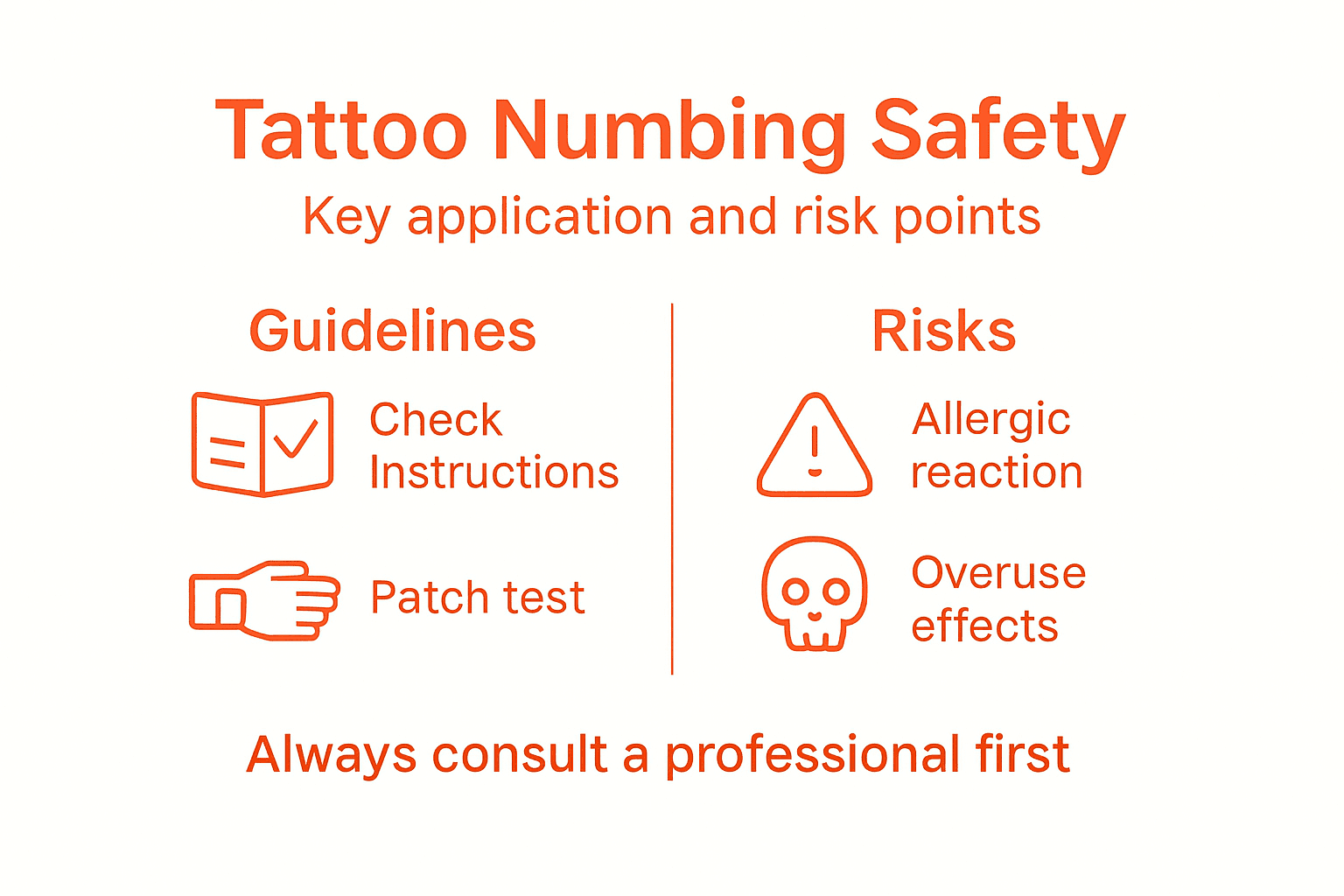
Below is a summary of key safety guidelines and potential risks when using tattoo numbing products:
| Safety Guideline | Importance | Associated Risk Example |
|---|---|---|
| Check lidocaine percentage | Prevents overdose | Dizziness, heart irregularities |
| Perform patch test | Identifies allergic reactions | Swelling, redness, rash |
| Avoid broken skin | Reduces infection risk | Infection, delayed healing |
| Consult artist/doctor | Ensures safe, effective application | Interaction with medical conditions |
Pro tip: Consult a healthcare professional before using numbing creams if you have pre-existing medical conditions or sensitive skin.
Tattoo Numbing Myths and Artist Opinions
Tattoo numbing myths continue to divide the tattoo community, creating ongoing debates about pain management during ink sessions. Tattoo artists present varied perspectives on the use of numbing products, reflecting a complex professional landscape.
Common myths and professional perspectives include:
- Pain as a Rite of Passage Myth
- Traditional artists believe suffering is part of the tattoo experience
- Some view numbing as undermining authentic tattoo culture
- Younger artists are more open to client comfort
Artist concerns about numbing products involve:
- Potential Skin Complications
- Possible texture changes during tattooing
- Potential interference with ink absorption
- Risk of extended healing periods
- Professional Performance Impacts
- Altered skin responsiveness
- Potential challenges in needle penetration
- Reduced tactile feedback during tattoo process
Not all artists reject numbing creams - many recognize their value for clients with low pain tolerance.
Modern tattoo professionals increasingly understand that pain tolerance varies widely among individuals. While some maintain traditional stances, a growing number of artists prioritize client comfort and are becoming more accepting of carefully applied numbing solutions.
Pro tip: Always discuss numbing cream usage with your specific tattoo artist before the session to understand their professional guidelines.
Experience Pain-Free Tattoo Sessions with Trusted Numbing Creams
Getting a tattoo should be an exciting and creative experience without the worry of pain holding you back. The challenge many face is managing discomfort during tattoo sessions, especially for sensitive skin areas or long procedures. This article highlights how tattoo numbing products, like those with Lidocaine and other powerful anesthetics, can dramatically reduce pain sensation and make your ink journey smoother. If you are seeking a safe, effective way to ease the discomfort and extend your tattooing comfort, our selection at Featured Products – TKTX obchod is designed exactly for that.

Take control of your tattoo experience today with our premium TKTX and Dermacain numbing creams, guaranteed to provide up to three hours of reliable pain relief across all of Europe. We prioritize your satisfaction with a money-back guarantee when you return the product if you are not fully happy. Enjoy free shipping on orders over 30 Euro. Start your pain-free tattoo journey now by visiting our Home page – TKTX obchod to explore your options or go directly to https://buytktx.online. Don’t wait for discomfort to decide your tattoo story. Choose comfort, choose confidence, and make your next tattoo session truly pain-free.
Frequently Asked Questions
What are tattoo numbing products?
Tattoo numbing products are specialized topical solutions, such as creams and sprays, designed to minimize pain during tattoo procedures by blocking nerve signals in the skin.
How do tattoo numbing creams work?
Tattoo numbing creams work by applying active anesthetics like lidocaine, benzocaine, and tetracaine to the skin, temporarily interrupting nerve transmission and reducing pain signals sent to the brain during the tattooing process.
How long before my tattoo session should I apply numbing cream?
For optimal pain relief, it’s recommended to apply numbing cream 30-45 minutes before your tattoo session to ensure maximum effectiveness.
Can using numbing creams interfere with the tattoo process?
While many artists have varying opinions, some are concerned that numbing creams can affect skin texture, ink absorption, and tactile feedback, potentially impacting the overall tattooing experience.


