

Finding true comfort in tattooing no longer seems out of reach for Central European artists and collectors. Modern numbing creams, influenced by both European and American pharmaceutical research, now help transform the experience for over 60% of clients who report significant pain relief during sessions. These cutting-edge solutions not only raise the standard for safety and effectiveness but also open new doors for larger, more creative designs, all while protecting the skin and peace of mind.
Table of Contents
- Pain Relief Innovation In Tattooing Defined
- Types Of Modern Tattoo Numbing Creams
- How Tattoo Numbing Creams Work Effectively
- Safety, Legal Status, And Artist Acceptance
- Risks, Side Effects, And What To Avoid
Key Takeaways
| Point | Details |
|---|---|
| Pain Management Innovation | Modern numbing creams have transformed tattooing by significantly reducing pain during sessions, enhancing the overall experience for clients. |
| Types of Numbing Creams | Tattoo numbing solutions include nerve blockers, nerve deadeners, and vasoconstrictors, each designed for different pain tolerance levels and application needs. |
| Safety and Compliance | Strict regulations ensure the safety and efficacy of numbing creams, making it crucial to verify product authenticity and consult with tattoo artists. |
| Risks and Precautions | Users must be aware of potential allergic reactions and skin sensitivities, and a patch test is recommended before application to avoid complications. |
Pain Relief Innovation in Tattooing Defined
Pain relief innovation in tattooing represents a groundbreaking medical and artistic convergence, transforming how individuals experience body art. Recent scientific advances in topical anesthetics have revolutionized pain management during tattoo sessions, enabling more people to explore complex and extensive tattoo designs without significant discomfort.
Modern numbing creams utilize sophisticated pharmaceutical technologies to interrupt nerve signal transmission, creating a localized anesthetic effect. These specialized topical solutions typically contain active ingredients like lidocaine and prilocaine, which temporarily block pain receptors in the skin. By strategically applying these creams before tattooing, artists can help clients manage pain more effectively, making longer and more intricate tattoo sessions possible.
The impact of these pain relief innovations extends beyond mere comfort. They democratize body art by reducing barriers for individuals with lower pain tolerance, enabling more people to express themselves through tattoos. These medical-grade numbing solutions represent a significant leap forward in tattoo technology, bridging the gap between personal aesthetic expression and physiological comfort.
Pro tip: Always consult with your tattoo artist about proper numbing cream application to ensure maximum effectiveness and minimize potential skin sensitivity.
Types of Modern Tattoo Numbing Creams
Tattoo numbing solutions have evolved dramatically, offering a diverse range of pain management technologies for body art enthusiasts. Modern tattoo numbing solutions fall into several specialized categories designed to address different pain tolerance levels and tattoo placement requirements. These advanced pharmaceutical formulations provide targeted relief through sophisticated mechanisms that interrupt pain signal transmission.
The primary categories of numbing creams include nerve blockers, nerve deadeners, and vasoconstrictors. Nerve blockers like lidocaine and prilocaine work by temporarily interrupting nerve signal communication, creating a localized anesthetic effect. These ingredients are typically found in over-the-counter and prescription-strength creams, offering varying levels of pain management. Delivery methods range from traditional creams and gels to innovative transdermal patches, each with unique application advantages.
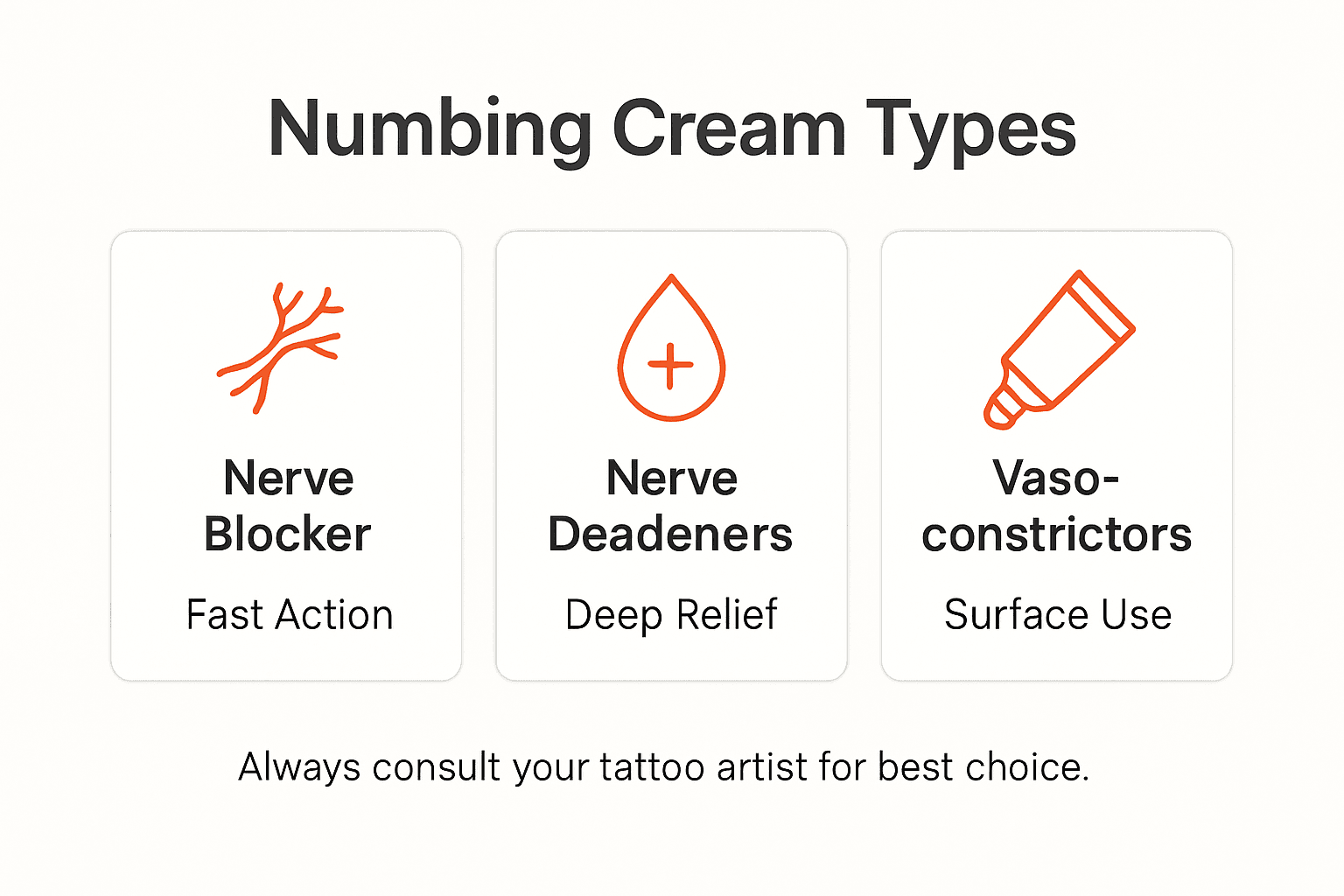
Professional dermatological research highlights important distinctions between numbing formulations. Transdermal patches, for instance, offer more uniform anesthesia compared to standard topical creams, providing consistent coverage across larger tattoo areas. Some advanced formulations combine multiple pain management technologies, creating multi-action solutions that address both surface-level and deeper nerve sensitivities.
Here’s a quick comparison of major numbing cream types for tattoos:
| Numbing Type | Typical Ingredients | Depth of Action | Common Usage Area |
|---|---|---|---|
| Nerve Blockers | Lidocaine, Prilocaine | Surface and shallow skin | Small to medium tattoos |
| Nerve Deadener | Benzocaine | Primarily surface | Sensitive skin locations |
| Vasoconstrictors | Epinephrine | Reduces blood flow | Large or detailed work |
Pro tip: Consult with your tattoo artist about your specific skin type and pain tolerance to select the most appropriate numbing cream for your tattoo session.
How Tattoo Numbing Creams Work Effectively
Tattoo numbing creams operate through a sophisticated neurological intervention mechanism designed to minimize pain perception during body art procedures. These specialized topical solutions work by strategically blocking nerve signals, creating a temporary anesthetic effect that allows individuals to experience tattoo sessions with significantly reduced discomfort.
The primary mechanism of action involves nerve signal interruption, where active ingredients like lidocaine and prilocaine temporarily prevent pain receptors from transmitting sensory information to the brain. These compounds specifically target sodium channels in nerve cells, effectively blocking the electrical impulses that would normally communicate pain sensations. By creating a localized numbing effect, these creams enable tattoo artists to work more precisely and clients to endure longer, more complex tattoo sessions with minimal physical stress.
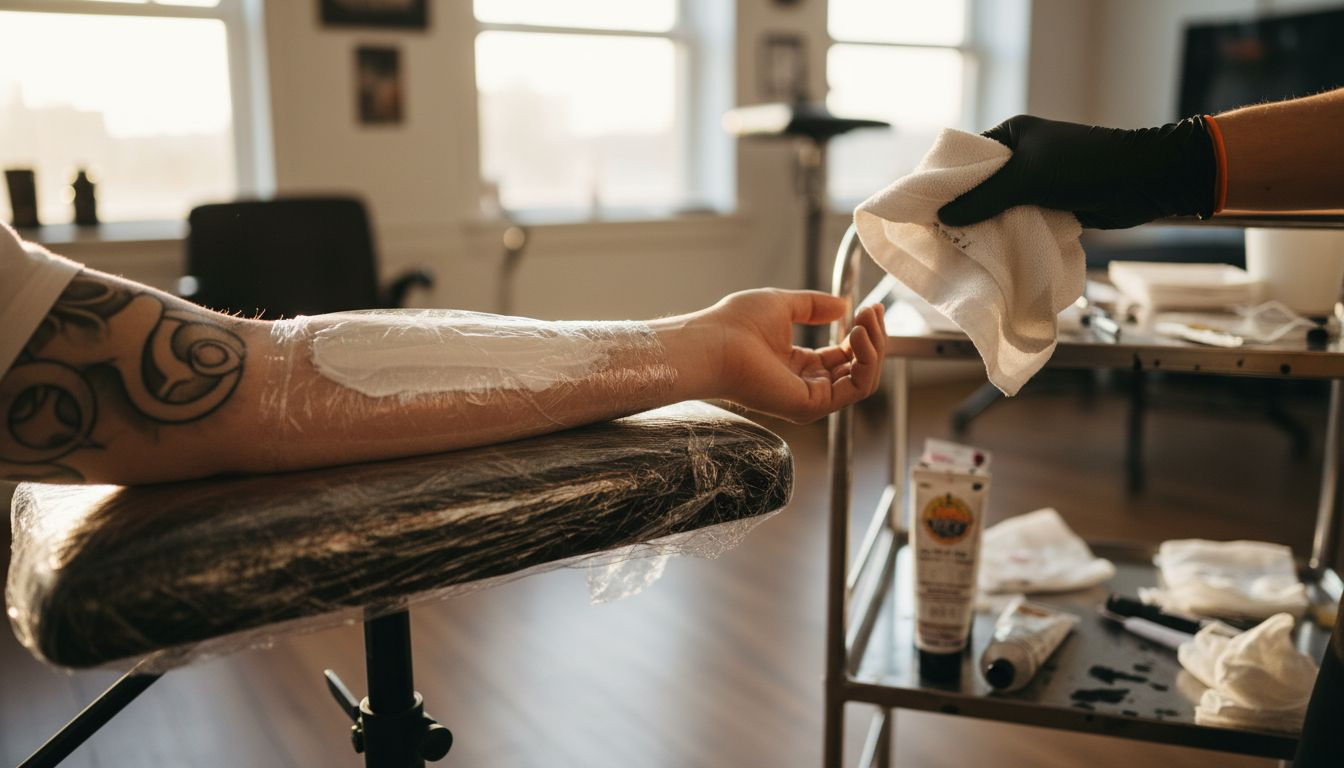
Different numbing cream formulations achieve pain reduction through varied approaches. Some products focus on surface-level nerve deadening, while others penetrate deeper tissue layers to provide more comprehensive anesthesia. Advanced formulations may combine multiple pain management strategies, such as vasoconstrictors that reduce blood flow and nerve blockers that interrupt sensory transmission. This multi-layered approach ensures a more comprehensive and effective pain management experience for tattoo enthusiasts.
Pro tip: Apply numbing cream 30-45 minutes before your tattoo session and cover with plastic wrap to maximize absorption and effectiveness.
Safety, Legal Status, and Artist Acceptance
The landscape of tattoo numbing creams has been dramatically transformed by stringent regulatory frameworks designed to protect consumer safety. Central Europe’s safety regulations for tattoo products have established comprehensive guidelines that significantly impact the production, distribution, and application of numbing solutions. These REACH regulations mandate rigorous chemical testing and restrict potentially hazardous ingredients to minimize allergic reactions and systemic health risks.
Tattoo artists increasingly recognize numbing creams as a professional tool that enhances client experience and enables more complex artistic work. The acceptance of these products has evolved from initial skepticism to widespread acknowledgment of their benefits. Professional tattoo artists now often recommend specific numbing cream applications, understanding that reduced client discomfort leads to more precise tattooing techniques and allows for longer, more intricate sessions. This shift represents a collaborative approach between medical science and body art professionals.
Legal compliance requires manufacturers to provide transparent labeling, ingredient lists, and safety documentation. Artists and clients must verify product authenticity, ensuring that numbing creams meet European Union standards for chemical composition and potential side effects. This regulatory environment protects consumers by establishing clear guidelines for product safety, application methods, and potential contraindications. The emphasis remains on creating a safe, comfortable experience that prioritizes both artistic expression and individual health.
Pro tip: Always request documentation of your numbing cream’s regulatory compliance and consult with your tattoo professional about potential skin sensitivity before application.
Risks, Side Effects, and What to Avoid
Potential risks associated with tattoo numbing creams demand careful consideration and proactive management. Medical professionals have identified several critical concerns that tattoo enthusiasts must understand before applying these topical anesthetic solutions. Allergic reactions represent the most significant potential complication, with approximately 5–10% of individuals experiencing unexpected sensitivities to common numbing ingredients like lidocaine.
The primary risks associated with numbing creams include skin irritation, potential tissue damage, and adverse allergic responses. Improper application can lead to significant complications, especially when used on broken, infected, or abraded skin surfaces. Dermatological experts strongly advise against using unregulated products or applying numbing creams without professional guidance. Individuals with pre-existing skin conditions, allergies, or sensitive skin must exercise extreme caution and consult healthcare providers before introducing any topical anesthetic.
Specific scenarios that require immediate avoidance include applying numbing creams to damaged skin, using products beyond their recommended concentration, or combining multiple numbing agents without professional consultation. Some individuals may experience systemic reactions that extend beyond localized skin responses, potentially affecting broader physiological functions. Understanding individual skin chemistry, conducting thorough patch tests, and maintaining open communication with tattoo artists can significantly mitigate potential risks and ensure a safer body art experience.
The table below summarizes primary risks and recommended precautions when using tattoo numbing creams:
| Risk Factor | Frequency/Impact | Recommended Precaution |
|---|---|---|
| Allergic Reaction | 5–10% of users | Patch test 24 hours before session |
| Skin Irritation | Mild to moderate risk | Avoid use on damaged skin |
| Regulatory Compliance | Varies by region | Check product labeling and documentation |
Pro tip: Conduct a small patch test 24 hours before your tattoo and immediately discontinue use if any unusual skin reaction occurs.
Experience Pain-Free Tattooing with Advanced Numbing Creams
The challenge of enduring tattoo pain no longer has to hold you back from expressing your unique style. If you are concerned about discomfort during long or intricate tattoo sessions, our premium numbing creams TKTX and Dermacain offer a scientifically backed solution. Designed to provide up to 3 hours of guaranteed pain relief, these creams use nerve blockers like lidocaine to interrupt pain signals and create a comfortable tattoo experience.

Take control of your tattoo journey today by choosing trusted, medical-grade numbing creams approved for use across Europe. Enjoy free shipping on orders over 30 Euro and our customer satisfaction guarantee. Visit our website now to learn more and order your pain relief solution before your next appointment. Don’t let pain limit your creativity. Act now and transform your tattoo experience with effective numbing creams from TKTX and Dermacain.
Frequently Asked Questions
What are tattoo numbing creams and how do they work?
Tattoo numbing creams are topical anesthetics that reduce pain during tattooing by blocking nerve signals. They typically contain ingredients like lidocaine and prilocaine, which create a localized anesthetic effect.
What types of tattoo numbing creams are available?
Tattoo numbing creams fall into several types, including nerve blockers, nerve deadeners, and vasoconstrictors. Nerve blockers like lidocaine and prilocaine interrupt nerve signal communication, while vasoconstrictors reduce blood flow to the area, enhancing effectiveness.
How should I apply numbing cream before my tattoo session?
It is recommended to apply the numbing cream 30-45 minutes before the tattoo session. Covering the application area with plastic wrap can help maximize absorption and effectiveness.
What are the potential risks associated with using tattoo numbing creams?
Potential risks include allergic reactions, skin irritation, and tissue damage. It’s essential to avoid applying numbing creams to damaged skin and to conduct a patch test before use.


