

Long tattoo sessions in Central Europe often test both the skill of artists and the pain tolerance of clients. Finding practical ways to minimize discomfort can make the entire experience smoother and help ensure clients return for future work. With topical anesthetic creams offering rapid, targeted pain relief by blocking nerve signals in the skin, artists and enthusiasts can focus on creativity instead of pain. Bold solutions like these are changing how tattoos feel for everyone involved.
Table of Contents
- What Is Anesthetic Cream For Tattoos?
- Types Of Numbing Creams And Active Ingredients
- How Anesthetic Cream Works On The Skin
- Safety, Risks, And Legal Status In Central Europe
- Tips For Maximizing Effectiveness And Avoiding Issues
Key Takeaways
| Point | Details |
|---|---|
| Anesthetic Cream Functionality | Anesthetic cream temporarily numbs the skin’s surface by blocking nerve signal transmission, reducing pain during tattooing. |
| Variety of Active Ingredients | Common ingredients include Lidocaine and Prilocaine, each offering distinct benefits and durations for numbing effects. |
| Safety Regulations in Central Europe | Anesthetic creams are subject to strict EU regulations, ensuring safety and efficacy before consumer use. |
| Maximizing Effectiveness | Proper skin preparation, timely application, and monitoring for reactions are essential for optimal results with anesthetic creams. |
What Is Anesthetic Cream for Tattoos?
Anesthetic cream is a specialized topical medication designed to temporarily numb the skin’s surface during invasive or potentially painful procedures like tattooing. Topical anesthesia mechanisms involve blocking nerve signal transmission by inhibiting sodium channels in nerve membranes, effectively preventing pain sensations from reaching the brain.
These creams work through a targeted approach that numbs only the superficial skin layers without requiring injections or systemic anesthesia. By applying the cream before a tattoo session, individuals can significantly reduce discomfort and make the tattooing process more bearable. The cream creates a localized numbing effect that typically lasts between 2-3 hours, which covers most standard tattoo appointment durations.
Key characteristics of tattoo anesthetic creams include:
- Fast-acting numbing within 15-30 minutes of application
- Targeted pain relief specifically for skin surface procedures
- Non-invasive alternative to injected anesthetics
- Temporary effect lasting 2-4 hours depending on formulation
- Minimal side effects when used as directed
Professional tattoo artists increasingly recommend these creams to help clients manage pain and remain comfortable during longer or more complex tattoo sessions. Pain management techniques have evolved significantly, with topical anesthetics providing a safe, effective solution for reducing tattoo-related discomfort.
Pro tip: Always consult with your tattoo artist about proper anesthetic cream application to ensure optimal results and minimal interference with the tattooing process.
Types of Numbing Creams and Active Ingredients
Topical anesthetic creams for tattoos utilize a variety of active ingredients designed to block nerve signals and reduce pain during tattoo procedures. Compounded topical pain creams typically contain specialized pharmaceutical agents that temporarily interrupt nerve transmission, providing targeted pain relief for tattoo enthusiasts.
The most common active ingredients in numbing creams include several powerful anesthetic compounds that work through different mechanisms to block pain signals. These primary anesthetic agents are carefully selected for their effectiveness and safety in topical applications:
- Lidocaine: The most frequently used anesthetic, known for rapid and effective pain blocking
- Benzocaine: A surface-level numbing agent often used in lower concentrations
- Prilocaine: Another powerful nerve signal blocker with minimal systemic absorption
- Pramoxine: Provides quick surface numbness with minimal skin irritation
- Tetracaine: A potent anesthetic used in combination with other ingredients
Professional tattoo artists and medical experts recommend choosing numbing creams that combine multiple active ingredients to maximize pain reduction. Top numbing ingredients often include complementary compounds that enhance the overall numbing effect and provide additional skin benefits.
These specialized creams typically combine anesthetic agents with supporting ingredients like menthol for cooling sensations or hydrocortisone to reduce potential inflammation. The goal is to create a comprehensive pain management solution that makes the tattooing process more comfortable and accessible for clients with lower pain tolerances.
Here’s a quick reference for the main anesthetic agents found in tattoo numbing creams:
| Ingredient | Typical Use Duration | Special Benefit | Common Side Effect |
|---|---|---|---|
| Lidocaine | 2-4 hours | Fast, reliable skin numbing | Occasional mild burning |
| Benzocaine | 1-2 hours | Surface-level quick effect | Possible skin sensitivity |
| Prilocaine | 2-3 hours | Minimal systemic absorption | Rare allergic reaction |
| Pramoxine | 1-2 hours | Quick numbing, low irritation | Itching or redness |
| Tetracaine | 2-3 hours | Potent when combined | Temporary stinging |
Pro tip: Always perform a small skin patch test with your chosen numbing cream at least 24 hours before your tattoo appointment to check for potential allergic reactions or skin sensitivity.
How Anesthetic Cream Works on the Skin
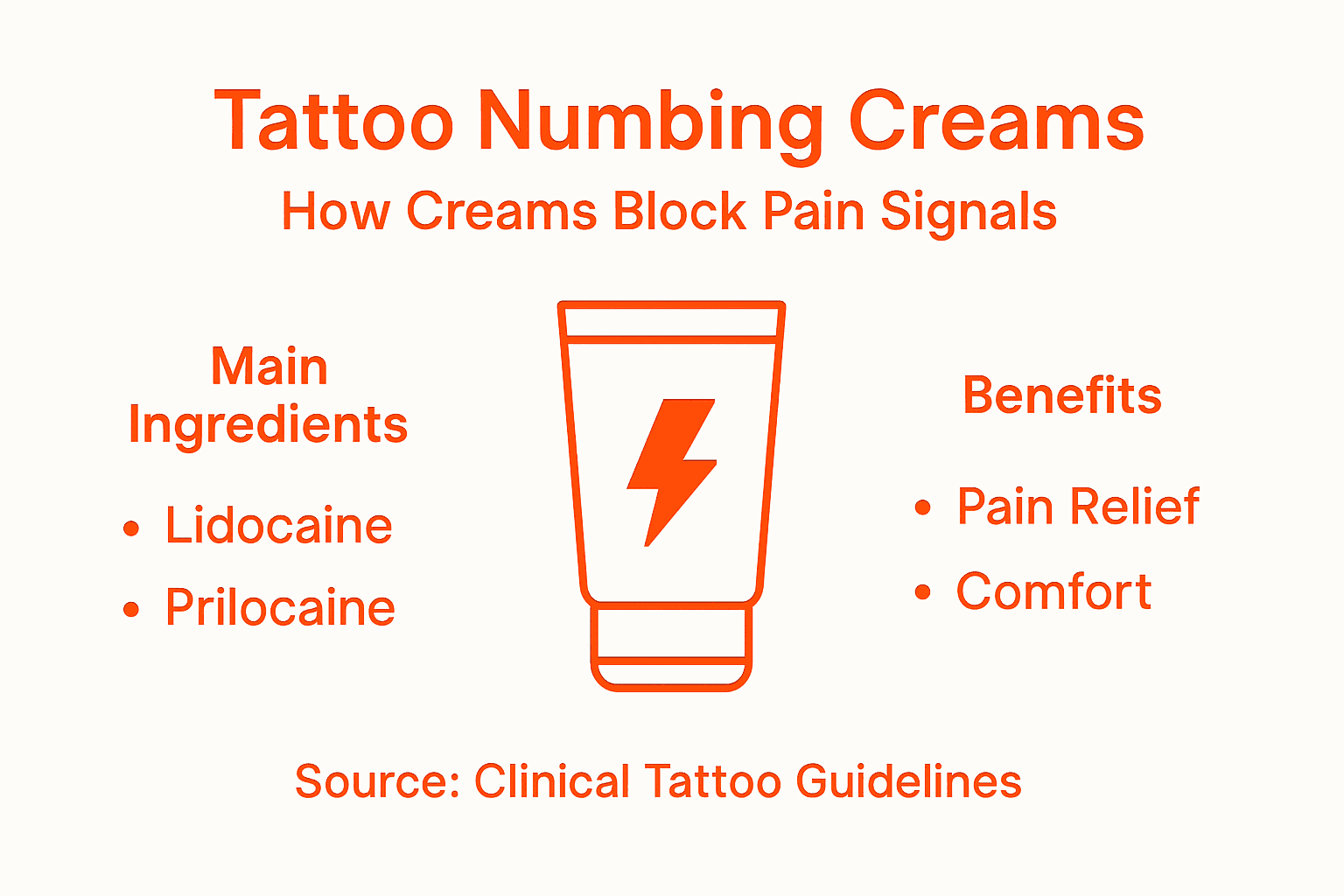
Anesthetic creams function through a sophisticated biological mechanism that temporarily interrupts pain signals in the skin’s nerve network. Topical anesthesia mechanisms involve blocking nerve impulse transmission by targeting specific neurological pathways that communicate pain sensations to the brain.

The process begins when the cream’s active ingredients penetrate the skin’s superficial layers, directly interacting with sensory nerve endings. These specialized compounds work by blocking sodium channels in nerve cell membranes, which prevents the generation and propagation of pain signals. By interrupting this critical neurological communication, the cream creates a localized numbing effect that can last several hours.
Key mechanisms of anesthetic cream action include:
- Sodium channel blockade: Preventing electrical impulse transmission in nerve cells
- Localized effect: Numbing only the specific area of application
- Minimal systemic absorption: Reducing potential widespread bodily effects
- Rapid onset: Typically taking effect within 15-30 minutes
- Targeted pain interruption: Blocking sensory nerve signal pathways
Skin layers and anesthetics reveal a complex interaction between chemical compounds and biological structures. The cream’s molecular composition allows it to penetrate the epidermis and target nerve receptors without causing lasting damage, creating a temporary pain-blocking barrier that makes tattoo procedures significantly more comfortable.
Pro tip: Apply the anesthetic cream in a thick, even layer and cover with medical-grade plastic wrap to enhance absorption and maximize numbing effectiveness.
Safety, Risks, and Legal Status in Central Europe
In Central Europe, anesthetic creams used for tattoo procedures are subject to strict regulatory oversight and safety standards. Regulatory authorities in the European Union carefully monitor these products to ensure they meet comprehensive safety, efficacy, and quality requirements before allowing them to be marketed and sold.
The legal landscape for anesthetic creams varies across different Central European countries, with each nation maintaining specific guidelines for medical and cosmetic applications. Potential risks associated with these products include allergic reactions, systemic absorption, and potential toxicity if improperly used. Medical professionals and regulatory bodies recommend careful application and adherence to manufacturer instructions.
Key safety considerations for anesthetic creams in Central Europe include:
- Regulatory compliance: Strict EU and national approval processes
- Ingredient restrictions: Controlled concentrations of active anesthetic compounds
- Medical supervision: Recommended for first-time and sensitive users
- Potential side effects: Allergic reactions, skin irritation
- Usage limitations: Specific guidelines for application and duration
Regulatory authorities in Central Europe maintain rigorous monitoring systems to track product safety and investigate any reported adverse events. Countries like Austria, Czech Republic, and Slovakia have established robust frameworks to ensure consumer protection and medical product safety.
Here’s a summary contrasting regulations and usage safety for tattoo anesthetic creams in Central Europe:
| Aspect | EU Regulatory Standards | User Safety Recommendations |
|---|---|---|
| Approval Process | Strict, multi-stage | Use only approved products |
| Allowed Ingredients | Controlled concentrations | Avoid excess application |
| Application Oversight | Medical/cosmetic supervision | Consult professionals if unsure |
| Patch Testing | Not mandatory but advised | Essential for sensitive individuals |
| Monitoring of Side Effects | Ongoing by authorities | Report any adverse skin reactions |
Pro tip: Always consult with a healthcare professional and perform a patch test before using anesthetic creams, especially if you have sensitive skin or known allergies.
Tips for Maximizing Effectiveness and Avoiding Issues
Maximizing the effectiveness of anesthetic creams requires a strategic approach that goes beyond simple application. Topical anesthetic application techniques emphasize the importance of precise preparation and careful usage to ensure optimal pain reduction during tattoo procedures.
Proper skin preparation and application are critical to achieving the best numbing results. This involves cleaning the skin thoroughly, ensuring it is free from oils or dirt, and applying the cream in a thick, even layer. The cream should be left on for the recommended duration, typically 30-60 minutes, and covered with medical-grade plastic wrap to enhance absorption and effectiveness.
Key strategies for maximizing anesthetic cream effectiveness include:
- Skin preparation: Clean and dry the area completely before application
- Timing: Apply cream 30-60 minutes before the tattoo procedure
- Coverage: Use medical-grade plastic wrap to enhance absorption
- Thickness: Apply a generous, even layer of cream
- Monitoring: Watch for any signs of skin irritation or allergic reaction
Topical anesthetic safety guidelines recommend avoiding application on broken, irritated, or damaged skin to prevent potential complications. Users should be cautious about the total area of application and the quantity of cream used to minimize the risk of systemic absorption or toxicity.
Pro tip: Perform a small patch test at least 24 hours before your tattoo to ensure you don’t have an unexpected allergic reaction to the numbing cream.
Experience Pain-Free Tattoos with Professional-Grade Numbing Creams
Getting a tattoo can be an exciting journey, but the discomfort often holds many back. This article highlights how anesthetic creams provide targeted, temporary relief by blocking nerve signals and numbing the skin for hours. If you want to avoid those painful moments and make your tattoo session comfortable and manageable for up to three hours, choosing the right numbing cream is crucial. Key terms like lidocaine, topical anesthesia, and patch testing show how important quality and safety are for a smooth tattoo experience.

Discover the effectiveness of trusted products like TKTX and Dermacain at https://buytktx.online. We proudly offer fast shipping across Europe with free shipping on orders over 30 Euro and a money-back guarantee if you are not totally satisfied. Don’t wait until your next tattoo session to struggle with pain. Learn more about our range of solutions and how to apply them safely by visiting our site. Take control of your tattoo pain today with professional tattoo numbing creams designed for maximum comfort and client satisfaction.
Frequently Asked Questions
What is anesthetic cream for tattoos?
Anesthetic cream is a topical medication that temporarily numbs the skin’s surface during tattoo procedures, helping to reduce discomfort without the need for injections.
How long does the numbing effect of anesthetic cream last?
The numbing effect of anesthetic cream typically lasts between 2 to 4 hours, which is sufficient for most tattoo sessions.
What are the common active ingredients found in tattoo numbing creams?
Common active ingredients in tattoo numbing creams include Lidocaine, Benzocaine, Prilocaine, Pramoxine, and Tetracaine, each working to block pain signals in the skin.
How can I maximize the effectiveness of anesthetic cream during my tattoo appointment?
To maximize the effectiveness of anesthetic cream, clean the area before application, apply a generous layer 30-60 minutes prior to tattooing, and cover it with medical-grade plastic wrap to enhance absorption.


