

Finding ways to make tattoo sessions comfortable is something every tattoo enthusiast and artist in Central Europe considers. Tattoo numbing creams are a trusted solution, offering pain-free experiences that help clients relax and artists create precise work. With careful use and quality formulas, these creams block pain signals to deliver dependable results. Discover how safe, effective numbing solutions can transform your tattoo experience and improve satisfaction for both clients and professionals.
Table of Contents
- What Is Tattoo Numbing Cream?
- Types of Tattoo Numbing Creams Explained
- How Tattoo Numbing Creams Work Safely
- Legal Status and Use in Central Europe
- Common Risks and How to Avoid Them
Key Takeaways
| Point | Details |
|---|---|
| Numbing Cream Efficacy | Tattoo numbing creams contain active ingredients like lidocaine that provide temporary pain relief for tattoo sessions lasting up to three hours. |
| Application Instructions | Proper application is crucial; apply a thick layer to clean, dry skin and wait 30-60 minutes before tattooing. |
| Health and Safety | Always conduct a patch test 24 hours in advance to avoid allergic reactions and use creams only on healthy skin. |
| Consumer Rights | EU regulations ensure numbing creams are safe and effective, giving consumers rights to refunds or returns if products underperform. |
What Is Tattoo Numbing Cream?
Tattoo numbing cream is a topical anesthetic applied directly to your skin before getting tattooed. It reduces or eliminates pain during the tattooing process by numbing the area, allowing you to sit comfortably for hours without wincing.
Think of it like a targeted pain blocker. The cream penetrates your skin’s outer layers and desensitizes nerve endings in that region. This means your tattoo artist can work without you tensing up from discomfort, which actually helps them create better, cleaner lines.
How It Works
Tattoo numbing creams contain active ingredients like lidocaine or benzocaine that interrupt pain signals. When applied correctly, these ingredients create a temporary numbing effect that lasts approximately three hours. This window is plenty of time for most standard tattoo sessions.
Here’s the basic process:
- Apply the cream thickly to clean, dry skin
- Wait 30-60 minutes for the anesthetic to penetrate
- Wipe away the excess cream before tattooing begins
- Enjoy a pain-free or significantly reduced-pain experience
Why Central European Tattoo Artists and Enthusiasts Use Numbing Creams
In Central Europe, where tattoo culture is thriving, numbing creams have become standard practice. Artists appreciate them because clients remain still, resulting in sharper, more precise tattoo work.
For tattoo enthusiasts, the benefits are clear:
- Longer sessions become manageable without excessive pain
- Better healing outcomes when you’re not tensing muscles from discomfort
- Ability to focus on the design rather than suffering through the needle
- Peace of mind, especially for larger or sensitive placement areas
Quality numbing creams like TKTX deliver three hours of guaranteed pain relief, making even extensive tattoo sessions comfortable.
What Sets Effective Numbing Creams Apart
Not all numbing products work equally. Active ingredients in numbing creams determine how deep the anesthetic penetrates and how long the effect lasts.
The best options for tattoo use include:
- Maximum strength formulations with proven effectiveness
- Products tested specifically for tattooing, not just general topical use
- Creams that remain stable during the full session duration
- Options with free shipping across Europe for convenient access
Real Expectations
Numbing cream won’t eliminate all sensation. You’ll still feel the needle, but it should feel like pressure rather than sharp pain. This is normal and actually helpful—you want some awareness so you can communicate with your artist if needed.
Tattoo numbing creams work best when paired with a professional artist. They handle the technical side while the cream handles your comfort.
Pro tip: Order your numbing cream with sufficient time before your appointment and test it on a small area first to ensure your skin responds well—quality brands offer satisfaction guarantees with free returns if you’re not completely happy.
Types of Tattoo Numbing Creams Explained
Tattoo numbing creams come in several different formulations, each designed to work slightly differently based on their active ingredients and strength levels. Understanding the differences helps you choose the right product for your specific tattoo session and skin type.
The main categories break down by potency, ingredient composition, and how they’re applied. Some are over-the-counter options, while others require more careful consideration or professional guidance.

Standard Topical Anesthetics
These are the most common numbing creams you’ll find. They contain anesthetic agents that penetrate your skin’s outer layers and block pain signals at the nerve endings. Lidocaine-based formulations work quickly, typically creating noticeable numbing within 20-60 minutes and lasting 2-4 hours.
Standard creams offer:
- Quick onset times suitable for most tattoo appointments
- Reliable, predictable numbing effects
- Easy application directly to skin
- Affordable pricing compared to specialized formulas
Combination Formulas
These products blend multiple active ingredients to enhance effectiveness. Rather than relying on just one anesthetic, combination formulas use synergistic ingredients that work together for deeper penetration and longer-lasting numbness.
Central European tattoo artists often recommend combination formulas because they deliver more consistent results across different skin types. The blend approach means fewer clients experience partial numbing or patchy coverage.
Combination formulas with multiple anesthetic agents typically provide more reliable pain relief during longer tattoo sessions than single-ingredient products.
Prescription-Grade and Maximum Strength Creams
These formulations contain stronger anesthetic agents designed for serious pain management. They’re the choice for extensive tattoo work, sensitive placements, or clients with higher pain sensitivity.
Maximum strength options include:
- Stronger active ingredients for deeper numbing
- Longer-lasting effects extending 3+ hours
- Enhanced penetration for thicker or tougher skin
- Results comparable to professional numbing solutions
TKTX and Dermacain represent maximum strength options with guaranteed three-hour pain relief, making them ideal for substantial tattoo sessions.
Here is a comparison of the main types of tattoo numbing creams and their unique attributes:
| Type of Cream | Key Active Ingredients | Duration of Effect | Best Usage Scenario |
|---|---|---|---|
| Standard Topical Anesthetics | Lidocaine | 2-4 hours | Small to medium tattoos, quick sessions |
| Combination Formulas | Lidocaine, Prilocaine, etc. | Up to 4 hours | Long sessions, varied skin types |
| Maximum Strength/Prescription | Higher-dose anesthetics | 3+ hours | Large tattoos, sensitive skin areas |
Application Differences by Type
Not all numbing creams apply the same way. Some require specific timing, occlusion techniques, or prep work to activate properly. The type you choose affects your preparation schedule before your appointment.
Most standard creams need 30-60 minutes to become effective. Maximum strength formulas may require slightly longer application times but deliver superior results. Proper timing and technique directly impact whether you get full pain relief or patchy numbing.
Pro tip: Check your chosen numbing cream’s specific application instructions at least one week before your tattoo appointment, and test it on a small inconspicuous area first to confirm your skin responds well without irritation.
How Tattoo Numbing Creams Work Safely
Tattoo numbing creams are safe when used properly, and understanding how they work helps you use them correctly. These products function by blocking sodium channels in nerve endings, preventing pain signals from reaching your brain during the tattoo process.
The safety profile is excellent when you follow basic guidelines. Most adverse reactions come from misuse rather than the products themselves.
The Science Behind the Numbing
When you apply numbing cream to your skin, the active anesthetic ingredients penetrate through your outer skin layers to reach nerve endings underneath. These ingredients essentially “turn off” the communication pathway that normally sends pain signals to your brain.
Common active ingredients work through this same mechanism:
- Lidocaine blocks sodium channels in nerve fibers
- Prilocaine provides similar nerve-blocking effects
- Benzocaine and tetracaine offer extended numbing duration
- Each ingredient varies in onset time and how long numbness lasts
Safe Application Practices
Blocking sodium channels in nerve endings requires proper application technique to work effectively without causing problems. Safety depends on applying cream only to intact, healthy skin.
Key safety rules include:
- Apply only on unbroken, undamaged skin
- Never use on sunburned, irritated, or inflamed areas
- Respect dosage limits provided by the manufacturer
- Allow proper timing before tattooing begins
- Remove excess cream thoroughly before your artist starts
High-quality numbing products paired with correct application technique maximize both safety and effectiveness during your tattoo session.
Avoiding Common Safety Mistakes
Most problems occur when people overuse numbing cream or apply it to damaged skin. Applying too much product or leaving it on longer than recommended can cause unnecessary skin irritation.
Central European tattoo artists recommend getting guidance for safe tattoo numbing before your appointment. Proper preparation ensures your skin responds well and you achieve maximum pain relief without complications.
Never apply numbing cream to tattoo areas with existing:
- Open cuts or wounds
- Severe acne or infections
- Recent sunburn or chemical burns
- Dermatological conditions
Why Quality Matters
High-quality numbing creams from reputable manufacturers provide consistent, predictable results. Products like TKTX and Dermacain are formulated specifically for tattooing, with safety testing appropriate to the application.
Inferior products may cause unpredictable reactions or fail to deliver promised pain relief. Your skin deserves ingredients tested for tattoo use specifically.
Pro tip: Apply your numbing cream exactly 30-45 minutes before your appointment starts, test your skin’s response 24 hours before your tattoo date, and always inform your tattoo artist which product you used so they can monitor the area properly.
Legal Status and Use in Central Europe
Tattoo numbing creams exist in a clear legal framework across Central Europe. Understanding the regulations helps you purchase and use these products confidently without legal concerns.
The legal status is straightforward: numbing creams are permitted and regulated to ensure safety. Most Central European countries follow consistent EU guidelines for topical anesthetic products used in tattooing.
Regulatory Framework
Central European countries regulate tattooing through laws governing client age requirements and hygiene standards. Tattooing regulations vary by country, with most enforcing either 16 or 18 as the minimum age for clients, sometimes requiring parental consent for minors.
Numbing creams fall under these same regulatory frameworks. They’re treated as topical anesthetic products subject to EU safety standards that ensure any product you purchase meets strict quality requirements.
Key regulatory aspects:
- EU REACH regulations restrict hazardous substances in topical products
- Numbing creams must comply with cosmetic and pharmaceutical regulations
- Products must list all ingredients clearly
- Manufacturers must provide safety data sheets
EU Compliance Standards
EU regulations like REACH control which substances can be used in tattoo-related products, including numbing creams. This system protects consumers by preventing dangerous or untested ingredients from reaching the market.
When you purchase TKTX or Dermacain numbing creams, you’re buying products formulated to meet these strict European standards. Compliance means the products have undergone safety testing appropriate to their intended use.
EU-compliant numbing creams guarantee you’re using products formulated with safety oversight and ingredient restrictions protecting your health.
Country-Specific Considerations
While EU guidelines create a baseline, individual Central European countries may have specific requirements. Poland, Czech Republic, Hungary, and Austria each maintain their own tattoo industry standards alongside EU regulations.
The good news: major numbing cream suppliers operating across Europe formulate their products to meet the strictest standards in the region, ensuring compliance everywhere.
Most Central European countries allow:
- Numbing cream purchase by adults
- Use before professional tattooing
- Online ordering with shipping across Europe
- Consumer satisfaction guarantees from reputable sellers
Your Rights as a Consumer
European consumer protection laws work in your favor. If a numbing cream product doesn’t perform as advertised, you have rights to refunds or returns. Reputable sellers like ours guarantee customer satisfaction with money-back guarantees if you’re unsatisfied.
This legal protection means you can purchase numbing creams confidently knowing the law backs your consumer rights.
Pro tip: Purchase numbing creams only from sellers clearly operating within Europe and offering satisfaction guarantees, ensuring you benefit from EU consumer protection laws and can easily resolve any issues.
Common Risks and How to Avoid Them
Tattoo numbing creams are safe when used correctly, but misuse can create problems. Understanding the risks and how to prevent them ensures you get pain relief without complications.
Most issues stem from improper application rather than the products themselves. The good news: prevention is straightforward when you follow basic guidelines.
Allergic Reactions and Skin Irritation
Some people experience allergic reactions to numbing cream ingredients, typically manifesting as redness, swelling, or itching at the application site. Skin irritation can also occur from overuse or application to sensitive areas.
These reactions are usually mild and temporary, but they’re worth preventing. Allergic reactions to numbing cream ingredients happen in a small percentage of users, mainly those with sensitivity to lidocaine or other anesthetics.
Prevent allergic reactions by:
- Conducting a patch test 24 hours before your tattoo
- Applying a small amount to your inner arm
- Waiting for any reactions before full application
- Stopping use if redness or swelling appears
Lidocaine Toxicity and Overuse
Applying too much numbing cream or leaving it on broken skin can cause lidocaine toxicity. Symptoms include muscle tremors, dizziness, or in severe cases, systemic effects affecting your heart or nervous system.
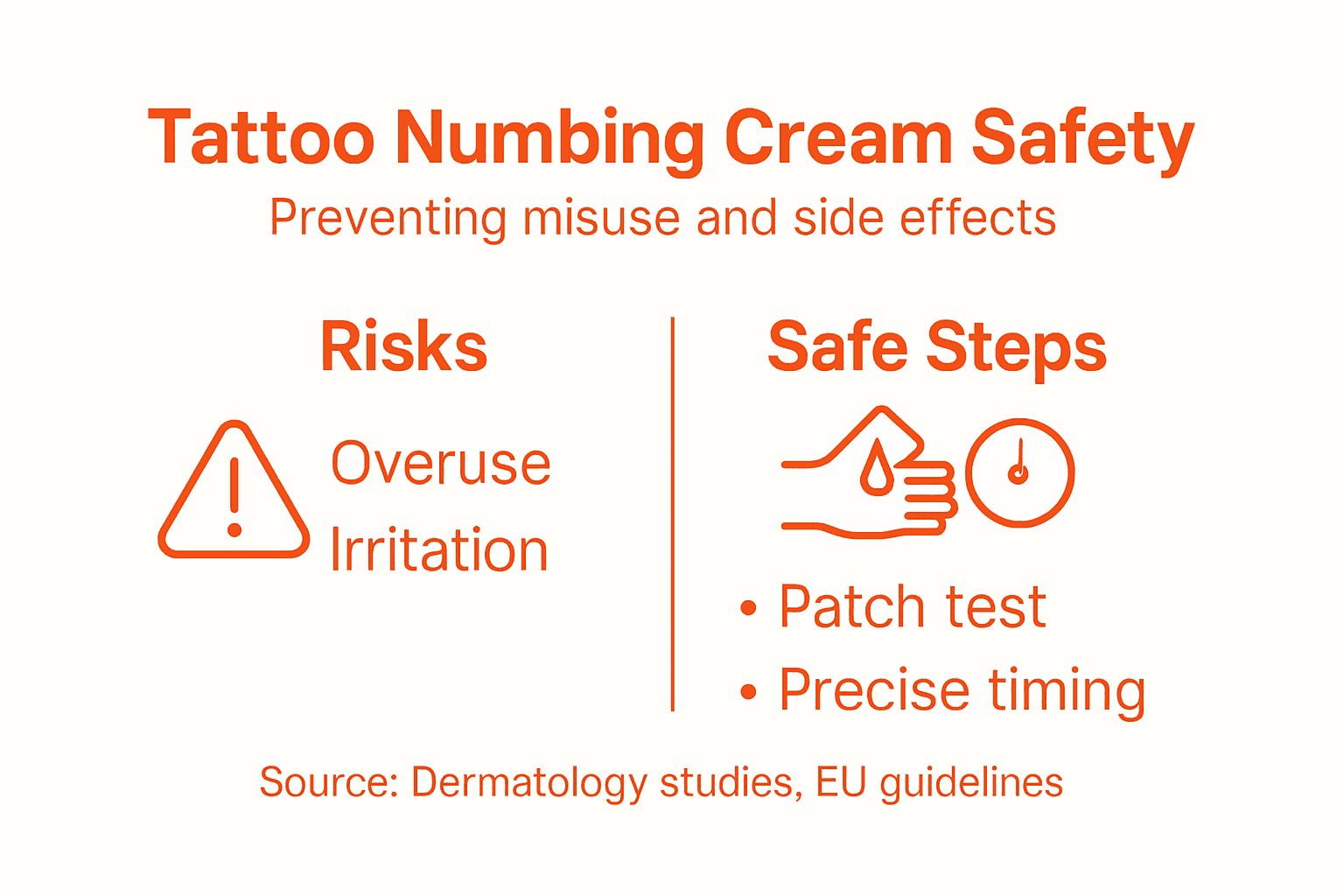
This risk sounds serious, but it’s extremely rare when you follow dosage instructions. The key is respecting the limits and not assuming more cream equals better numbing.
Avoid toxicity by:
- Following manufacturer dosage recommendations exactly
- Never applying to broken, cut, or severely irritated skin
- Limiting application area as specified
- Not extending application time beyond recommendations
- Informing your tattoo artist about the numbing cream used
Impact on Tattooing Quality
Heavy numbing cream application can distort skin texture temporarily, affecting your artist’s ability to see fine details or apply ink precisely. Some professionals report that excessive numbing changes how skin accepts ink.
The table below summarizes common safety risks of tattoo numbing creams and how to avoid them:
| Risk Type | Typical Cause | Prevention Method |
|---|---|---|
| Allergic Reaction | Skin sensitivity to ingredients | 24-hour patch test recommended |
| Lidocaine Toxicity | Overapplication or broken skin use | Follow dosage and use instructions |
| Poor Tattoo Quality | Excessive cream, improper removal | Apply thin layer, wipe thoroughly |
Apply numbing cream thinly and remove excess thoroughly before tattooing begins to prevent texture distortion and ensure your artist can work effectively.
Best Practices for Safe Use
Your tattoo artist is your ally in safe numbing cream use. Professional artists appreciate communication and will adjust their technique if needed.
Follow this prevention approach:
- Patch test 24 hours before your appointment
- Apply cream only to clean, intact skin
- Use the recommended amount only
- Wait the specified time (usually 30-45 minutes)
- Wipe away excess cream thoroughly
- Tell your artist which product you used
- Stop immediately if unusual reactions occur
Pro tip: Schedule your tattoo appointment at least one week after testing your numbing cream, allowing time to confirm your skin tolerates it well and eliminate any risk of unexpected reactions during your actual session.
Experience True Comfort with TKTX and Dermacain Tattoo Numbing Creams
Getting a tattoo should be an exciting journey, not a painful challenge. The article highlights the struggle with needle pain and the importance of a numbing solution that offers reliable, long-lasting relief. If you want to avoid discomfort and give your tattoo artist the best conditions for precise, clean work, choosing high-quality numbing cream is essential. With ingredients like lidocaine delivering up to three hours of guaranteed numbness, you can enjoy longer sessions without agony or tension.

Discover the difference with our premium range at Featured Products – TKTX obchod. We proudly ship across all of Europe and offer free shipping on orders over 30 Euro. If you are not completely satisfied, our customer-first policy guarantees a money-back return—just send the product back. Don’t let pain hold you back from your perfect tattoo. Visit https://buytktx.online now to unlock a pain-free tattoo experience and take control of your comfort today.
Frequently Asked Questions
What is tattoo numbing cream, and how does it work?
Tattoo numbing cream is a topical anesthetic applied to the skin to reduce or eliminate pain during tattooing. It contains active ingredients like lidocaine or benzocaine, which interrupt pain signals to the brain and create a temporary numbing effect that typically lasts around three hours.
How do I apply tattoo numbing cream correctly?
To apply tattoo numbing cream, clean the area thoroughly and apply it thickly to dry skin. Wait for 30-60 minutes to allow the anesthetic to penetrate before wiping away the excess cream prior to tattooing, ensuring you follow manufacturer guidelines for optimal results.
Are there different types of tattoo numbing creams, and how do they differ?
Yes, there are various types of tattoo numbing creams, including standard topical anesthetics, combination formulas, and maximum strength creams. Standard creams typically last 2-4 hours, while combination formulas enhance effectiveness, and maximum strength options are designed for serious pain management, often providing numbing effects lasting 3+ hours.
Can using numbing cream affect the quality of my tattoo?
If overused or not applied correctly, numbing cream can temporarily distort skin texture, which might affect how well the artist can see details and apply ink. To ensure the best results, apply the cream thinly and remove excess thoroughly before the tattooing begins.


