

More than 50 percent of clients say pain is their main concern before getting a tattoo, making comfort a central focus for tattoo artists across Central Europe. With growing demand for longer, larger, and more detailed work, understanding the american approach to client assessment and numbing solutions can set your studio apart. This guide highlights effective screening steps that prioritize client safety, help you tailor each session, and build trust through thoughtful pain management.
Table of Contents
- Step 1: Gather Essential Client Information
- Step 2: Review Client Medical History And Allergies
- Step 3: Assess Skin Type And Tattoo Placement
- Step 4: Evaluate Client Expectations And Pain Tolerance
- Step 5: Confirm Suitability For Numbing Creams
Quick Summary
| Key Insight | Explanation |
|---|---|
| 1. Thorough Client Intake | Comprehensive assessments ensure client safety and satisfaction during the tattoo process. |
| 2. Assess Medical History | Identifying allergies and health issues prevents complications and ensures proper care. |
| 3. Evaluate Skin Type | Understanding skin characteristics optimizes tattoo placement and healing for better results. |
| 4. Confirm Pain Tolerance | Discussing pain thresholds helps tailor the tattoo experience, improving comfort and satisfaction. |
| 5. Screen for Numbing Cream | Proper assessment ensures suitability for numbing options, minimizing risks during the tattoo session. |
Step 1: Gather essential client information
Prepping for a successful tattoo session starts with comprehensive client assessment. You need to collect critical details that ensure both safety and satisfaction throughout the tattooing process.
Begin by establishing a thorough client intake procedure that covers medical history, potential allergies, and physical considerations. Your consultation should include key health screening details that help prevent potential complications. Request information about current medications, skin conditions, and any prior tattoo experiences. Verify the client’s age and obtain proper consent documentation as recommended by professional health guidelines.
Collect specific details like skin type, pain tolerance, and placement preferences to customize the tattoo experience. Ask about medical implants, recent surgeries, or chronic conditions that might impact tattoo healing. Systematic documentation helps you anticipate potential challenges and create a personalized approach for each client.
Pro tip: Create a standardized intake form with clear sections and checkboxes to streamline your client assessment process and ensure you capture all necessary information efficiently.
Here’s a summary of key client assessment factors and their impact on the tattoo process:
| Assessment Factor | Why It Matters | Impact on Tattoo Experience |
|---|---|---|
| Medical History | Identifies health risks | Ensures safety, reduces complications |
| Skin Type | Predicts healing, ink uptake | Customizes technique and placement |
| Pain Tolerance | Guides comfort strategies | Improves session experience |
| Placement Preferences | Matches design and health | Enhances aesthetics, aids healing |
Step 2: Review client medical history and allergies
Careful medical history assessment is crucial for preventing potential tattoo complications and ensuring client safety. Your goal is to identify any underlying health conditions or allergies that might impact the tattooing process.

Start by conducting a comprehensive health screening for tattoo risks. Ask detailed questions about medication use, skin sensitivities, and past allergic reactions. Pay special attention to potential reactions to ink pigments, lidocaine, and other topical substances. Investigate any history of autoimmune disorders, bleeding conditions, or infectious disease risks that could complicate the tattooing procedure.
Document every medical detail systematically. Look for red flags like chronic skin conditions, immune system disorders, or recent surgeries that might affect healing. Be thorough but compassionate creating an environment where clients feel comfortable sharing sensitive health information.
Pro tip: Create a confidential digital medical history template with dropdown menus and clear sections to make the screening process both comprehensive and user friendly.
Step 3: Assess skin type and tattoo placement
Successful tattoo application requires a detailed understanding of your client’s unique skin characteristics and optimal placement strategy. Your goal is to evaluate skin type and recommend the most suitable tattoo location for long term aesthetic and healing results.
Utilize the Fitzpatrick Skin Phototype scale to comprehensively assess your client’s skin type. This classification helps predict potential pigmentation changes, healing responses, and potential ink absorption variations. Examine skin texture, elasticity, sensitivity, and underlying health conditions. Carefully analyze areas with different skin thickness, movement patterns, and sun exposure to determine ideal placement that minimizes potential complications from tattooing guidance protocols.
Consider factors like skin tone, natural contours, muscle movement, and potential future body changes when discussing placement options. Recommend locations that offer optimal healing conditions and aesthetic appeal while considering the client’s lifestyle, professional environment, and personal comfort. Provide visual guidance and use professional judgment to ensure the best possible outcome.
Pro tip: Create a visual skin assessment chart with color coded zones to quickly evaluate potential tattoo placement risks and healing probabilities.
Step 4: Evaluate client expectations and pain tolerance
Understanding your client’s pain threshold and tattoo expectations is crucial for creating a positive and comfortable tattoo experience. Your goal is to establish clear communication and develop a personalized approach that addresses individual comfort levels and artistic vision.
Utilize validated pain assessment techniques to systematically evaluate client pain tolerance. Engage in an open dialogue about previous experiences with pain, medical conditions, and personal anxiety levels. Discuss the specific tattoo design, anticipated duration, and potential discomfort associated with different body areas. Implement a comprehensive pre tattoo consultation that allows clients to express concerns and helps you develop appropriate pain management strategies based on medical pre procedure assessment guidelines/25%3A_Preoperative_Care/25.01%3A_Preadmission_Assessment_and_Education).
Provide realistic expectations about the tattooing process, potential pain levels, and healing requirements. Explain how different body areas have varying sensitivity and demonstrate empathy by offering multiple pain mitigation options. Recommend numbing solutions, breaks during the session, and alternative techniques that can help manage client comfort and reduce anxiety.
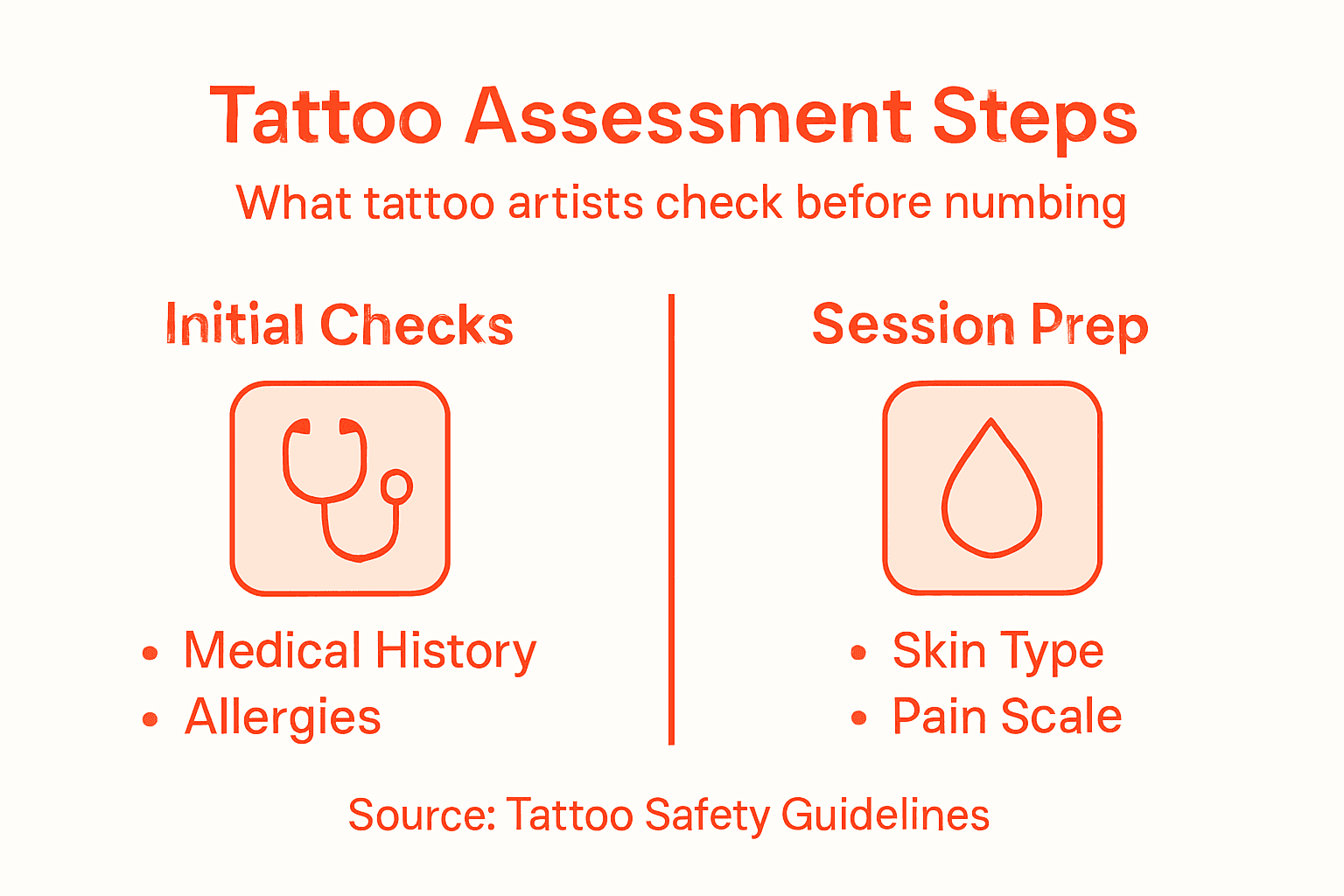
Pro tip: Create a visual pain mapping chart that helps clients understand and communicate their personal pain tolerance across different body regions.
Step 5: Confirm suitability for numbing creams
Careful screening is essential before applying any numbing cream to ensure client safety and prevent potential adverse reactions. Your primary objective is to conduct a thorough assessment that determines whether a numbing solution is appropriate for your client.
Review lidocaine safety guidelines to understand potential risks and contraindications. Investigate the client’s complete medical history, focusing on allergies, skin sensitivities, and existing medical conditions. Check for any previous reactions to topical anesthetics or skin medications. Examine the tattoo site carefully to ensure the skin is intact and free from cuts, bruises, or active skin conditions that could interfere with numbing cream application.
Evaluate the client’s overall health status and potential interactions with FDA recommended numbing cream protocols. Discuss potential side effects, application instructions, and expected sensations during the tattooing process. Verify that the client understands proper usage and can communicate any unusual reactions immediately.
Pro tip: Create a standardized medical screening checklist that systematically evaluates a client’s suitability for numbing cream application, reducing the risk of potential complications.
Here’s a comparison of numbing cream suitability checkpoints and possible outcomes:
| Suitability Checkpoint | What to Review | Outcome if Not Met |
|---|---|---|
| Allergy History | Check for lidocaine reactions | Increased risk of allergic response |
| Skin Integrity | Look for cuts or infections | Delayed healing, higher infection risk |
| Previous Cream Use | Ask about past experiences | Unpredictable reaction or side effects |
| Current Medications | Review possible interactions | Avoid adverse drug interactions |
Enhance Your Tattoo Comfort with Expertly Approved Numbing Solutions
Mastering client assessment before using numbing creams is key to a smooth and pain free tattoo experience. The article highlights the importance of safety checks like allergy history and skin integrity before applying numbing creams such as Lidocaine based products. If you want to ensure your tattoo pain management matches professional safety standards and adapts to your unique needs then choosing trusted numbing creams is essential.

Discover premium tattoo numbing creams like TKTX and Dermacain at https://buytktx.online. Our products are designed to provide guaranteed pain relief for up to 3 hours while adhering to safety guidelines mentioned in the article. Benefit from free shipping on orders over 30 Euro and our satisfaction guarantee that puts your comfort and safety first. Start your pain free tattoo journey today by visiting TKTX and Dermacain Numbing Creams and get the perfect solution that complements expert client assessment practices.
Frequently Asked Questions
What information should I gather during a client assessment before numbing for a tattoo?
To ensure client safety and comfort, collect details such as medical history, allergies, and skin type. Implement a standardized intake form to streamline this process and gather essential information efficiently.
How can I assess a client’s pain tolerance for their tattoo session?
Engage in an open dialogue about their previous pain experiences and potential anxiety levels. Use validated pain assessment techniques to help gauge their comfort, allowing you to implement tailored pain management strategies.
What are the key factors to consider in a client’s medical history during tattoo assessments?
Focus on allergies, previous reactions to topical anesthetics, and any existing medical conditions that may affect healing. Systematically document these details to reduce complications during the tattooing process.
How do I evaluate a client’s skin type for optimal tattoo placement?
Utilize the Fitzpatrick Skin Phototype scale to assess their skin characteristics, including texture and sensitivity. Provide visual guidance to recommend placement that minimizes complications and promotes healing.
Why is it important to confirm suitability for numbing creams before application?
Confirming suitability reduces the risk of allergic reactions and ensures skin integrity before applying numbing cream. Conduct a thorough assessment of the client’s medical history and current medications to ensure safety during the tattoo process.
How can I create a comfortable environment for discussing a client’s health concerns?
Foster an empathetic atmosphere where clients feel safe sharing sensitive information about their health. Offer reassurance and maintain confidentiality to encourage openness during the assessment process.


