

Over half of tattoo enthusiasts in Central Europe admit that fear of pain delays their next appointment. For those seeking a pain-free experience, american numbing creams have transformed the world of tattoo artistry by offering scientifically proven comfort solutions. Artists and clients now rely on these topical anesthetics to make sessions more enjoyable and less stressful. Discover how expert-recommended numbing products can empower both tattoo lovers and professionals to embrace creativity without the distraction of discomfort.
Table of Contents
- Numbing Creams for Tattoos Explained
- Types of Tattoo Numbing Creams Available
- How Numbing Creams Work to Reduce Pain
- Enhancing Client Comfort and Tattoo Experience
- Safety, Side Effects, and Best Usage Practices
Key Takeaways
| Point | Details |
|---|---|
| Pain Management | Numbing creams effectively reduce pain during tattooing by blocking nerve signals, allowing for a more comfortable experience. |
| Types and Concentrations | Tattoo numbing creams come in varying concentrations (4-18% lidocaine) tailored to different tattoo sizes and individual pain tolerances. |
| Safety Precautions | Proper usage precautions, including patch tests and adherence to recommended guidelines, are essential to mitigate potential side effects. |
| Client Experience | Enhanced comfort from numbing creams promotes longer sessions and encourages artistic exploration, minimizing anxiety during tattoo applications. |
Numbing Creams for Tattoos Explained
Numbing creams represent an innovative solution for individuals seeking pain reduction during tattoo procedures. These specialized topical anesthetics work by temporarily blocking nerve signals in the skin, providing significant comfort during what can otherwise be an intense experience. Topical local anesthetics effectively control pain for superficial skin procedures like tattooing, offering a non-invasive alternative to traditional pain management techniques.
Typically, these creams contain active ingredients like lidocaine, which specifically target nerve endings to minimize discomfort. Tattoo numbing creams are applied prior to procedures by following a precise application method: spreading a thick layer of cream, covering with plastic wrap for 40-60 minutes, and then wiping off before the tattoo session begins. The effectiveness can vary based on individual skin type, temperature, and personal pain tolerance.
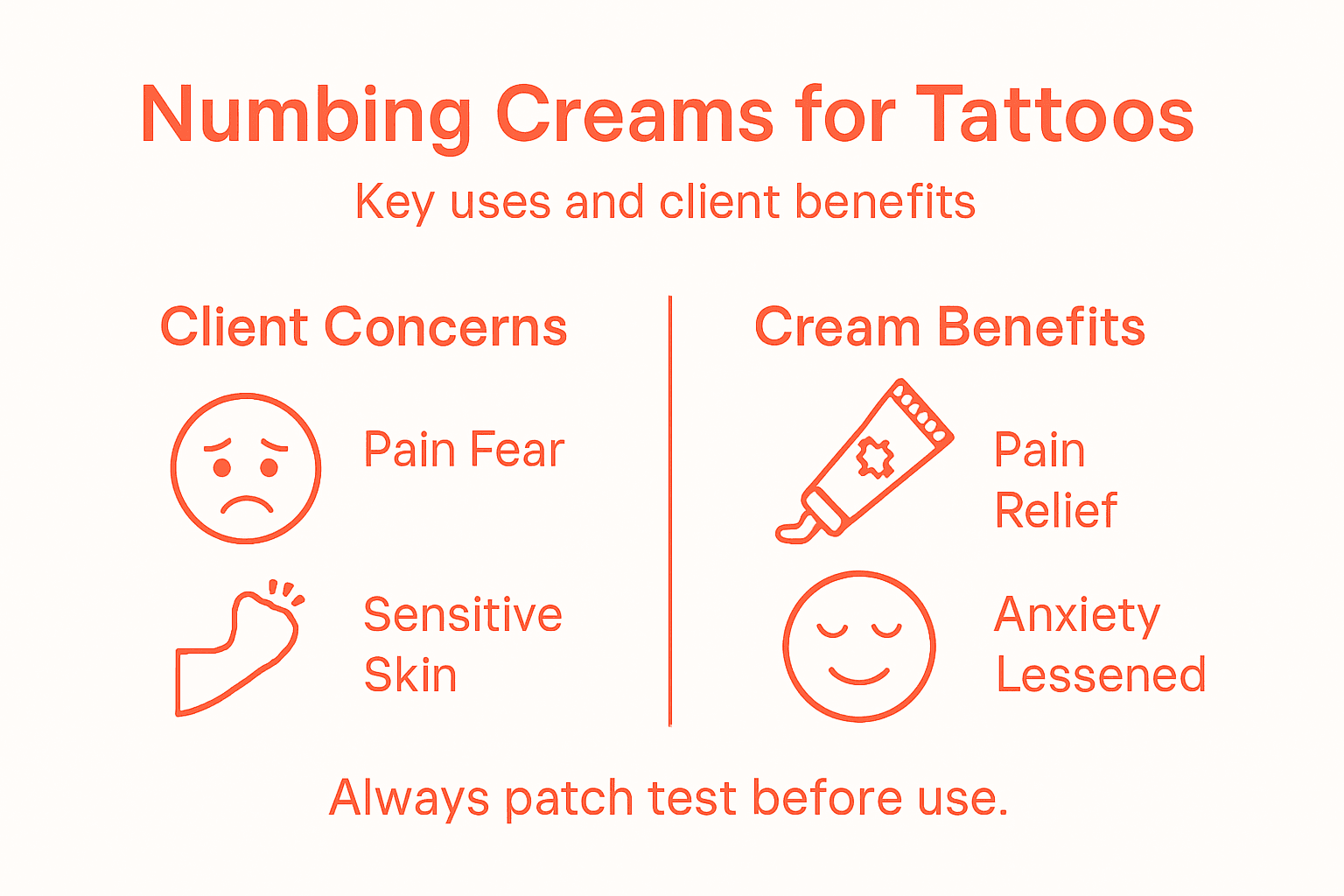
Most numbing creams offer several key benefits for tattoo enthusiasts:
- Reduced pain during tattoo application
- Decreased anxiety about potential discomfort
- Enables longer tattoo sessions
- Helps individuals with lower pain thresholds complete desired artwork
Pro tip: Always perform a patch test with numbing cream at least 24 hours before your tattoo to check for potential allergic reactions and ensure skin compatibility.
Types of Tattoo Numbing Creams Available
The world of tattoo numbing creams offers a diverse range of options designed to minimize discomfort during tattoo sessions. Tattoo numbing creams contain lidocaine in concentrations typically ranging from 4% to 5%, with some specialized formulations reaching up to 18% for more intense pain management. These creams come in various formulations, including emulsions, pastes, and gels, each offering unique benefits for different skin types and tattoo experiences.
The primary types of numbing creams can be categorized based on their active ingredients and concentration levels:
- Low Concentration Creams (4-5% lidocaine): Suitable for smaller tattoos or individuals with lower pain sensitivity
- Medium Concentration Creams (5-10% lidocaine): Ideal for medium-sized tattoos or moderate pain tolerance
- High Concentration Creams (10-18% lidocaine): Designed for larger tattoos or individuals with higher pain thresholds
Specialized numbing cream formulations often include additional ingredients to enhance effectiveness and skin comfort. These may include:
Here’s a comparison of common tattoo numbing cream formulations and their ideal uses:
| Formulation Type | Typical Lidocaine Concentration | Best For | Additional Soothing Ingredients |
|---|---|---|---|
| Cream | 4-5% | Small or first tattoos | Aloe vera, emu oil |
| Gel | 5-10% | Medium-sized tattoos | Menthol, vitamin E |
| Paste | 10-18% | Large/complex tattoos | Tetracaine, emu oil |
| Emulsion | 5-18% | Sensitive skin areas | Aloe vera, jojoba oil |
- Aloe vera for skin soothing
- Menthol for cooling sensation
- Emu oil for skin conditioning
- Additional anesthetics like tetracaine for enhanced numbing
Pro tip: Always consult with your tattoo artist about the best numbing cream for your specific tattoo size, location, and personal pain tolerance to ensure optimal results and skin protection.
How Numbing Creams Work to Reduce Pain
Local anesthetic mechanisms block pain signals by interrupting nerve communication at a cellular level. These specialized creams contain active ingredients like lidocaine that strategically target sodium channels within nerve cells, preventing the transmission of pain impulses to the brain. This sophisticated biochemical process effectively creates a temporary barrier that stops pain sensations before they can be perceived, allowing tattoo enthusiasts to experience significantly reduced discomfort during their artistic process.
The scientific mechanism behind numbing creams involves several precise steps:
- Sodium Channel Blockade: Lidocaine molecules attach to sodium channels in nerve cell membranes
- Signal Interruption: Nerve cells cannot generate or transmit pain signals
- Localized Numbing: Only the specific area where cream is applied becomes desensitized
- Temporary Effect: Numbing typically lasts between 20-60 minutes depending on cream formulation
Topical anesthetics provide pain control without the invasiveness of injections, making them an ideal solution for tattoo procedures. The cream’s active ingredients create a protective neural barrier, allowing individuals with lower pain tolerance to experience tattoo artistry more comfortably. Factors like skin thickness, individual metabolism, and precise application technique can influence the cream’s effectiveness.
Pro tip: Apply numbing cream in a thick, even layer and cover with plastic wrap for maximum absorption and effectiveness, ensuring you follow the specific product’s recommended application instructions.
Enhancing Client Comfort and Tattoo Experience
Numbing creams significantly improve tattoo client experiences by transforming what could be a painful procedure into a more manageable and enjoyable artistic process. By reducing physical discomfort, these specialized products help clients feel more relaxed, confident, and open to exploring larger or more intricate tattoo designs. The psychological impact of pain reduction cannot be overstated, as it directly influences a client’s willingness to commit to longer sessions and more complex artwork.
The benefits of using numbing creams extend beyond simple pain management:
- Reduced Anxiety: Clients feel more comfortable and less stressed
- Extended Session Tolerance: Enables longer, more complex tattoo work
- Improved Artist Interaction: Clients can remain more relaxed and communicative
- Enhanced Artistic Exploration: Reduced pain encourages more creative tattoo choices
Topical pain management strategies minimize procedural distress and create a more positive overall experience. Tattoo artists and clients alike benefit from this approach, as it transforms the tattooing process from a potentially intimidating experience to a more collaborative and enjoyable artistic journey. The cream helps break down psychological barriers, allowing clients to focus on the artistic expression rather than anticipating pain.

Pro tip: Communicate openly with your tattoo artist about your pain tolerance and comfort level, and work together to determine the most appropriate numbing cream application strategy for your specific tattoo design and personal needs.
Safety, Side Effects, and Best Usage Practices
Numbing cream safety requires careful consideration to prevent potential adverse reactions and ensure a positive tattoo experience. These topical anesthetics, while incredibly useful, demand responsible application and awareness of potential risks. Understanding proper usage, potential side effects, and individual skin sensitivities can help tattoo enthusiasts maximize comfort while minimizing potential complications.
Potential side effects and safety precautions include:
- Skin Irritation: Redness, rash, or localized allergic reactions
- Allergic Responses: Potential systemic reactions requiring medical attention
- Application Limitations: Avoid use on broken or damaged skin
- Concentration Risks: Higher lidocaine percentages increase potential complications
FDA warns about topical pain relief product risks associated with improper usage. Serious adverse effects can include irregular heartbeat, seizures, and breathing difficulties, particularly when products are applied incorrectly or over large skin areas. Tattoo clients should always prioritize professional guidance, perform patch tests, and follow recommended application protocols to minimize potential health risks.
To help users gauge risk and comfort, here’s an overview of numbing cream safety versus usage duration:
| Lidocaine Concentration | Safe Duration (Minutes) | Potential Risks | Skin Compatibility |
|---|---|---|---|
| 4-5% | 40-60 | Mild irritation, redness | Generally suitable |
| 5-10% | 30-50 | Rash, moderate sensitivity | Most skin types |
| 10-18% | 20-40 | Allergic reactions, toxicity | Patch test essential |
Pro tip: Conduct a small patch test 24 hours before your tattoo appointment, and always consult with both your tattoo artist and a healthcare professional about the most appropriate numbing cream for your specific skin type and tattoo requirements.
Experience Pain-Free Tattoo Sessions with Trusted Numbing Creams
The article highlights the challenge many tattoo clients face: managing pain and discomfort during the tattooing process. When anxiety and sensitivity threaten to limit your creativity or even stop your tattoo journey, specialized numbing creams like TKTX and Dermacain provide a proven solution. With ingredients targeting nerve endings to block pain for up to three hours, these creams allow you to relax, extend your sessions, and focus fully on your new artwork.
At BuyTKTX.online, we understand the importance of a comfortable and anxiety-free tattoo experience across Europe. We proudly offer genuine TKTX and Dermacain numbing creams that guarantee pain relief for three hours. Our commitment includes free shipping on orders over 30 Euro and a customer satisfaction promise where you can return the product if you are not fully satisfied.
Don’t let fear of pain hold you back from your perfect tattoo.

Take control of your tattoo experience today. Visit BuyTKTX.online now to secure your trusted numbing cream and enjoy longer, more comfortable sessions. Let your tattoo artist and you focus on creativity while we take care of the pain.
Frequently Asked Questions
What are numbing creams for tattoos?
Numbing creams are topical anesthetics that temporarily block nerve signals in the skin to reduce pain during tattoo procedures.
How do numbing creams work to alleviate pain during tattoos?
Numbing creams like those containing lidocaine work by blocking sodium channels in nerve cells, preventing the transmission of pain signals to the brain, resulting in localized numbness.
What are the different types of numbing creams available for tattoos?
Numbing creams vary in concentration levels, with options like low concentration (4-5% lidocaine) for small tattoos, medium concentration (5-10%) for moderate pain, and high concentration (10-18%) for larger or more painful tattoos.
Are there any side effects associated with using numbing creams for tattoos?
Potential side effects from numbing creams can include skin irritation, allergic reactions, and risks associated with higher lidocaine concentrations, such as toxicity or systemic reactions when applied incorrectly.


